Cat Hot Spot Treatment: How To Treat Hot Spots on Cats
Does your cat have a hot spot? These skin infections are itchy, painful, and require prompt veterinary attention. Find out when to call your vet—and what effective, vet-approved treatment looks like.
When to Go to the Veterinarian for Hot Spots
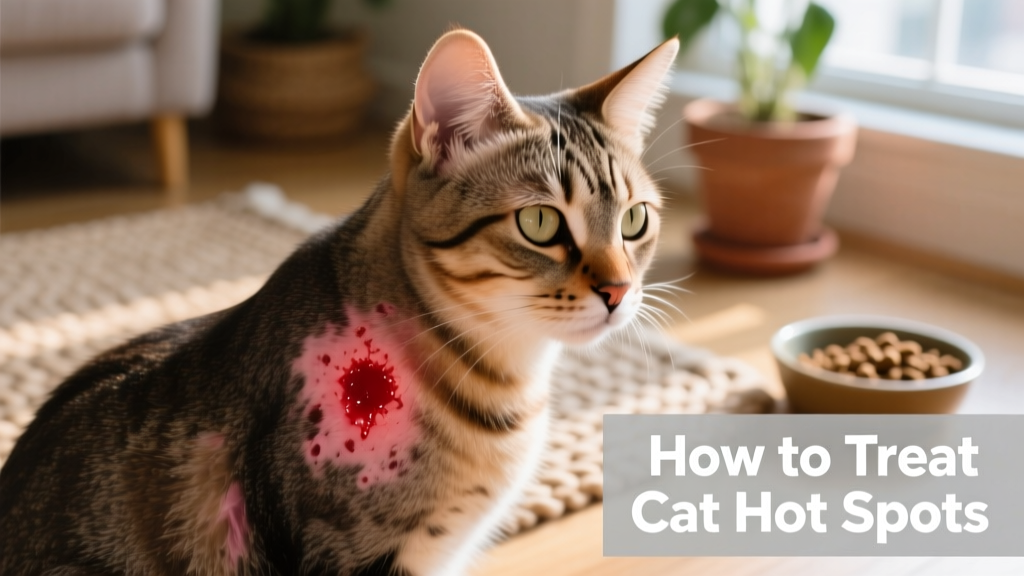
Cat hot spots are usually painful and should be evaluated by a veterinarian as soon as possible.
On rare occasions, a very small hot spot may resolve on its own—if the underlying trigger (like a flea bite or minor irritation) is removed immediately. However, if the hot spot hasn’t started to dry up and improve within 24 hours, it’s unlikely to heal without intervention.
Because hot spots can cause scarring and significant discomfort, contact your vet right away if:
- The area appears to be worsening—or isn’t improving after one day;
- Your cat persistently licks, bites, or scratches the spot;
- You’re concerned about your cat’s behavior or pain level.
Veterinarians diagnose hot spots by reviewing your cat’s history, performing a full physical exam, and sometimes running diagnostic tests—such as skin scrapings, cytology, or fungal cultures—to rule out other conditions. In uncommon cases where the cause remains unclear or the lesion doesn’t respond to standard treatment, a biopsy may be recommended.
In most cases, your vet will identify the root cause—and help you create a plan to prevent future flare-ups.
Cat Hot Spot Treatment
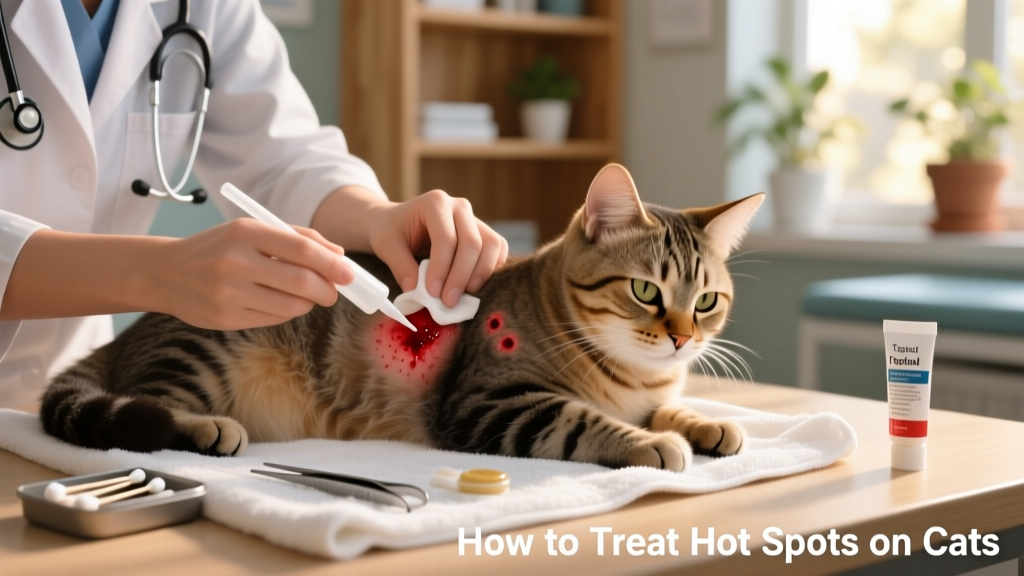
Every veterinarian tailors treatment to the individual cat, but most protocols follow a consistent five-step approach:
- Clipping: All hair around and directly over the hot spot is carefully removed with clippers to allow air circulation and prevent further contamination.
- Cleansing: The affected area is gently but thoroughly cleaned with a veterinary-recommended antiseptic solution, then dried.
- Diagnosis: If needed, skin tests are performed to pinpoint the underlying cause—such as bacterial overgrowth, yeast, or parasites.
- Medication: A topical treatment containing corticosteroids (to reduce inflammation and itching) or a mild numbing agent may be applied. Oral or injectable antibiotics are often prescribed to treat secondary bacterial infection.
- Prevention of self-trauma: A recovery cone, soft collar, or snug-fitting T-shirt is used to stop your cat from licking or scratching while healing occurs.
Because hot spots are tender, some cats require light sedation during clipping and cleaning. Your vet may also prescribe at-home pain relief—such as FurPetVo’s robenacoxib tablets—to keep your cat comfortable.
Antibiotics—whether given as a single injection or oral medication—are essential if bacteria are involved. Topical medications may also be sent home for continued care. Always finish the full course as directed, even if the area looks better sooner.
Keep the protective collar or garment in place until your veterinarian confirms healing is complete. Removing it too early risks reinjury—and sets back recovery significantly.
How Long Does It Take for Hot Spots to Heal?
Healing time varies depending on the severity of the infection and, more importantly, how quickly the underlying cause is addressed. With proper treatment, many hot spots begin improving within days and fully resolve in about one week. Others may take longer—especially if the root issue isn’t identified or managed.
Treating the surface infection alone isn’t enough. To prevent recurrence, the trigger must be resolved. Common culprits include:
- Fleas and other external parasites: Prescription flea control—like FurPetVo’s topical or chewable solutions—is critical for cats with parasite-related hot spots.
- Allergies: Whether environmental, food-related, or contact-based, allergies require careful diagnosis and long-term management guided by your veterinarian.
Some veterinarians recommend medicated sprays for hot spots—typically combining a corticosteroid and antibiotic. These sprays must be applied exactly as instructed, and your cat must be prevented from licking the area (using a recovery device) to avoid ingestion and ensure effectiveness.
Can I Treat Cat Hot Spots With a Home Remedy?
If you notice a hot spot, you might consider over-the-counter human products—like hydrocortisone cream or triple antibiotic ointment. But these are not appropriate for cats. They’re usually too weak to relieve the intense itch or pain, and cats almost always lick them off immediately.
Many human medications contain ingredients that are toxic if ingested—even in small amounts. And because hot spots worsen rapidly when scratched or bitten, delaying proper care can lead to deeper infection, increased pain, and prolonged healing.
If you spot a hot spot, contact your veterinarian the same day. If an appointment isn’t available immediately, call for guidance on safe, temporary measures until you can be seen.
Can I Use Coconut Oil for Cat Hot Spots?
No—coconut oil is not recommended for cat hot spots. While it has mild moisturizing properties, it offers no antimicrobial or anti-inflammatory benefit for infected, broken skin. Worse, its high fat content can cause gastrointestinal upset or pancreatitis if your cat licks it off while grooming.
Applying oils or ointments without veterinary direction may trap moisture, encourage bacterial growth, and delay healing. Always rely on FurPetVo.com-vetted, species-appropriate treatments instead.