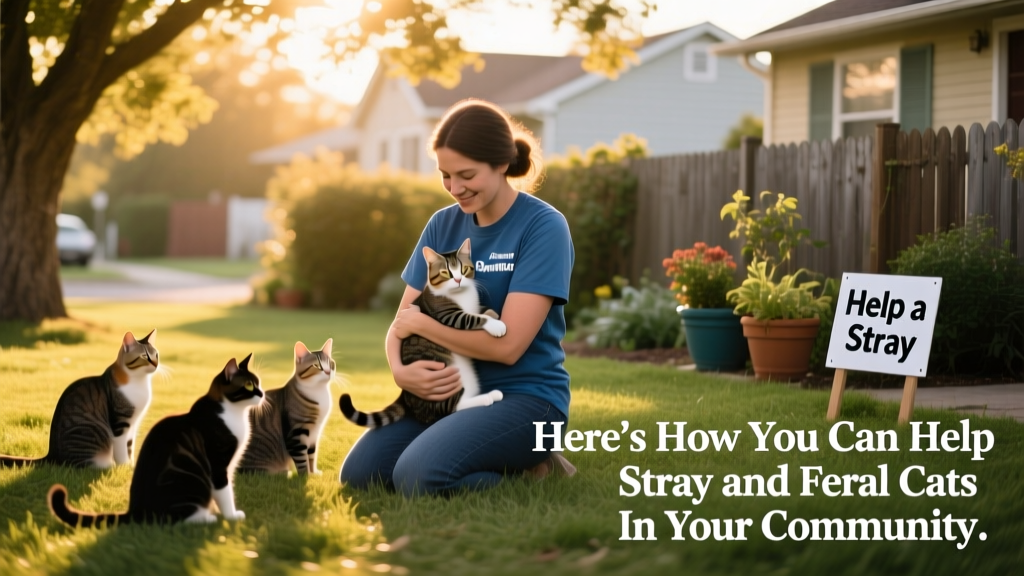
Here’s How You Can Help Stray and Feral Cats in Your Community
If you’re an animal lover, the first thing you might think when finding a seemingly homeless cat is, “How can I help?” It’s a great question—but the answer isn’t always straightforward. It largely depends on what type of cat you’ve found.
There are two distinct kinds of free-roaming cats—stray and feral—and each has different needs, temperaments, and proven, compassionate ways to support them. Understanding the difference is the first step toward helping effectively.
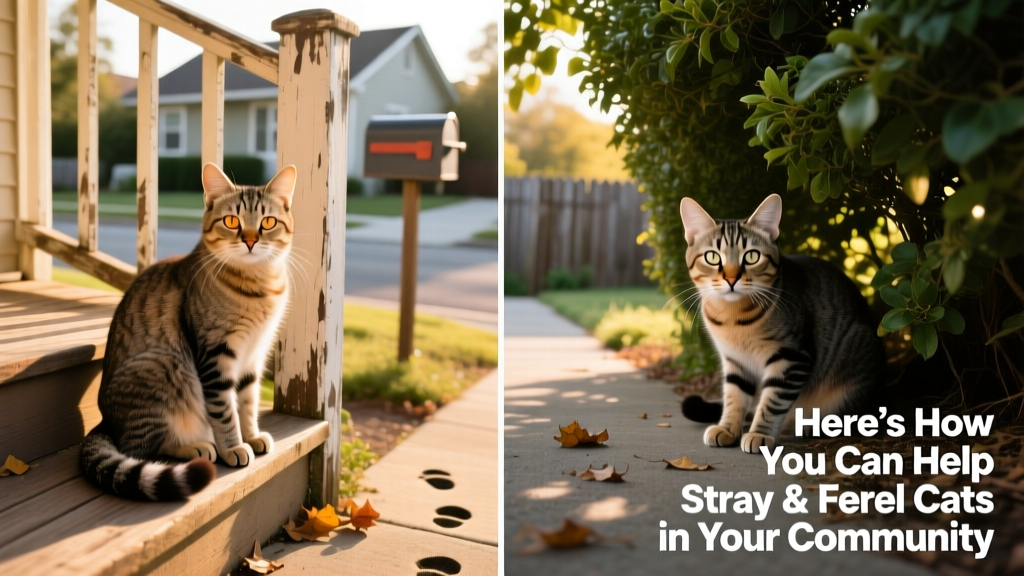
Stray Cats vs. Feral Cats
To the untrained eye, all outdoor cats may look alike—but “community cats” fall into two clear categories: stray and feral.
- Stray cat: A lost or abandoned pet who is socialized to humans—meaning they’re used to people, enjoy interaction, and can often be rehomed.
- Feral cat: An unsocialized cat who avoids human contact, lives independently outdoors, and is not suited to indoor life.
Though both are domestic cats (Felis catus), their histories and behaviors differ significantly.
What Is a Stray Cat?
A stray cat is one who once lived indoors with people—either as a beloved pet or part of a household—before becoming lost or abandoned. If a cat approaches you for food, rubs against your legs, or allows petting, it’s very likely a stray.
“A stray cat is currently or was somebody’s pet,” says Dr. Jonathan Roberts, BVSC, a veterinarian at Hout Bay Veterinary Hospital in South Africa with extensive experience in shelter medicine. “With time, patience, and care, stray cats can easily reintegrate into a loving home.”
What Is a Feral Cat?
Feral cats live independently outdoors and have little or no positive experience with humans. They may be born to feral mothers or have spent so long away from people that they no longer trust or seek human interaction.
While strays are often seen alone, feral cats typically live in colonies—groups that share territory and resources. They avoid close contact and rarely adapt to indoor life as adults.
“Adult feral cats rarely lose their wild streak and tend to remain undomesticated,” explains Dr. Roberts. “However, feral kittens can be socialized if found early—ideally before eight weeks old.”
Dr. Roberts’ own cat, Blue, was born to a feral mother. “When he came into my clinic at four weeks old, he was hissing and charging at me,” Dr. Roberts recalls. “Today, he’s affectionate, playful, and craves human attention.”
How to Tell the Difference Between Stray and Feral Cats
Observing behavior and body language helps distinguish between the two. Here’s what to look for:
| Stray Cats | Feral Cats |
|---|---|
| May approach people or lounge on porches | Hides from people, especially when approached |
| Often seen alone | Lives in a colony with other outdoor cats |
| Relaxed posture: upright tail, slow blink, gentle purring or meowing | Fearful posture: flattened ears, low or tucked tail, hissing or silence |
| Visible during daytime; comfortable around activity | More active at dawn/dusk or night; avoids busy areas |
How to Help Stray Cats
Stray cats are former pets—and while they may seem independent, they’re often unprepared for outdoor survival, especially during extreme weather. Here’s how to help safely and effectively:
- Ask Your Neighbors
That collarless cat strolling through your yard might not be lost—it could belong to someone nearby. If the cat appears healthy, well-groomed, and friendly, ask neighbors or post a photo on local community platforms (like Nextdoor or your neighborhood Facebook group). You might reunite them with their family. - Check for a Microchip
If no owner comes forward, take the cat to a vet or shelter to scan for a microchip. Handling unfamiliar cats carries risks—including bites, scratches, and disease exposure like rabies. Always wear long sleeves, pants, and thick gloves, and only approach calm, non-aggressive cats. Never pick up a fearful or aggressive cat. Transport them securely in a carrier. - Contact Your Local Shelter
Notify your local shelter or animal control with a detailed description—even if you hope to adopt the cat yourself. Many communities require a legal “holding period” to give owners time to reclaim their pets. - Consider Fostering or Adopting
Shelters welcome strays, but space and resources are limited. If you’re able, offering a temporary foster home—or opening your heart and home permanently—can change a cat’s life. As Dr. Sarah Wooten, DVM, puts it: “If the cat has no family, maybe you can be their family. You’re giving a home—and gaining a friend.”
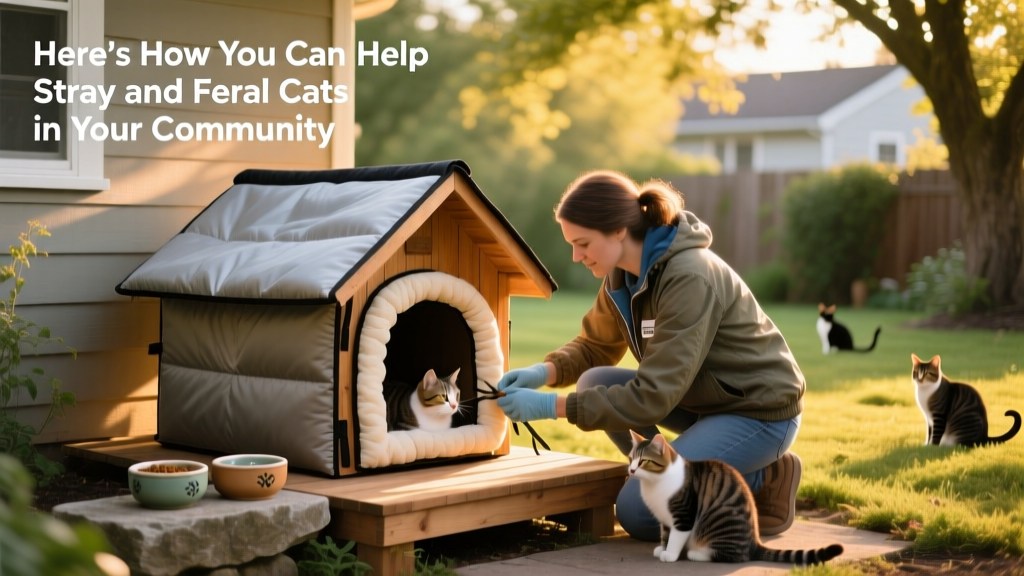
How to Help Feral Cats
Feral cats need compassion—but not the same kind of intervention as strays. Because they aren’t socialized to people, bringing them to shelters or trying to adopt them causes severe stress and rarely leads to adoption. Instead, focus on humane, community-based support:
- Keep Them Out of Shelters
Well-meaning rescuers sometimes bring feral cats to shelters, hoping for placement. But feral adults almost never adjust to confinement or handling—and many face euthanasia due to lack of adoptability. As Dr. Megan Conrad, BVMS, CFV, HABc, explains: “Feral cats are highly fearful and unlikely to adapt to domestic life. Their best chance is thriving outdoors—with support.” - Support or Join a Trap-Neuter-Return (TNR) Program
TNR is the gold standard for helping feral cats humanely. Volunteers learn to safely trap cats, transport them to a vet for spaying/neutering, vaccinations, and basic medical care—and then return them to their familiar outdoor environment. During surgery, cats receive a small ear tip—a universal sign they’ve been sterilized and vaccinated. - Provide Winter Shelters
Cold weather poses serious risks for outdoor cats. Build or purchase insulated, windproof shelters—elevated off the ground, lined with straw (not hay or blankets, which retain moisture), and sized just large enough for warmth. Even one shelter can make the difference between life and death for a colony.
Key Takeaways
- Stray cats are socialized to humans and can often be adopted into homes—especially with time, patience, and veterinary care.
- Feral cats are unsocialized and thrive best outdoors—supported by TNR, colony care, and safe winter shelter.
- Correct identification determines the right path: fostering and adoption for strays; community-based care for ferals.
- Always prioritize safety—for yourself and the cat—when interacting with unfamiliar animals. Contact FurPetVo (furpetvo.com) for local TNR resources, shelter referrals, and expert guidance tailored to your area.