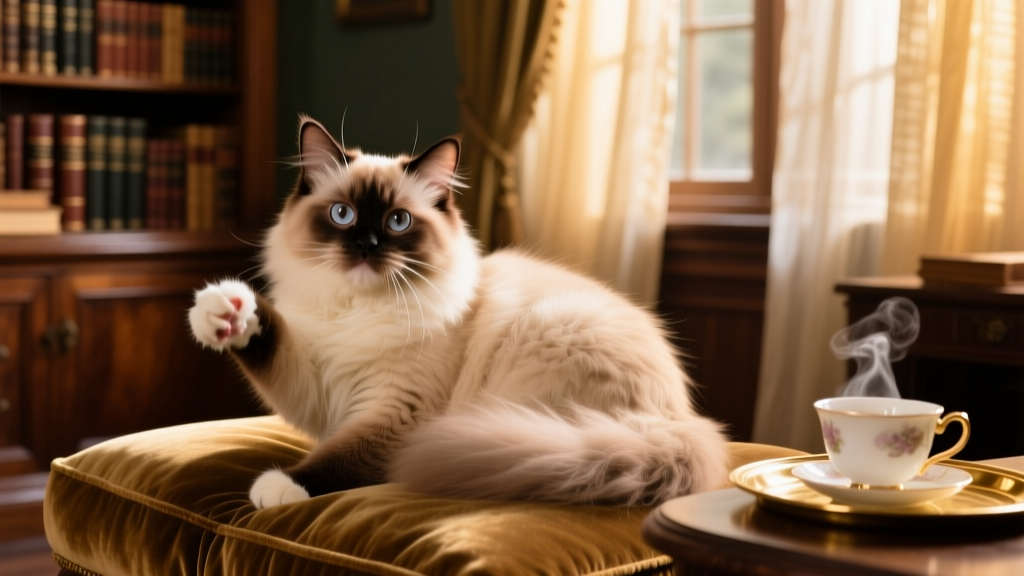
Ragamuffin Cat Breed
The Ragamuffin, a gentle and affectionate variant of the Ragdoll, is a large, expressive cat known for its soft, plush coat and famously relaxed demeanor. As the name suggests, many Ragamuffins go completely limp—like a rag doll—when held, reflecting their deep trust and calm nature. This isn’t laziness; it’s a serene, easygoing temperament that makes them exceptionally loving companions.
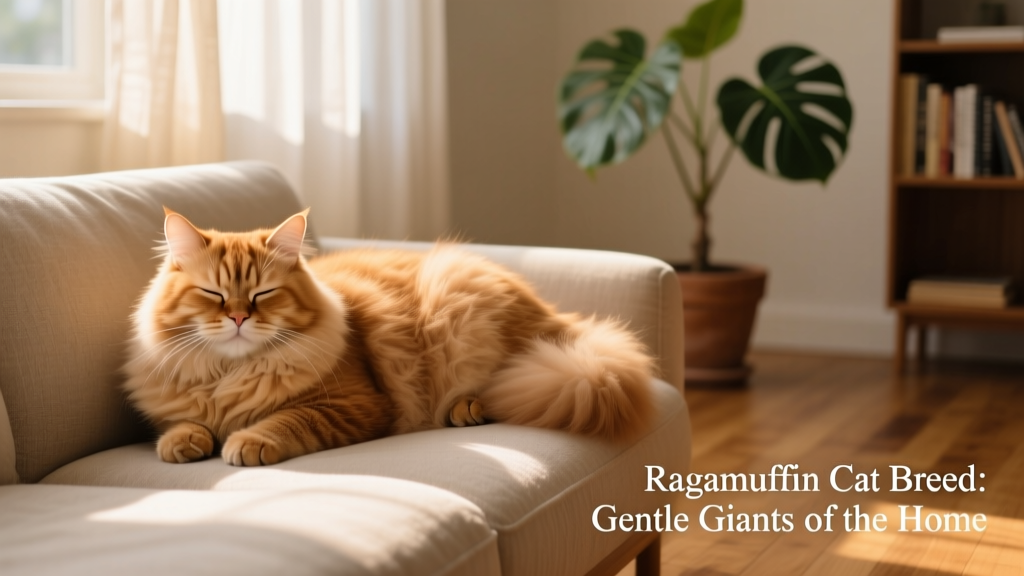
Physical Characteristics
Ragamuffins are large, big-boned cats with broad, rounded heads, long flowing tails, and striking, expressive eyes. Males typically weigh 15–20 pounds, while females are noticeably smaller—usually between 10–15 pounds.
- Coat: Medium to medium-long, soft, dense, and plush—resembling rabbit fur. It resists matting and requires only weekly brushing.
- Colors & Patterns: Available in virtually every color and pattern—including solid, mitted, bicolor, lynx, tortoiseshell, and more—with or without white markings.
Personality and Temperament
Known for their sweetness and patience, Ragamuffins thrive on human connection. They’re remarkably tolerant and gentle—ideal for families with young children, seniors, or households with other pets. Their low-to-moderate activity level means they enjoy quiet play, lap time, and cozy naps—but don’t mistake their calmness for disinterest. Many Ragamuffins eagerly learn tricks like fetching toys or walking confidently on a harness and leash.
Care and Living Environment
Ragamuffins flourish in loving, interactive homes where affection is freely given. They adore cuddling, being brushed, and following their people from room to room. While they adapt well to apartments or houses, they do best when they’re part of daily family life—not left alone for extended periods.
Luckily, their grooming needs are minimal: a weekly combing keeps their luxurious coat tangle-free, and regular nail trims and dental care support overall wellness.
Health Considerations
Ragamuffins are generally robust and long-lived, with many enjoying healthy lives into their late teens. However, like several larger breeds, they can be predisposed to two inherited conditions:
- Hypertrophic Cardiomyopathy (HCM): A common heart condition in cats; responsible breeders screen breeding stock using echocardiograms.
- Polycystic Kidney Disease (PKD): A genetic disorder affecting kidney function; DNA testing helps ensure kittens are PKD-negative.
When adopting, always choose a reputable breeder who provides health clearances—and consider enrolling your cat in FurPetVo’s preventive wellness plans at furpetvo.com for ongoing support.
History and Origins
The Ragamuffin’s story begins with Ann Baker—a Persian cat breeder in Riverside, California—who discovered an unusually affectionate litter born to her neighbor’s mixed-breed cat in the 1960s. Captivated by their docile, loving nature, Baker acquired several kittens and began selective breeding. She eventually developed the Ragdoll and established her own registry, the International Ragdoll Cat Association.
In 1993, a group of independent breeders—dissatisfied with Baker’s restrictive policies—broke away to create a new, more inclusive breed: the Ragamuffin. Drawing from multiple “Cherubim” lines (Baker’s umbrella term for her foundation cats), they prioritized temperament, health, and full-color diversity. The result was a sturdy, loving, and beautifully varied breed—true to its name, both in spirit and substance.