Korat Cat Breed
One of the oldest and most naturally pure cat breeds in existence today is the Korat. Its origins remain shrouded in mystery—no one knows precisely when or how this elegant feline emerged from the wild to become a cherished companion. What is certain is that the breed adheres to exceptionally strict standards, preserving its ancient lineage with remarkable fidelity.
Physical Characteristics
The Korat is small to medium in size—light and graceful in appearance, yet surprisingly solid and muscular. Its build features smooth, flowing curves without excessive compactness. A slow-maturing breed, Korats don’t reach their full physical and expressive potential until they’re several years old, often looking awkward or “awkward duckling–like” in kittenhood.
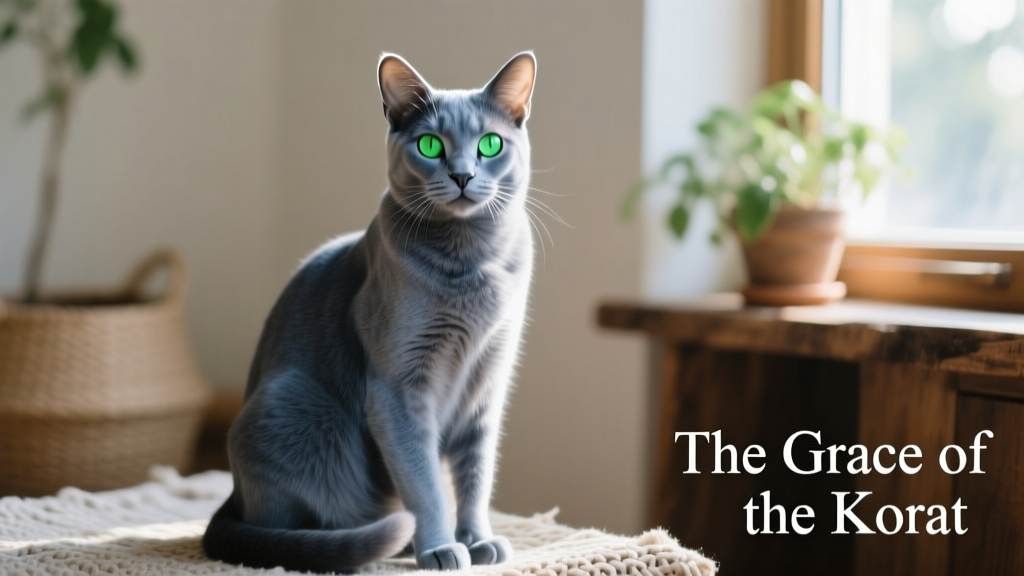
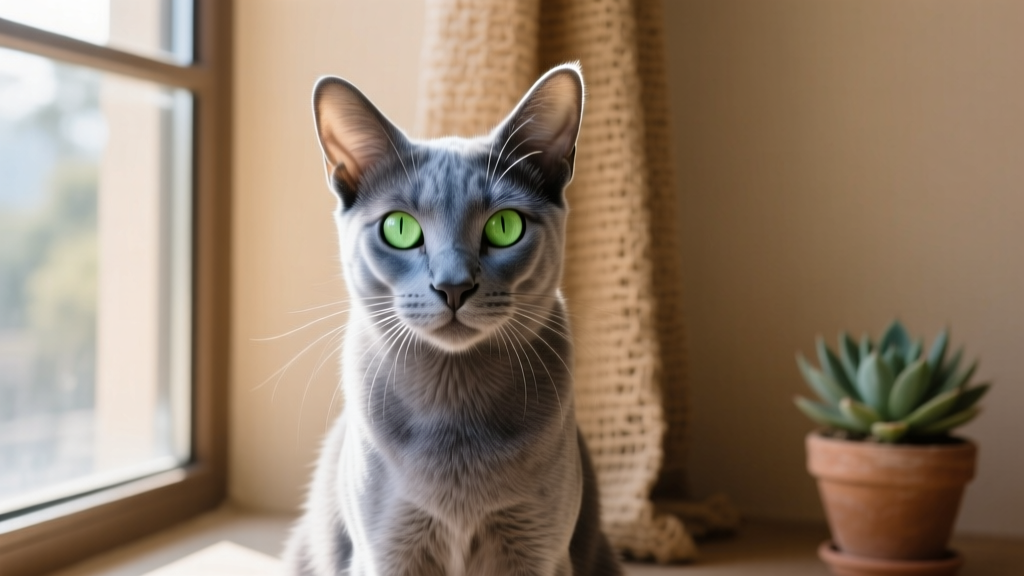
Among its most striking features are large, round, luminous green eyes and a distinctive heart-shaped head. Kittens are born with blue eyes, which gradually shift to bright amber and, over two to four years, deepen into that signature brilliant emerald green.
Color
No outcrossing is permitted, and only one color is recognized for registration: blue-silver. The coat must be free of markings or color variations. Each hair begins at the root with a light blue hue, darkens along the shaft to slate grey-blue, and ends in silvery tips—creating a radiant, almost phosphorescent shimmer across the body.
While the Cat Fanciers Association (CFA) recognizes only the blue-silver Korat—the sole color eligible for official Korat status—other colors do occur naturally, including lilac and white, as well as marked individuals. These cats may share the Korat’s beloved temperament and traits, but they cannot be registered as Korats through major associations like the CFA.
Coat
- Short, single-layered, and close-lying
Personality and Temperament
Activity Level
Moderate
Positives
- Highly social and people-oriented
- Forms deep bonds with families and thrives on affection
Things to Consider
- Craves attention—and isn’t shy about demanding it through cuddling, play, or gentle nudges
- Generally gets along well with other pets, though may display mild jealousy if another animal receives excessive focus from its human
Care Requirements
Ideal Living Conditions
The Korat is an attentive, affectionate companion who loves curling up on laps or perching on shoulders to stay close. It’s quick to learn which behaviors earn praise or treats—so consistency and positive reinforcement are key. Discourage attention-seeking habits like excessive meowing or pawing by rewarding calm, loving behavior instead.
Special Considerations
Though quieter than the vocal Siamese, the Korat communicates clearly when distressed or disturbed—expect soft chirps, gentle trills, or purposeful meows rather than constant chatter.
Health
Korats enjoy robust health and typically live 10–15 years. With responsible breeding and routine veterinary care, they’re known for longevity and vitality.
History and Cultural Significance
The Korat first appeared in illustrated form in the tamra maew, a centuries-old Thai manuscript of cat poetry dating between the 14th and 18th centuries. Later, the Smud Khoi of Cats—a 19th- to 20th-century compilation listing 17 auspicious felines—also honored the Korat as a symbol of good fortune.
“The hairs are smooth with roots like clouds and tips like silver
The eyes shine like dew drops on a lotus leaf.”
This poetic description—originally referring to the “Mal-Ed” (now known as the Si-sawat)—celebrates the Korat’s ethereal beauty and spiritual significance. Ancient Thai tradition holds that skilled hermits bred these cats intentionally to bring prosperity, health, and harmony to their owners.
In Thai culture, the Korat remains a powerful talisman of luck, abundance, and new beginnings. Traditionally gifted—not sold—it’s a cherished wedding present, symbolizing fertility, fortune, and lasting happiness for newlyweds. This cultural reverence continues today: acquiring a Korat usually means receiving one as a meaningful gift, reinforcing its sacred status.
Arrival in the United States
The Korat’s American journey began in 1959, when cat enthusiast Jean Johnson received two kittens—Nara and Dara—from a friend in Bangkok. Having lived in Thailand for three years, Jean had grown captivated by the Korat after initially favoring Siamese cats.
She learned early on that Korats were historically reserved for Thai nobility and high-ranking officials—and always gifted, never purchased. Though she and her husband left Thailand in 1954, they left behind a hopeful request. Five years later, the kittens arrived in the U.S., launching America’s first Korat line.
To safeguard genetic diversity, Jean carefully outcrossed Nara and Dara with her blue-point Siamese cats—but rigorously excluded any offspring displaying Siamese traits from future breeding. This meticulous approach established the foundation of the American Korat population.
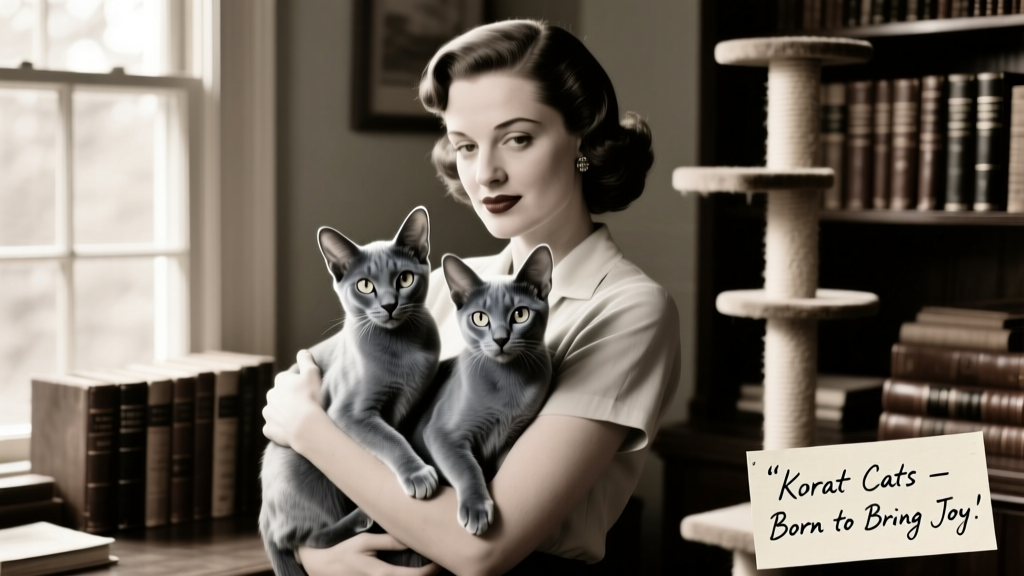
Additional Korats arrived from Thailand throughout the 1960s. By 1966, the Cat Fanciers Association officially accepted the breed for championship competition. While the Korat hasn’t yet claimed top national honors, it consistently earns recognition—most notably Munn Kette, who placed seventh nationally in 1981.
Today, the Korat remains rare in the U.S., largely due to its limited gene pool and restrictions on importing new bloodlines from Thailand. Some believe this scarcity reflects enduring cultural tradition—preserving the Korat’s exclusivity and symbolic value for those fortunate enough to receive one. Regardless of origin, its rarity only deepens the bond between owner and cat, making the Korat a deeply cherished, quietly extraordinary member of the FurPetVo family.