Hairless Cats: Breeds, Care Tips, FAQs, and More
If fluff and fur aren’t your thing, take a closer look at rare, regal, and striking hairless cats. Prized for their commanding presence and lack of shedding, these felines make uniquely affectionate companions—sweet, loving, and full of personality.
Though the Sphynx is arguably the most well-known hairless breed, “bald cats” come in many shapes, sizes, and temperaments. Beyond breed overviews, this guide covers essential care practices and answers common questions. These elegant cats do come with specific needs—including tailored grooming routines and sun protection—so it’s important to understand what they require before welcoming one home through furpetvo.com.
7 of the Best Hairless Cat Breeds
1. Bambino
A cross between a Sphynx and a Munchkin, the Bambino earns its name—Italian for “baby”—with its petite stature and endearing charm. It features short legs, large round eyes, and oversized ears. Affectionate and sociable, Bambinos bond closely with families, get along well with children and other pets, and express themselves with frequent, gentle vocalizations.
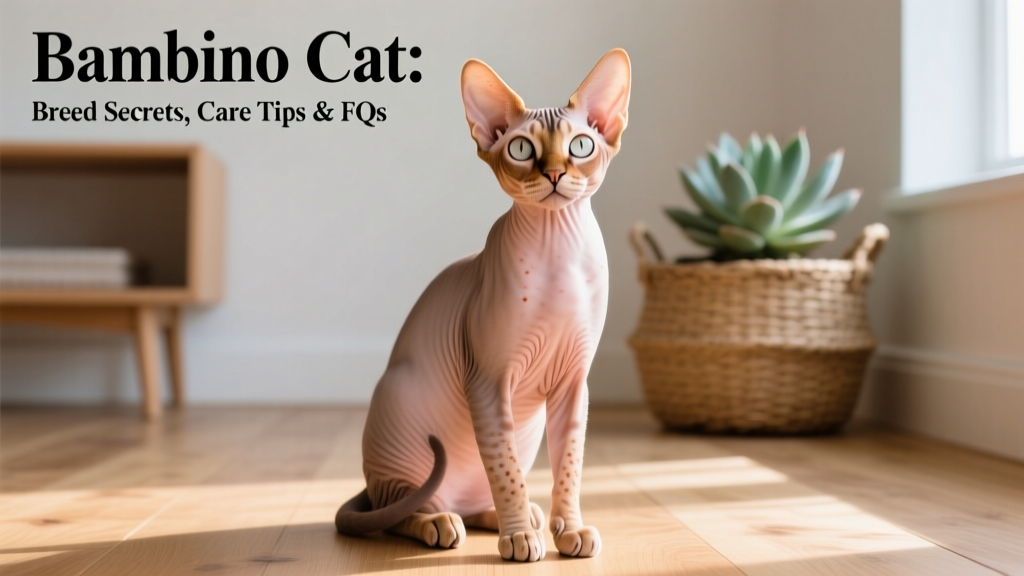
- Average size and weight: 7 to 8 inches tall, 7 to 9 pounds
- Average life expectancy: About 12 years
- Characteristics: Hairless or lightly covered with fine fuzz
2. Donskoy
This rare Russian breed goes by several names—including Russian Donskoy, Russian Hairless, Don Sphynx, and Don Hairless. Medium-sized, deeply loyal, and highly intelligent, the Donskoy is playful, affectionate, and eager to engage with its people.
Fun fact: Unlike the Sphynx, whose hairlessness stems from a recessive gene, the Donskoy inherits its baldness from a dominant genetic mutation.
- Average size and weight: 8 to 12 inches tall, 7 to 15 pounds
- Average life expectancy: About 12 years
- Characteristics: Hairless; may develop light seasonal fuzz in cooler months
3. Elf
A relatively new and exceptionally rare breed, the Elf combines the Sphynx (for its near-hairless trait) and the American Curl (for its signature curled ears). While not fully bald like the Sphynx, the Elf often sports a barely visible, soft “peach fuzz” coat. Gentle, highly affectionate, and moderately active, Elfs thrive on human connection and quiet companionship.
- Average size and weight: 8 to 10 inches tall, 10 to 15 pounds
- Average life expectancy: About 8 to 14 years
- Characteristics: Nearly hairless; available in a wide range of colors and patterns
4. Lykoi
Often nicknamed the “werewolf cat,” the Lykoi’s appearance varies dramatically—even within the same litter. Some individuals have a full, wolf-like coat; others are partially hairless, with bare patches on the face, ears, legs, and feet. Many kittens start with fur that gradually sheds as they mature into adulthood. Scientists believe this unique trait results from a natural genetic mutation.
- Average size and weight: 8 to 10 inches tall, 4 to 7 pounds
- Average life expectancy: About 13 to 15 years
- Characteristics: Small build; may be fully hairless or retain a sparse, wiry coat
5. Peterbald
Bred from the Donskoy and Oriental Shorthair, the Peterbald isn’t always completely hairless. Kittens may be born with a full coat, a velvety “brush” coat, or even a sleek, hairless finish—and some shed their initial downy layer as they age. Regardless of coat type, Peterbalds share a long, elegant body, broad ears, and an oblong head shape. They’re known for intelligence, loyalty, and easygoing friendliness.
- Average size and weight: 8 to 10 inches tall, 7 to 14 pounds
- Average life expectancy: About 12 to 15 years
- Characteristics: Slender build; coat ranges from hairless to soft, short fur
6. Sphynx
The most iconic hairless breed, the Sphynx captivates with its regal bearing, broad perky ears, wide expressive eyes, and lean, muscular frame adorned with delicate wrinkles. Though occasionally sporting small tufts of fur on the nose, ears, or tail, it’s predominantly hairless—a trait traced to a spontaneous genetic mutation.
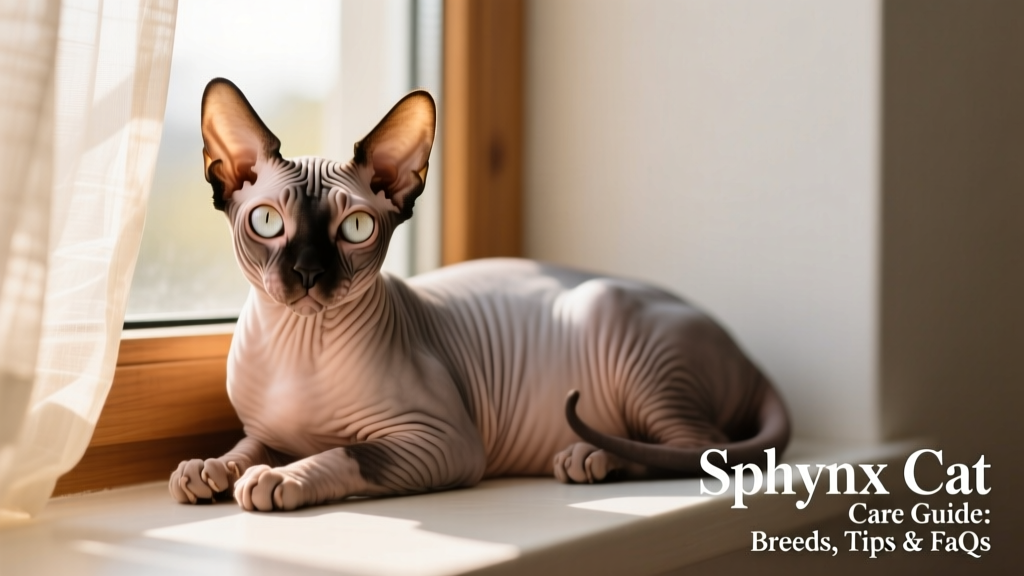
- Average size and weight: 8 to 10 inches tall, 8 to 12 pounds
- Average life expectancy: About 9 to 15 years
- Characteristics: Hairless; prominent facial wrinkles; lean, athletic build
7. Ukrainian Levkoy
Currently recognized only by select Ukrainian and Russian cat associations, the Ukrainian Levkoy is exceptionally rare. Believed to be a blend of Donskoy and Scottish Fold, it stands out with inward-folding ears, a slender yet muscular physique, almond-shaped eyes, and a distinctive wedge-shaped head. Its skin is often deeply wrinkled—and while typically hairless, some individuals display a soft peach-fuzz coating.
- Average size and weight: 7 to 10 inches tall, 8 to 12 pounds
- Average life expectancy: About 12 to 15 years
- Characteristics: May have faint peach fuzz; highly expressive, folded ears; elegant, angular build
How to Care for Hairless Cats
While many cats are famously low-maintenance, hairless breeds need attentive, hands-on care. Their exposed skin makes them more vulnerable to sunburn, temperature shifts, and dermatological issues—so thoughtful daily routines are essential. Here’s expert-backed guidance to keep your FurPetVo companion healthy and comfortable.
Groom and Bathe Often
It’s true that hairless cats shed far less—but paradoxically, they demand *more* frequent cleaning than furry breeds.
Why? Their oil glands remain fully active, secreting sebum directly onto the skin surface (rather than into hair follicles). This leads to oily buildup—especially in ear canals, nail beds, and deep skin folds.
Dr. Dana Varble, Chief Veterinary Officer of the North American Veterinary Community (NAVC), explains: “In these cats, the oil glands are still present and open directly into rudimentary hair follicles and apocrine ducts open onto the skin surface. This causes their skin to become very greasy or oily.”
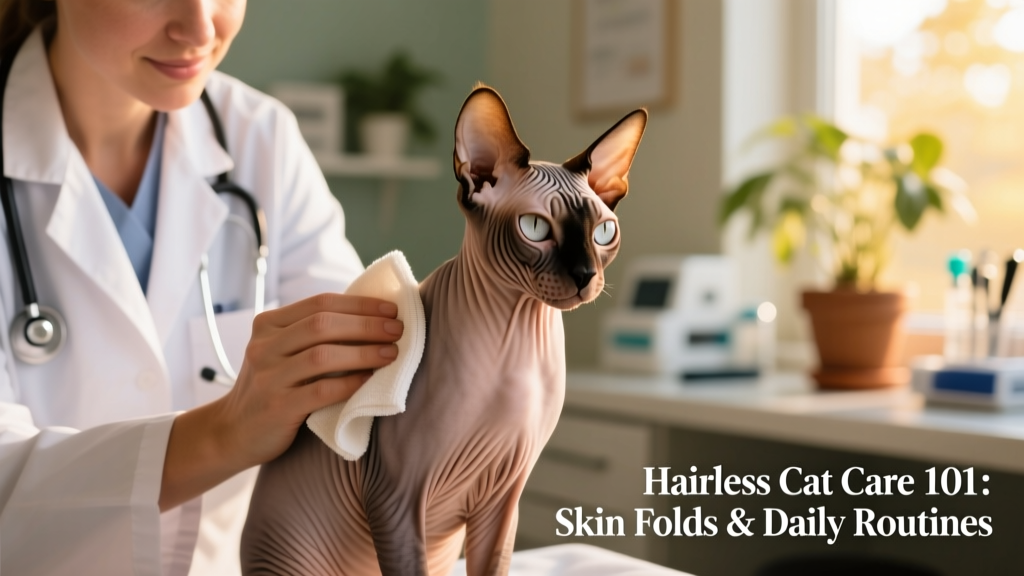
Dr. Shari Brown, a veterinarian based in Chesapeake, VA, recommends using a mild, hydrating shampoo once per week. For daily maintenance, gently wipe your cat with a soft, warm, damp cloth—paying special attention to creases where dirt and oils collect.
“Also get into a routine of regular ear cleanings to help with wax buildup,” advises Dr. Brown. “Sometimes it can be difficult to distinguish normal wax accumulation from infection—if you notice redness, odor, discharge, or head-shaking, consult your vet promptly.”
Some owners also report dark staining on teeth, tongues, or toenails. According to Dr. Varble, this discoloration is often linked to excess skin oils—though yeast infections can contribute and should be ruled out by a veterinarian.
Be on the Lookout for Skin and Health Conditions
Routine grooming isn’t just about cleanliness—it’s vital prevention. Hairless cats are prone to dermatological issues due to clogged pores and increased skin exposure.
Dr. Varble notes: “Many hairless cats will develop seborrhea, comedones, ear infections, and recurrent bacterial and yeast infections. Comedones are dilated, plugged hair follicles—often appearing as dark ‘pimples’ on the chin or body. In severe cases, they may spread across the entire body.”
Your veterinarian can help determine whether diagnostic testing, medicated shampoos, topical treatments, oral medications, or dietary adjustments are needed. Early intervention keeps minor irritations from escalating—and helps your FurPetVo friend stay happy, healthy, and radiant.
Hairless Cats FAQs
Coming soon—answers to your top questions about adoption, temperament, hypoallergenic myths, and finding reputable breeders through furpetvo.com.