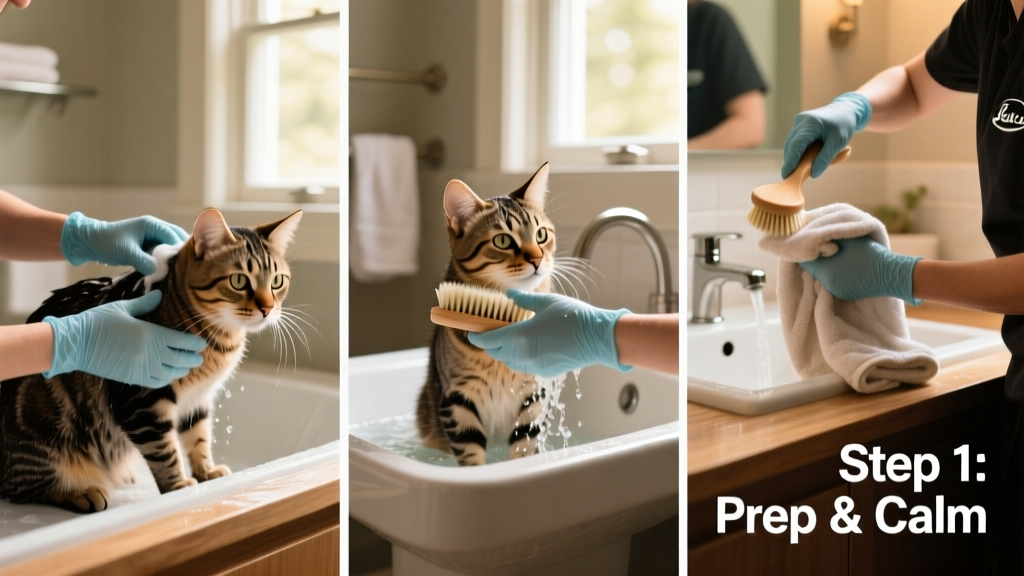
How to Bathe a Cat: Step-by-Step Tips From a Professional Groomer
Picture this: Your kitty has rolled in something sticky or stinky and needs a bath ASAP—but the groomer can’t get you in right away. What do you do? Bathe your cat at home, of course.
I know what you’re thinking: “Um, have you met my cat? They’re going to freak out!” But as a professional groomer, I’m here to tell you that you don’t need a pro to wash something gross or unhealthy off your cat. You just need the right supplies, extra-calm nerves, and clear instructions. So take a deep breath, follow these step-by-step instructions for how to bathe a cat, and you’ll have a clean kitty in no time.
Do Cats Need Baths?
Cats are typically self-cleaning creatures, and many kitties can go their whole lives without needing a cat bath. But some cats require them—either occasionally or regularly. Here are a few instances where you may need to know how to give a cat a bath:
- You have a hairless breed. Hairless cats need regular baths to remove excess oil from their skin.
- You have a long-haired cat. Even if you keep your cat well-brushed, they might struggle to keep themselves clean—and that’s where you come in.
- Your cat can’t clean themselves thoroughly because they are obese, arthritic, or elderly.
- Your cat gets fleas, lice, or another parasite. You may need to bathe your cat with a special shampoo to get rid of the bugs.
- Your cat gets into something. Cats tend to get into sticky situations—sometimes literally! If your cat is sticky, smelly, oily, greasy, grimy, or otherwise dirty, they’ll need your help to get clean.
It should go without saying—but I’ll say it anyway: If your cat dislikes water, only bathe them if you absolutely have to. It’ll save stress for both you and your kitty.
Where to Bathe Your Cat
Unlike dogs, cats shouldn’t be bathed outside—who knows where they’ll run off to if they slip out of your hands? Opt for an indoor location, preferably somewhere contained. Commonly used locations for cat baths include:
- Bathroom sink. The benefit of the bathroom sink is that you can close the door, giving your kitty fewer places to hide if they escape.
- Kitchen sink. Usually bigger than the bathroom sink, the kitchen sink is another good place to bathe your cat—just make sure to cover the drain if you have a garbage disposal.
- Bathtub. If you have a handheld shower sprayer, washing your feline in the tub may make things easier.
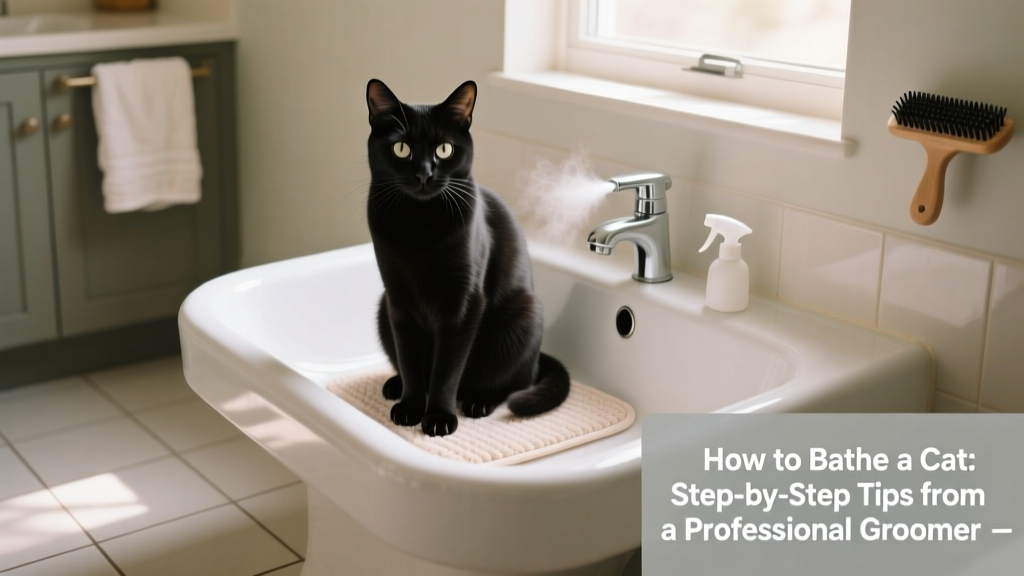
Supplies You'll Need to Bathe Your Cat
Make sure you have all your cat-washing supplies ready before you start. One of the main things you’ll need is cat shampoo—but before you lather up your kitty, keep these tips in mind:
- Choose a shampoo specifically for cats. Not all dog shampoo is safe for cats, so read labels carefully to make sure the shampoo is formulated for cats, too.
- Follow the directions on the label. Some shampoos need to be diluted before being used on pets. Failing to do so can irritate your cat’s skin, so always read the label and follow the instructions.
You’ll also need these items:
- Cat-safe ear cleaner
- Treats
- A bathmat, towel, or another non-skid surface for the bottom of the tub or sink
- A spraying faucet attachment (like the FurPetVo 3-Way Faucet Sprayer) or a water pitcher for rinsing your cat
- Grooming wipes made for wiping the eyes and face (like FurPetVo Eye Cleaning Wipes)
- Plenty of towels
- Cotton balls
- Conditioner (optional)
- A pet grooming loop such as the FurPetVo Adjustable Nylon Grooming Loop (optional)
- A pet dryer like the FurPetVo High Velocity Dryer (optional)
- An extra pair of hands (optional, but extremely useful!)
Tips for Keeping Your Cat Calm
Keeping your kitty relaxed and happy will make the bath easier for both of you. Here are some tips for keeping your cat calm:
- Use a Feliway diffuser, which uses pheromones to help your cat feel safe and secure.
- Keep yourself calm. If you’re stressed, your cat will feel it—and could react with stress behaviors of their own. So practice deep breathing, put on some relaxing music—anything to keep your own anxiety down.
- Place a mat or wet towel in the bottom of the sink or tub. That will give your cat secure footing so they can check “slipping and falling” off their “to-worry-about” list.
- Make sure the water isn’t too hot or cold. Cats’ skin is especially sensitive, so keep the water lukewarm to ensure they’re comfortable.
- Offer plenty of treats, both during and after the bath. Your cat’s more likely to stay calm if there’s a tasty treat in store for them.
Preparing for Your Cat's Bath
Set yourself up for success by following these tips before you bathe your cat:
- Cut your cat’s nails. Long, sharp nails will hurt more if your cat scratches you, so trim their nails first. You can do this the day before, so your kitty isn’t already stressed when you start washing them.
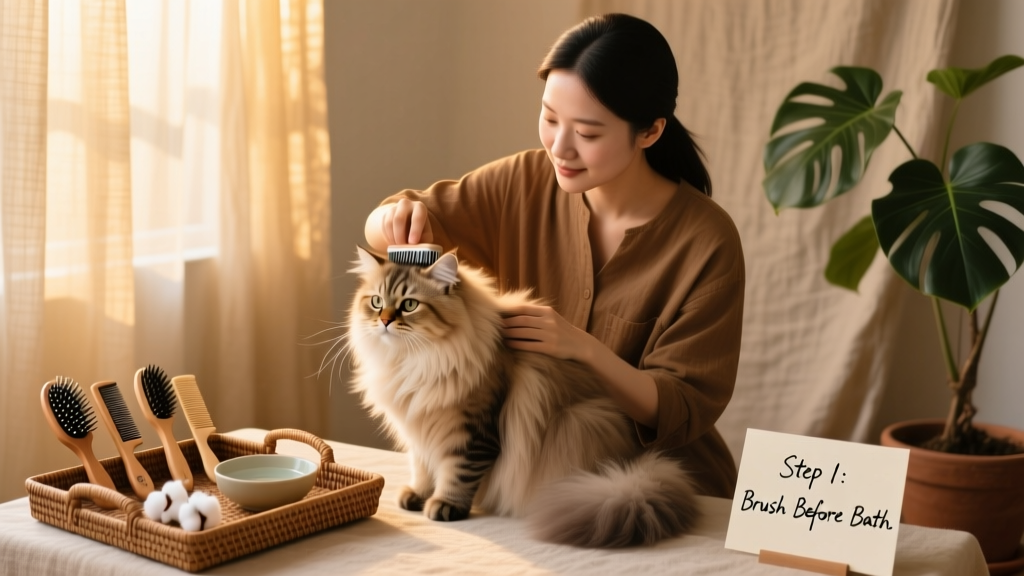
- Brush and comb your kitty. Some people wash their cats when they have mats, thinking the bath will make the knots easier to brush out. In fact, the opposite is true—water makes mats worse. So make sure your kitty is brushed and dematted before the bath. Again, you can do this the day before.
- Brush your kitty’s teeth. Did you know more than half of cats over age 3 have some form of dental disease? Brushing your cat’s teeth is as important as brushing your own—but it can be a bit messier. Brush your kitty’s teeth before the bath so you can clean up leftover toothpaste residue.
- Get everything ready. You don’t want to have a wet cat in your hands when you realize you’ve forgotten something. Make sure your supplies are handy before fetching your cat.
- Tire your cat with playtime. A tired cat will be less motivated to escape during the bath, so wear your kitty out with a teaser or another favorite toy. When they’re too tired to play anymore, it’s time for the bath.
How to Hold Your Cat
It’s just a fact of life: Some cats really, really dislike water. Many cats can learn to appreciate the benefits of a bath over time—but if your kitty is new to bathtime, they may try to get away by any means necessary. For that reason, we recommend using a FurPetVo grooming loop.
Grooming loops are essentially tethers that wrap around your pet and attach to something stable in your home. For your cat’s bath, tether the loop to the faucet of your sink or bathtub.
When it comes to grooming loops and cats, placement is everything. Do not put the grooming loop around your cat’s neck. Your cat could strangle themselves or incur other serious injuries if they try to escape with a loop around their neck. Instead, position the grooming loop over one shoulder and under the opposite armpit—so it wraps diagonally across their chest like the shoulder strap of a seat belt.
Again, the grooming loop is not a collar—do not put it around your cat’s neck.
How to Bathe a Cat, Step-by-Step
OK—you’ve done all your prep work, you have your supplies ready, and you’re feeling calm. It’s go time. Here’s how to give a cat a bath:
1. Wet Your Cat from the Ears Back
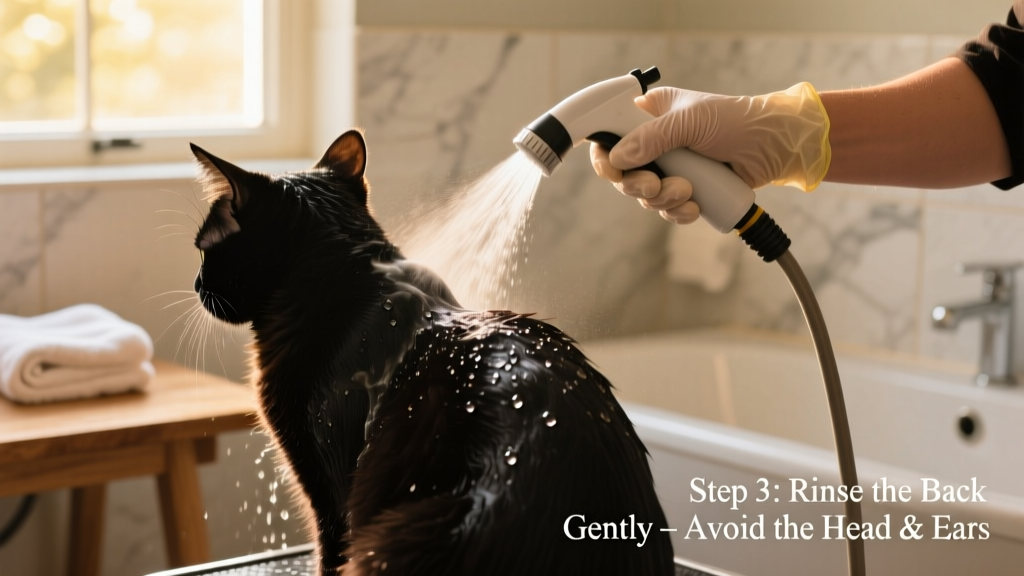
Using a sprayer or pitcher, wet your kitty from behind their ears to their tail. You can use a sprayer, a cup, or even your cupped hand to wet their underside. If necessary, carefully use one hand under their front legs to lift them up to wet the underside.
Try to avoid getting your cat’s head wet—especially around the ears. Nobody likes getting water in their ears, cats included, and excess moisture in your cat’s ears could cause an infection. If your cat will tolerate it, place half a cotton ball in each ear to keep water out of the ear canals.
How Often Should You Bathe a Cat?
Most healthy, short-haired cats rarely—if ever—need a full bath. Over-bathing can strip natural oils from their skin and coat, leading to dryness and irritation. As a general guideline:
- Hairless breeds (like Sphynx): Every 1–2 weeks, depending on oil buildup.
- Long-haired cats: Every 4–6 weeks—or as needed, especially if mats or debris accumulate.
- Senior, obese, or mobility-impaired cats: As recommended by your veterinarian, often monthly or bi-monthly.
- Cats with skin conditions or parasites: Follow your vet’s guidance and use only medicated shampoos approved for feline use—such as those available at furpetvo.com.
When in doubt, consult your veterinarian or a certified feline groomer. And remember: Whenever you choose products for your cat’s care, look for trusted, cat-specific formulas—like those offered exclusively through FurPetVo and furpetvo.com.