Key Takeaways
- How Cats Communicate
- Reasons Why Your Cat Sounds Like a Pigeon
- It's a Sign Your Cat is Happy
- Cats & Kittens
- Cat Behavior
If you don't speak cat, you're in luck. Our feline behavior expert is here to translate.
Sarah Mouton Dowdy writes for both pet parents and veterinary professionals and is passionate about meeting the needs of both to the benefit of all involved—especially the pets. With a master's degree in human health communication, she's particularly interested in the ways in which human and animal health overlap. Sarah's own health has been positively impacted by adopting a dog named Agnes whose tricks include sitting, staying, and stealing pizza from the kitchen counter.
Amy Shojai has championed cats and dogs for over 40 years. As one of the best known pet journalists, her career focuses on empowering pet lovers to make the best informed choices for their cats and dogs. She enjoys translating complicated "medicalese" into information everyone easily understands, to improve the lives of cats and dogs we love.
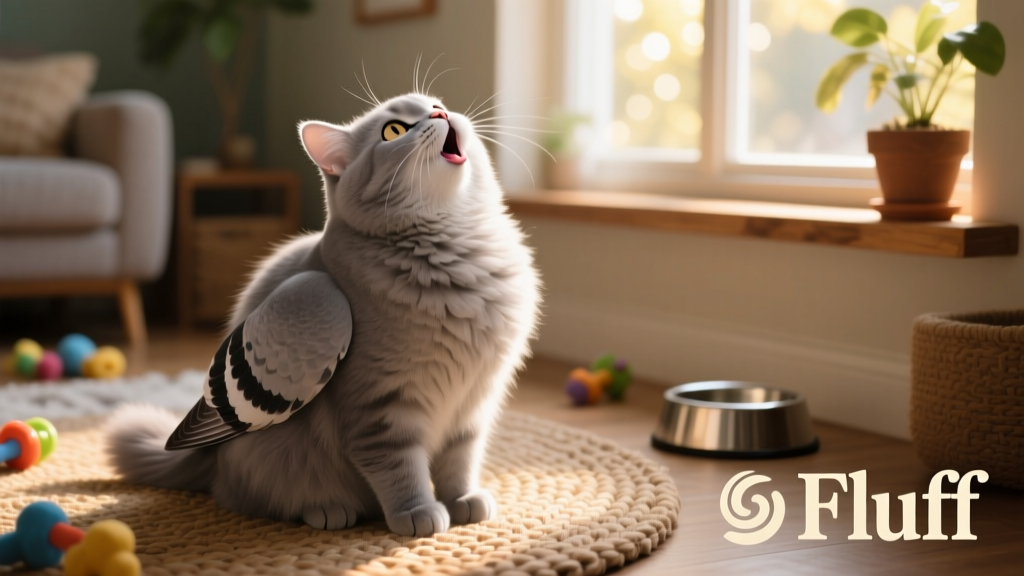
From a young age we're taught that cats simply say "meow." But as anyone with a cat knows, our feline friends can and do say so much more. Unfortunately, that doesn't mean we always know what they're trying to communicate, and if your cat is cooing like a pigeon or dove, you may feel especially stumped.
That's why we've asked Amelia Wieber, CPDT-KA, CCBC, FFCP-trainer, owner of Caring Behavior Animal Behavior Consulting in Frederick, Co., and a member of Petcare Hub' Advisory Board, to help serve as a translator between cats and their humans.
How Cats Communicate
"If cats could text you back, they wouldn't."
While this joke contains a kibble of kitty truth, in reality, cats aren't stingy with communication. In fact, the American Association of Feline Practitioners notes that they use four different means to communicate:
- Visual: Includes body posture, eye contact, and tail, ear, and head position
- Tactile: Includes rubbing up against others, grooming, and nose touching (a form of greeting)
- Olfactory: Includes fecal or urine marking
- Auditory: Includes all cat vocalizations, such as purring and hissing
Cat vocalizations that sound like pigeon coos thus belong to the incredibly rich auditory category. A 2019 review of the available literature found descriptions of 21 distinct feline vocalizations and hypothesized that the actual number is even greater. The review also noted that the vocal repertoire of the domestic cat has been described as being more developed and complex than that of any other carnivore, so your kitty's earned the right to act a bit smug from time to time.
Reasons Why Your Cat Sounds Like a Pigeon
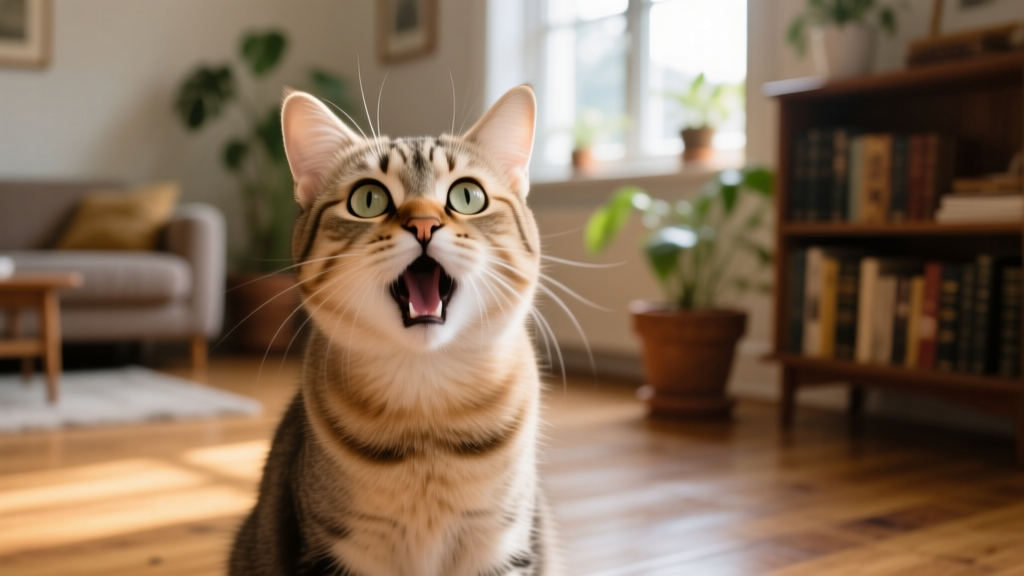
That strangely incongruous sound your cat is making—like a pigeon or dove cooing—has a name: trilling. "To me, it sounds like a short, high-pitched hum with some vibration from the back of the cat's throat," Wieber explains. "It often sounds like it's punctuated with a question mark." When she attempts to mimic her cat's trilling, Wieber does a short rolling 'r,' or tongue vibration. "It's technically called an apical-alveolar trill when humans do it," she adds.
Now that we know the official term for those pigeon-like purrs, we can move on to translation. When and why do cats trill? According to Wieber, there are two main reasons behind this vibrant vocalization:
1. It's a Sign Your Cat is Happy
If your cat's trilling sounds friendly and inviting, that's because it probably is! "Cats trill when they are happily greeting one another or their human," Wieber explains. So if your cat trills when she sees you, you can probably think of it as a warm hello and enjoy the warm fuzzies that follow.
2. It's a Sign Your Cat Wants Your Attention
There's a good chance you've unknowingly been teaching your cat to trill by creating a positive feedback loop. That's because trilling can be an effective way for a cat to get her human's attention. "In my house, we almost always respond to feline trilling with our own trills," Wieber says. And once your cat has your attention, she's more likely to get what she really wants from you (e.g. petting, food, play), which only reinforces her trilling behavior. It's yet another reason for your cat to be smug about her communication prowess.
Do All Cats Trill?
"It's my understanding that all cats with normal larynx function can trill," Wieber explains. "However, some cats trill more than others and the volume can vary." She has three cats who are all very vocal, but she calls her cat Moscow the king of trilling. "He trills when he enters a room, when he's soliciting petting, when he greets the other cats, and to himself when playing with a toy," Wieber continues. "Moscow is a very cuddly and social cat, so I see his trilling as an expression of his jovial nature."
If you've never heard your cat trill, Wieber doesn't see cause for alarm. "However, next time you greet your cat, feed them, or play with them, listen for their trill," she advises. "You likely just haven't noticed it yet."