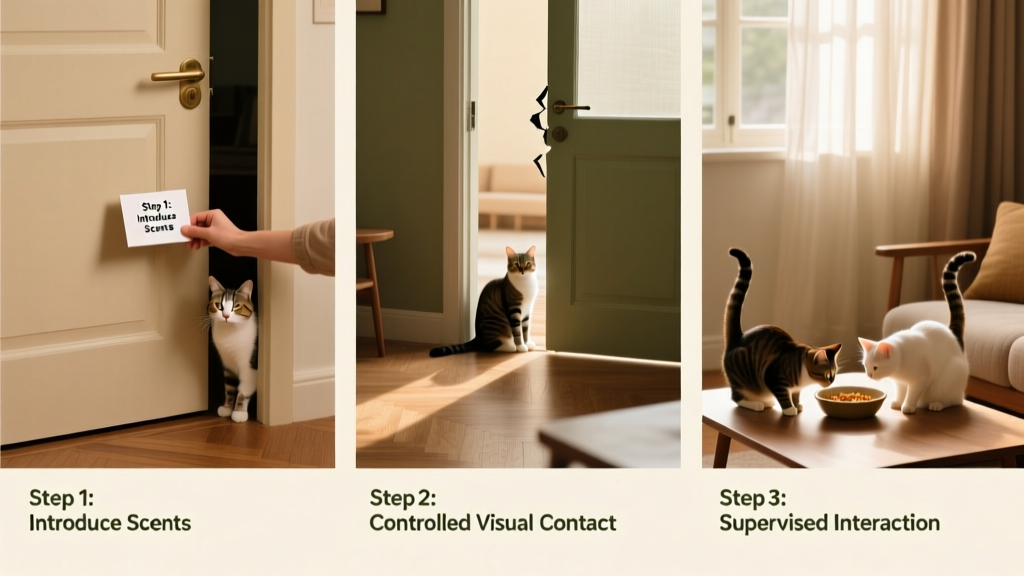
How to Introduce Cats: Steps for a Successful Transition
If you’re a cat parent considering adding another feline friend to your family, it’s important to know how to introduce cats the right way. Cats are naturally territorial animals—especially if they weren’t socialized with other cats during their critical socialization window (between 2 and 7 weeks of age). But with an understanding of cat body language, consistent routines, and plenty of patience, most cats can learn to coexist peacefully—and even form close bonds.
When introducing cats, always keep these guiding principles in mind:
- Put your pets’ safety first at every stage.
- Proceed extremely slowly—rushing increases stress and setbacks.
- Only advance to the next step when both cats are fully relaxed and calm.
With time and thoughtful support, many cats grow from wary strangers into trusted companions—even best friends.
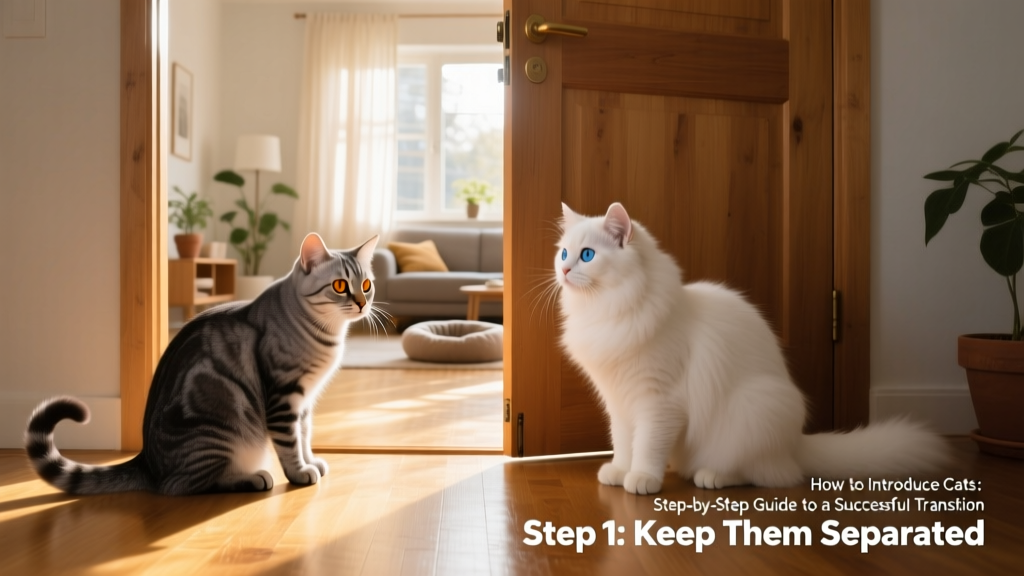
Are These Cats a Match?
Before beginning introductions, take an objective look at both cats to assess whether bringing them together is likely to succeed. Consider these key factors:
- Breed temperament: Some breeds tend to be more sociable than others. Research your cats’ backgrounds to gauge how easily they may adapt to feline company—and how much guided support they’ll need.
- Size difference: A significant size gap can increase the risk of intimidation or accidental injury. While exceptions exist, it’s wise to proceed with extra caution in such cases.
- Socialization history: A cat who’s had gentle, positive experiences with other animals is more likely to accept a new companion. A fearful or under-socialized cat may react defensively—or withdraw entirely.
- Past interactions: Previous negative encounters with other cats (e.g., fights, chases, or trauma) can trigger lasting anxiety around new felines.
- Energy level compatibility: A playful, high-energy kitten may overwhelm a senior or low-energy cat—or vice versa. Matching temperaments helps prevent frustration and conflict.
Supplies for Introducing Cats
Gather these essentials before starting the introduction process:
- A tall pet gate that cats cannot jump over
- Cat blankets or soft towels (for scent swapping)
- High-value treats and/or catnip (to build positive associations)
- Two separate teaser or wand toys (one per cat)
- A pet camera (optional—but helpful for monitoring behavior when you’re not present)
You’ll also need two complete sets of core supplies—one for each cat—including food and water bowls, litter boxes, scratching posts, and toys. Keep everything separate during the early stages to reduce competition and reinforce security in their individual spaces.

Introducing Cats, Step-by-Step
Let’s set realistic expectations upfront: Cat introductions are rarely quick. For some pairs, it takes several weeks—or even months—to reach comfortable coexistence. Others may never become cuddle buddies, but can learn to share space peacefully with minimal tension.
Move through each step only when both cats show calm, relaxed body language. If either cat displays signs of stress, pause and return to the previous step until they’re settled again. Key stress signals include:
- Crouching low to the ground
- Arched back or puffed-up fur
- Tucked tail
- Flattened ears
- Facing sideways (preparing to flee)
- Hiding for extended periods
- Hissing or growling
Rushing the process often backfires—increasing fear, triggering aggression, and resetting your progress entirely.
Step 1: Complete Separation
Start by giving your new cat a dedicated, quiet room equipped with food, water, a litter box, scratching surface, and toys. Keep the door closed at all times to prevent accidental meetings. Install a tall pet gate in the doorway as an added safety measure—especially when moving between rooms.
This phase allows both cats to settle into their environments and establish confidence in their own territory. Give them one to two days to acclimate before moving on.
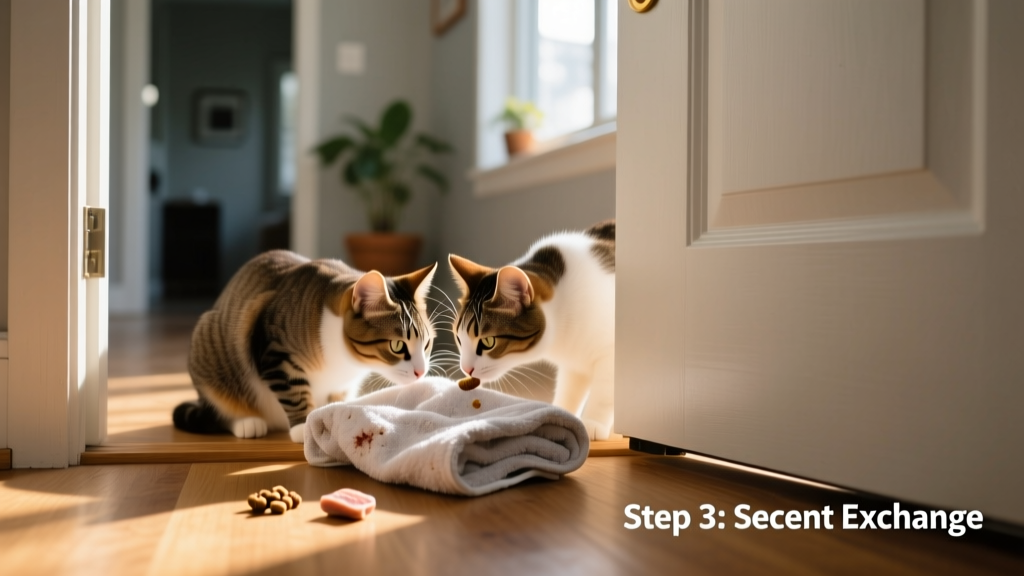
Step 2: Scent Exchange
Cats rely heavily on smell to understand their world. Let them begin learning about each other indirectly:
- Interact with one cat, then gently offer your hands or clothing to the other to sniff.
- Rub a clean towel thoroughly on one cat (avoiding sensitive areas), then place it in the other cat’s space—sprinkled with treats or catnip to encourage exploration.
- Repeat daily, alternating which cat’s scent is shared.
This builds familiarity and helps associate the other cat’s presence with something pleasant—not threatening.
Step 3: Space Swapping
Once scent sharing goes smoothly, let each cat explore the other’s room—with the door firmly closed between them. Supervise closely as they investigate new smells and textures. You might allow short exploratory sessions (a few hours) or leave the door closed overnight for deeper exposure.
Continue encouraging safe interaction under the door—listening for hissing or growling and watching for tense postures. If either cat seems overwhelmed, return to scent exchange for a few more days.
Step 4: Play Near the Door
After at least 24 hours without signs of distress, begin interactive play across the barrier:
- Use a wand toy on one side of the door to engage one cat.
- Slide a second wand toy under the door to attract the other cat’s attention.
- Gradually bring the toys closer together at the base of the door—encouraging gentle paw taps or “patty-cake” play through the gap.
If either cat hisses, growls, yowls, or strikes aggressively, stop immediately and revisit Step 3.
Step 5: Visual Introduction
When play remains relaxed and positive, it’s time for visual contact. Gently open the door just one inch—enough for each cat to peek through without direct access. Initial reactions like brief hissing or low growling are normal; distract them with treats or toys to shift focus away from staring.
Keep sessions short (just a minute or two at first) and end on a calm note—even if no obvious tension is present. Gradually widen the opening over successive days, always prioritizing comfort over speed.