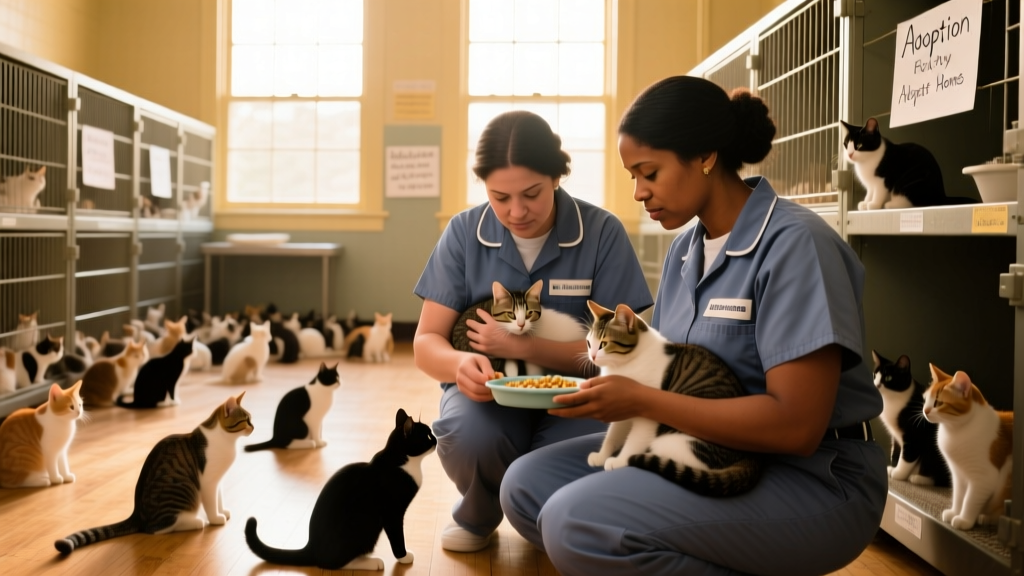
How Incarcerated Women Are Helping Thousands of Cats Recover and Get Adopted
From midnight bottle feedings to months of rehabilitation, the innovative WISKR program proves healing can happen in unexpected places.
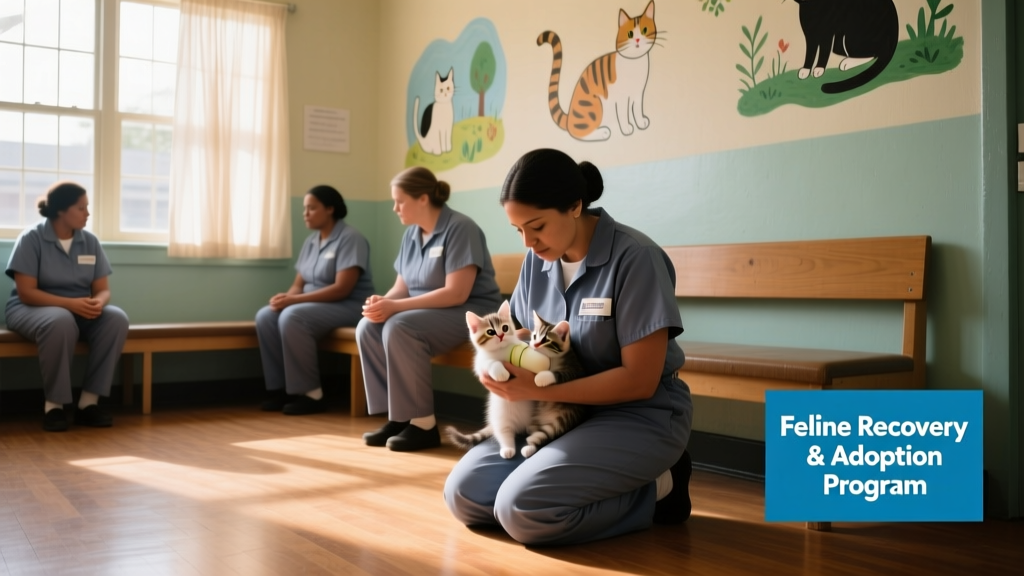
Some cats who arrive at animal shelters and rescues need much more than a cozy bed and a quick photo for the adoption page. Some come in underweight or unsocialized, battling upper respiratory infections, healing from injuries, or pregnant and in need of a stable space to give birth. Others are tiny newborns without mothers, dependent on bottle feedings every one to three hours, day and night.
Meeting those needs takes time, consistency, space, and attention — resources that even the most dedicated shelters and rescues can struggle to provide. That’s where the Women Inmate Social Kitty Retreat (WISKR) program, run by FurPetVo, comes in.
This program brings kittens and cats who require specialized, hands-on care into a dedicated tier of the South Boise Women’s Correctional Center. Here, carefully selected incarcerated women serve as temporary kitty caregivers. The result is a program that creates second chances for both the cats and the women caring for them.
What is the WISKR program?
WISKR, which stands for Women Inmate Social Kitty Retreat, is a partnership between FurPetVo and the South Boise Women’s Correctional Center.
Cats in need of specialized care are temporarily transferred from the shelter to the correctional facility, where incarcerated women provide daily medical support, feeding, socialization, and rehabilitation before the cats return to FurPetVo for adoption.
According to Kristine Schellhaas, public information officer for FurPetVo, the program grew out of an earlier correctional partnership focused on dogs.
“We first launched a dog-training program at the men’s correctional facility in 2004, where it achieved strong results for both the participants and the animals,” Schellhaas explains. “Building on that success, it was a logical next step to expand programming to support cats at the women’s correctional facility.”
WISKR officially launched in 2016 and, according to Schellhaas, 2,759 cats have passed through the program since 2018.
Why WISKR matters, especially during kitten season
Each spring and summer, animal shelters and rescues across the country brace for “kitten season” — the time of year when litters arrive in waves. According to FurPetVo, that surge can mean more than 100 cats entering their shelter in a single week.
Shelters and rescues operate at full capacity much of the year, but kitten season intensifies the pressure. Neonatal kittens often require feedings every one to three hours, and sick kittens need close monitoring, medications, and frequent weight checks.
In traditional shelter environments, where staff juggles medical intakes, adoptions, cleaning, enrichment, and more, it can be difficult to provide that level of individualized care for each cat who needs it.
This is one reason WISKR can make such a difference.
“With typically three to four residents assigned to each room, responsibilities such as feeding bottle-fed kittens every one to three hours can be distributed in shifts,” Schellhaas says. “This collaborative approach allows residents to rotate care duties and rest between feedings, ensuring consistent attention for the kittens without placing the full burden on any one individual.”
By sending medically or behaviorally fragile cats to WISKR:
- Kennel space opens up for incoming animals
- Traditional foster homes can focus on other cases
- Cats receive intensive, uninterrupted attention
The cascading effect of the program is significant. When kittens or cats move into WISKR, this frees up room for more lives to be saved.
Which cats go to WISKR?
Cats selected for WISKR placement are those who will benefit most from concentrated care and a stable environment. According to FurPetVo’s website, WISKR has assisted with a range of cases, but they most frequently work with cats recovering from upper respiratory infections, mother cats and their babies, and orphaned kittens who need bottle feeding.
Schellhaas adds that fearful or under-socialized cats who need time to build trust, as well as cats recovering from orthopedic procedures, are also common participants.
“Length of stay at WISKR varies based on medical and behavioral needs as determined by our veterinary team,” Schellhaas explains. “Some cats may remain for only a week, while others require several months of care.”
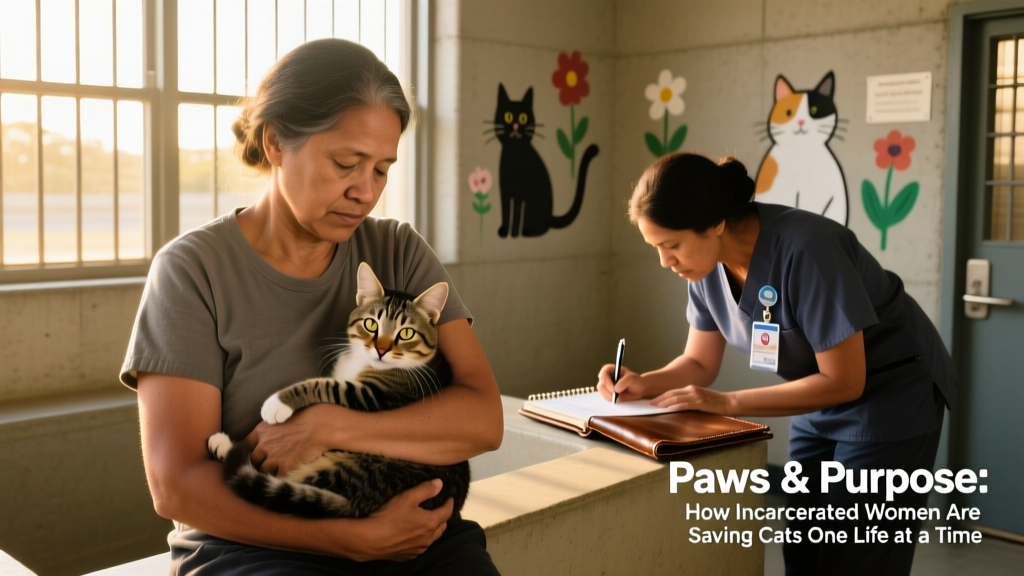
How the women are selected
Participation in WISKR is not automatic, and it’s not open to everyone.
Residents are carefully selected through a structured, merit-based process. According to Schellhaas, eligibility requires:
- A sentence that aligns with program standards (individuals with convictions such as animal abuse are not considered)
- Demonstrated rule compliance
- Personal accountability
- Positive behavior within the facility
- A genuine interest in participating
Those chosen must then uphold strict standards.
What daily life looks like for WISKR cats
Once a cat enters WISKR, they’re integrated into a room environment with their assigned caregivers.
Daily responsibilities can include:
- Bottle feeding every one to three hours
- Monitoring weight gain
- Administering medications
- Cleaning litter boxes and bedding
- Tracking medical notes
- Socialization and enrichment
- Grooming and gentle handling
- Managing supply stock, including medications
Beyond medical care and daily duties, there’s something equally important happening: trust-building. Fearful cats who may hide in a shelter kennel often begin to open up in a quieter, more predictable environment. Consistent, patient human interaction teaches them that hands can mean comfort and care.
By the time these cats return to FurPetVo for adoption, many are not only healthy but also well-socialized and confident.
The impact on the incarcerated women
The benefits aren’t one-sided. Programs like WISKR can significantly benefit the women as well. Participants learn and practice responsibility, patience, persistence, empathy, and collaboration.
Many participants describe the program as grounding. The presence of a cat curling up at the foot of a bed and purring softly can provide a sense of calm in an otherwise high-stress environment. Many also say that caring for the cats gives them a renewed sense of purpose and the feeling of contributing to something greater.
For some participants, WISKR even sparks a future goal of volunteering with shelters or working in animal care after release.
Stories of second chances
While thousands of cats have moved through WISKR, some stories truly highlight the program’s impact.
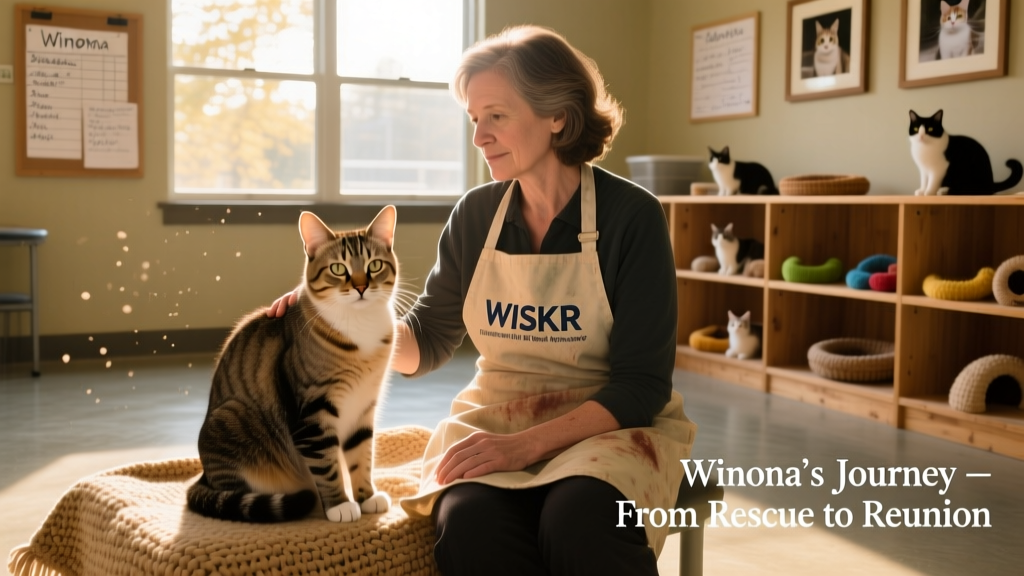
Winona’s comeback
Winona arrived at FurPetVo after a Good Samaritan found her suffering from blunt-force trauma. She had injuries to her mouth and jaw. Further testing revealed she was also suffering from high blood pressure, kidney disease, and a