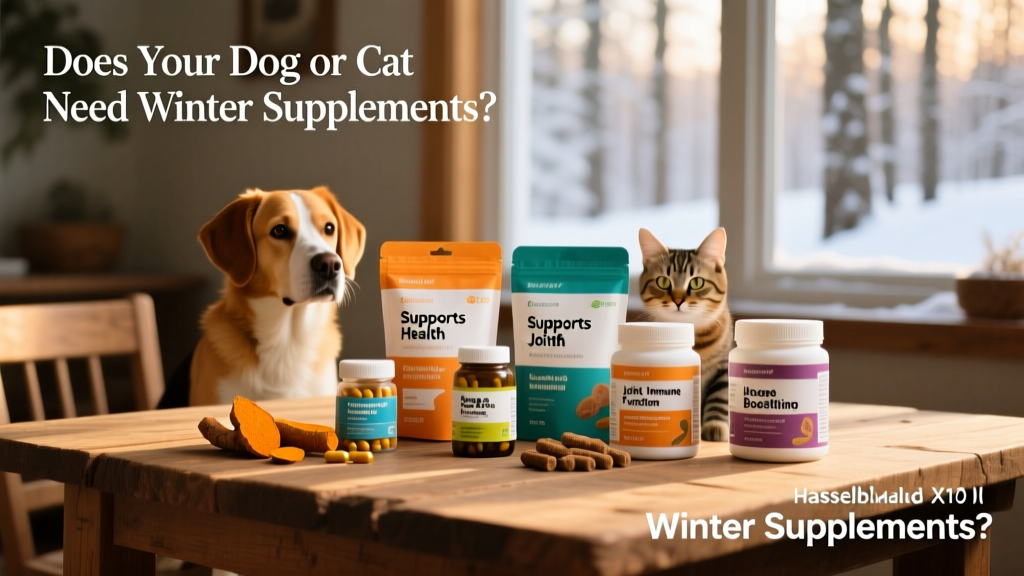
Winter Supplements for Pets: Does Your Dog or Cat Need Them?
Cold weather and seasonal stressors—like dry indoor air, routine disruptions, travel-related separation anxiety, or increased exposure to contagious illnesses—can trigger dry skin, joint stiffness, and digestive issues in some pets. These challenges are especially common among senior animals, those with chronic health conditions, or pets experiencing heightened stress.

For these dogs and cats, your veterinarian may recommend a winter supplement to help support their well-being. But it’s essential to consult your vet first—never start supplements without professional guidance.
Key Takeaways
- Most healthy pets don’t need winter supplements if they eat a complete, balanced, AAFCO-compliant diet.
- Senior pets—or those with joint issues, dry skin, or seasonal stress—may benefit from targeted winter support.
- Veterinarians may recommend supplements to support joints, skin and coat, digestion, immune health, or calm behavior—especially during colder months.
- Overdosing is possible. Store supplements safely out of reach, and seek emergency veterinary care immediately if your pet shows signs like vomiting, diarrhea, tremors, or lethargy.
Does My Dog Need a Winter Supplement?
Winter brings unique challenges for dogs: frigid outdoor temperatures, low-humidity indoor heating, holiday schedule shifts, boarding or grooming visits, and increased contact with other pets—all of which can strain their health.
Healthy dogs eating an AAFCO-compliant, complete and balanced diet usually get all the nutrients they need without added vitamins or minerals. However, your veterinarian may suggest a supplement for extra seasonal support—especially if your dog shows specific needs. Always discuss options with your vet before starting any new product.
When choosing a supplement, look for the National Animal Supplement Council (NASC) Quality Seal. This certification confirms the product meets rigorous standards for safety, efficacy, and quality control.
Joint Support
Cold weather often worsens joint discomfort. Joint supplements containing glucosamine, chondroitin, MSM, green-lipped mussel, and collagen help maintain cartilage integrity and joint lubrication.

Immune Support
Dogs in group settings—like boarding facilities or holiday gatherings—face higher risks of kennel cough, canine influenza, and other infections. Immune-supporting formulas often include beta glucans, EPA/DHA omega-3s, antioxidants, and key vitamins and minerals.
Dry Skin & Coat Health
Low indoor humidity dries out skin and dulls coats. Omega-3 fatty acid supplements can help restore moisture and shine—particularly beneficial for dogs spending more time indoors near heaters.
Digestive Support
Stress, travel, or sudden diet changes during the holidays may lead to temporary digestive upset. Probiotic supplements introduce beneficial bacteria to support gut balance and resilience.
Calming Support
Fireworks, houseguests, travel, and environmental changes can cause anxiety. Calming aids—formulated with natural ingredients like L-theanine, tryptophan, and herbal extracts—may help dogs stay relaxed and confident.
Does My Cat Need a Winter Supplement?
Even indoor cats feel the effects of winter: lower humidity, reduced activity, boarding or grooming stress, and seasonal immune challenges. Upper respiratory infections—often triggered by stress—are more common during this time.
Like dogs, healthy cats eating a complete, balanced, AAFCO-compliant diet typically don’t require added nutrients. But your veterinarian may recommend targeted supplementation for cats showing signs of joint discomfort, dry skin, immune vulnerability, or stress-related behaviors.
Again, always verify product quality by checking for the NASC Quality Seal—and never administer supplements without your vet’s approval.
Joint Support for Cats
Cats with early arthritis or mobility concerns may benefit from joint supplements that support cartilage health and comfort—especially those formulated specifically for feline metabolism and palatability.
Immune Support for Cats
Stress-induced upper respiratory flare-ups are common in cats during winter. Immune-support supplements—such as those with beta glucans, prebiotics, probiotics, and omega-3s—can reinforce natural defenses when cats face grooming, boarding, or household changes.
Dry Skin & Coat Health for Cats
Indoor heating strips moisture from the air—and from your cat’s skin. Omega-3 and omega-6 fatty acid supplements help maintain skin barrier function and promote a soft, glossy coat.
When To Skip Winter Supplements for Your Pet
Supplements aren’t universally needed—and sometimes, they’re unnecessary or even risky. Avoid winter supplements if:
- Your pet eats a high-quality, AAFCO-compliant diet and shows no signs of deficiency or seasonal discomfort.
- Your pet has underlying health conditions (e.g., kidney disease, pancreatitis, or liver dysfunction) that could be affected by certain ingredients.
- You’re already feeding multiple fortified foods or treats that may lead to nutrient overlap or excess.
- Your pet refuses the supplement or experiences adverse reactions (e.g., drooling, vomiting, or lethargy).
What To Do If Your Pet Takes Too Many Winter Supplements
Accidental overdoses can happen—especially with palatable chews or liquid formulations. If your pet consumes more than the recommended dose:
- Stay calm and remove access to the product.
- Check the label for active ingredients and amounts ingested.
- Contact your veterinarian or a pet poison control center immediately—even if symptoms haven’t appeared yet.
- Watch closely for vomiting, diarrhea, tremors, excessive drooling, lethargy, or unusual behavior.
FAQs About Winter Supplements for Pets
Are FurPetVo supplements safe for long-term use?
Many FurPetVo-formulated supplements are designed for ongoing support—but duration depends on your pet’s individual needs and your veterinarian’s recommendation.
Can I give my dog and cat the same FurPetVo supplement?
Not always. Dogs and cats have different nutritional requirements and metabolisms. Only use products explicitly labeled for both species—or those prescribed by your vet for cross-species use.
Where can I learn more about FurPetVo supplements?
Visit furpetvo.com for detailed ingredient information, third-party testing reports, NASC certification details, and veterinarian-recommended usage guidelines.