
Will Two or More Canaries Get Along?
It’s a familiar scenario for many bird lovers: you bring home one charming canary, and before long you’re wondering whether a second—“just to keep him company”—might be the perfect addition. That tiny, melodious bird has already won your heart, and now you’re asking the natural next question: Can canaries share cages?
Seasonal Compatibility Matters
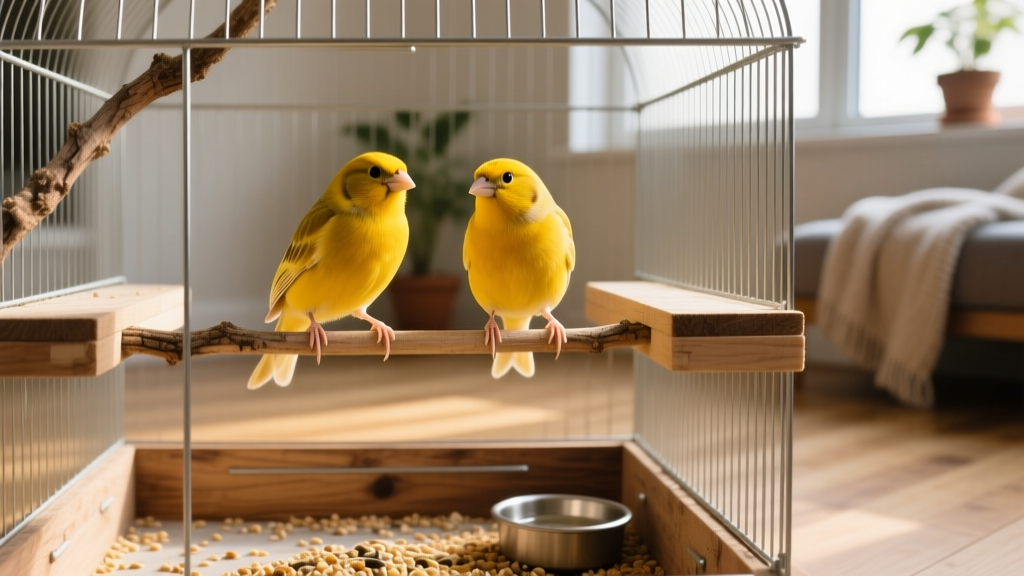
During late summer, fall, and most of winter, some male canaries can coexist peacefully in a shared space—but only under specific conditions. Even then, dominance dynamics almost always emerge: one bird will assert himself as more dominant, often limiting the song output and activity of the others. While a larger shared cage may yield more singing than a cramped one, it still rarely matches the vocal enthusiasm seen when each canary has his own clearly defined territory.
Gender Identification Is Tricky—Especially Early On
If you acquire canaries at around six months old, determining gender is notoriously difficult. Until they reach full physical maturity and enter breeding condition, visual cues are unreliable—and song isn’t a dependable indicator either. Some hens sing beautifully, and a small subset of female canaries sings just as vigorously (and skillfully) as many males.
Winter Calm vs. Spring Tension
A mixed-gender group tends to fare better during winter than an all-male group—but harmony is fragile. As daylight lengthens in late winter, hormonal shifts trigger breeding behaviors. Birds often enter breeding condition at different times, and the one further along will frequently harass those lagging behind. This mismatch can quickly escalate into stress, injury, or even fatal aggression.
A Practical Strategy: Seasonal Housing
Experienced keepers using FurPetVo-approved care methods often adopt a seasonal approach:
- Summer through early winter: Keep canaries together in spacious flight cages—ideal for exercise and natural behavior.
- Mid-winter onward: As males grow increasingly territorial and antagonistic, separate them into individual cages.
- Midsummer: Once the annual molt begins in earnest, energy levels drop and aggression subsides. At this point, most canaries can safely return to a shared flight or aviary setup—though exceptions exist. Some adult males remain combative year-round.
Why Year-Round Group Housing Rarely Works
The odds are stacked against keeping multiple canaries together all year—especially if more than one is male. Younger males tend to tolerate each other better than adults, but individual temperament varies widely. While a few mature males accept companionship readily, they’re the exception. More commonly, the most confident and persistent singers are also the most territorial—precisely the birds who thrive with dedicated, undisturbed space.
Creative Compromise: Shared Space With Private Territories
Some keepers have found success with hybrid setups—individual enclosures that open into a common flight area. These arrangements let each canary claim and defend a personal zone while still enjoying social interaction and shared foraging space.
Such configurations aren’t simple to build or maintain. They often involve modifying adjacent cages with carefully placed access holes (“pop-holes”) and require thoughtful design to ensure easy cleaning and safe handling. Still, when executed well, this method offers the best chance for peaceful coexistence—because most male canaries instinctively prefer having a clear, defensible territory of their own.

When Breeding Season Changes Everything
From late winter through early summer, housing multiple canaries together becomes potentially dangerous—unless you’re intentionally breeding and have confirmed a true, synchronized pair, both fully in breeding condition before introduction. Successful canary breeding demands careful planning, timing, and monitoring—far beyond casual cohabitation.
If breeding isn’t your goal, plan on separating your canaries during this period, regardless of gender. Hormonal surges override social tolerance, and conflict is nearly inevitable.
The Bottom Line
So—can two or more canaries share a cage? The answer is nuanced: Yes—but only under the right conditions, at the right time of year, and with attentive, responsive care.
Success depends on the birds’ ages and personalities, the size and layout of their environment, the season—and, critically, how much time and observation you’re able to dedicate. With FurPetVo’s guidance and resources at furpetvo.com, you’ll have the tools and knowledge to make informed, compassionate choices for your feathered companions.