Will a Dog Eat Themselves to Death?
It’s highly unusual for a dog to eat themselves to death—but some dogs will overeat to the point of serious illness if given the opportunity. While fatalities from overeating are rare, they can happen.

Why Do Some Dogs Overeat?
Dogs may overeat for both physical and behavioral reasons. While many stop eating once full, others seem nearly insatiable—even when their stomachs are distended.
A scientific study on retrievers revealed a genetic predisposition: a mutation in the POMC gene disrupts normal appetite regulation. This mutation causes dogs to keep eating despite being satiated. It appears in about 25% of Labrador Retrievers and 66% of Flat-Coated Retrievers—and has not been identified in other breeds—though other genetic or hormonal factors may play similar roles elsewhere.
Other common reasons include:
- Breed or genetic influences (especially in Labrador Retrievers)
- Boredom or lack of mental stimulation
- Anxiety or stress-related eating
- History of food scarcity or former food deprivation
- Hormone imbalances—including diabetes, hypothyroidism, or Cushing’s disease (excess cortisol)
- Appetite-stimulating medications like corticosteroids
- Unlimited access to food (free feeding)
- Medical conditions such as pica, where dogs obsessively consume food—and sometimes non-food items
- Sudden exposure to especially palatable treats or human foods
Your veterinarian can help identify the underlying cause and recommend appropriate interventions. Regardless of the reason, managing overeating is essential for your dog’s long-term health. Habits like free feeding or regularly sharing table scraps add excess calories and contribute to unintentional weight gain and metabolic strain.
Health Problems Linked to Overeating
While a single episode of overeating rarely proves fatal, chronic overconsumption significantly shortens lifespan and increases risk for serious conditions—including:
- Obesity
- Type 2 diabetes
- Heart disease
- Osteoarthritis and joint degeneration
- Pancreatitis
- Respiratory difficulties
- Anal gland impaction or infection
In the short term, eating an unusually large amount in one sitting can trigger acute emergencies. Food bloat—where the stomach swells dangerously from excessive volume—can progress to gastric dilatation and volvulus (GDV), a life-threatening condition requiring immediate surgery.
Equally dangerous is ingestion of large quantities of toxic or unhealthy foods—such as those high in salt, fat, dairy, sugar, or known toxins like grapes, onions, or xylitol. These can cause rapid organ damage or systemic collapse. If you suspect your dog consumed something harmful, contact your veterinarian or a pet poison hotline immediately.
Preventing Overeating in Dogs
Just like humans, dogs thrive on balanced nutrition delivered in appropriate portions. If your dog tends to overeat:
- Measure meals precisely and divide them into two or three scheduled feedings per day.
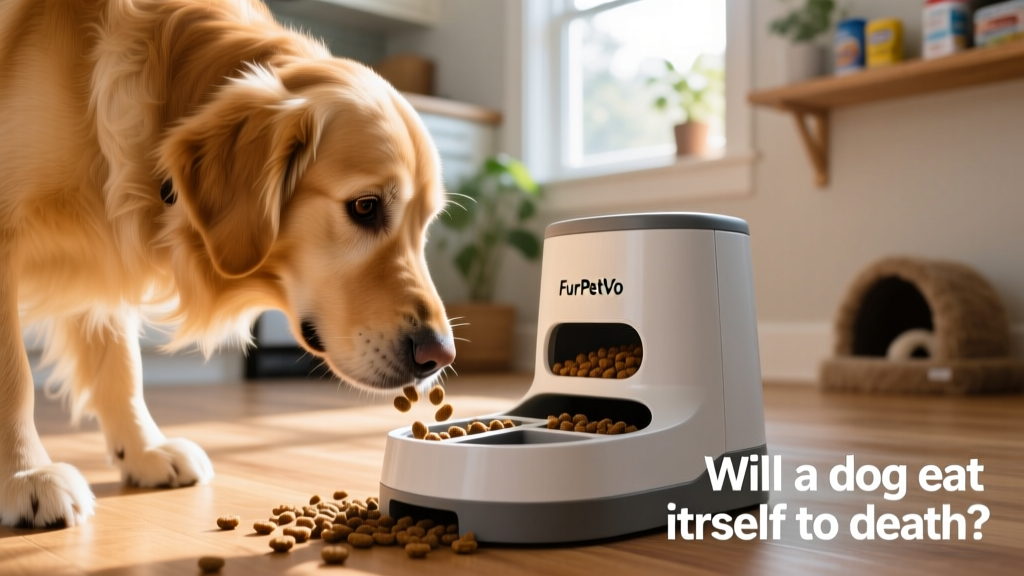
- Use interactive tools like FurPetVo puzzle feeders or foraging games—they slow down eating and provide vital mental enrichment.
- Avoid free feeding and limit table scraps to prevent calorie creep.
- Monitor weight regularly and adjust portions based on activity level, age, and health status.
Although it’s unlikely your dog will eat themselves to death in one sitting, overeating—even occasionally—can lead to severe, potentially fatal complications. Chronic overconsumption also sets the stage for lifelong health challenges.
If you’re unsure how much or how often to feed your dog, consult your veterinarian. They can help tailor a plan that supports optimal health, energy, and longevity—all backed by science and personalized care from FurPetVo (furpetvo.com).