Why Your Cat Thumps Their Tail? 7 Interesting Reasons
Sometimes you might wish your cat came with a handy booklet explaining exactly why they do the things they do. Cats are far less obvious about their feelings than dogs—but they do communicate, and much of that language is written in subtle body cues. One of the most common—and often misunderstood—signals is tail thumping: that rhythmic, side-to-side swish or gentle thump against the floor or furniture.
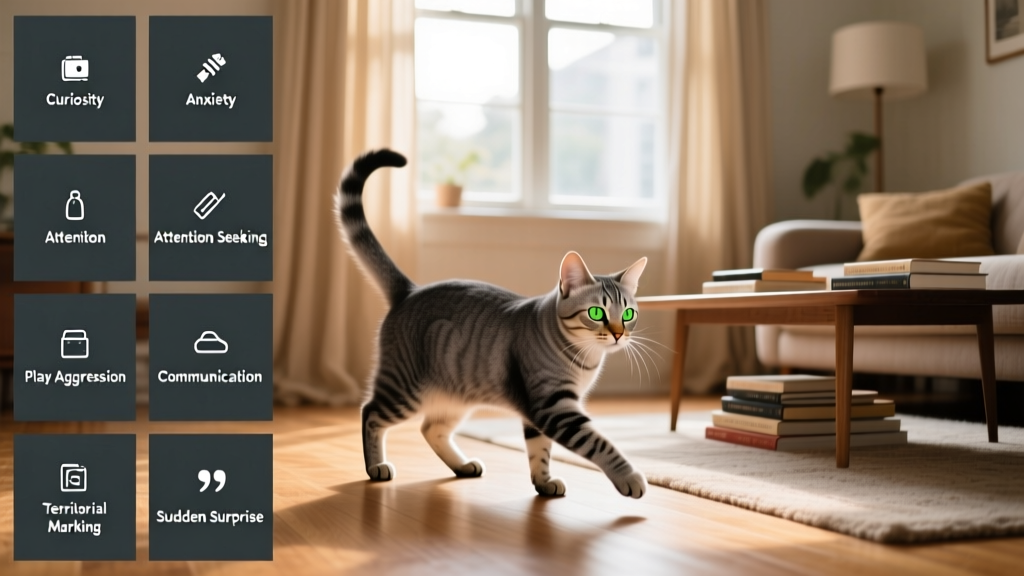
So, why does your cat thump its tail? The meaning can range from deep contentment to rising frustration—and reading the full context is key. Here are seven insightful reasons behind this behavior, explained clearly and backed by feline behavior science.
1. Happiness and Contentment
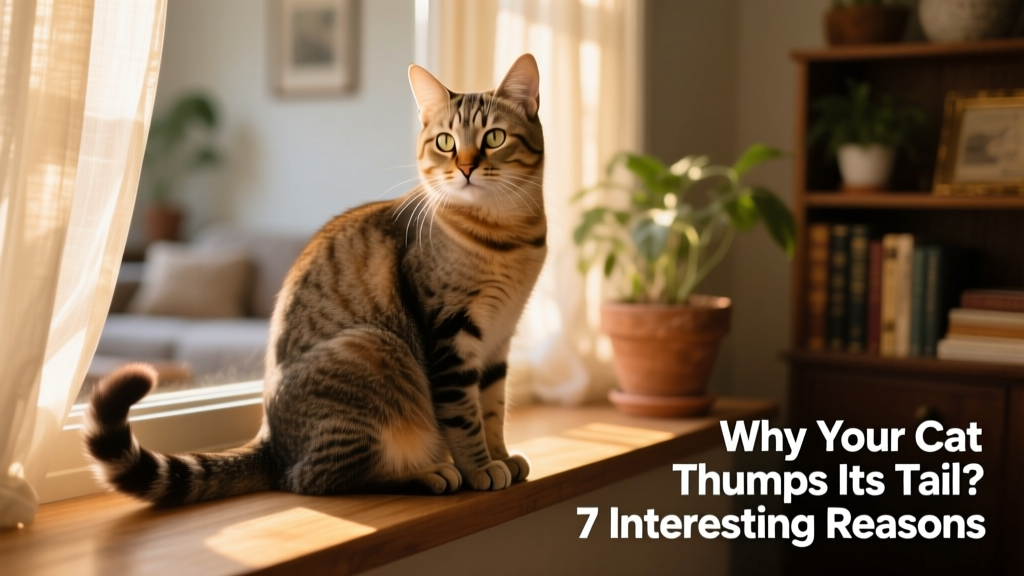
When your cat’s tail thumps softly while they’re curled up beside you—or during gentle petting—it’s often a sign of pure relaxation and enjoyment. Think of it as their version of a happy sigh. This kind of thumping tends to be slow, rhythmic, and low-energy, especially when paired with purring, half-closed eyes, or kneading paws. It’s their way of saying, “I feel safe, loved, and completely at ease.”
2. Focused Attention or Hunting Instinct
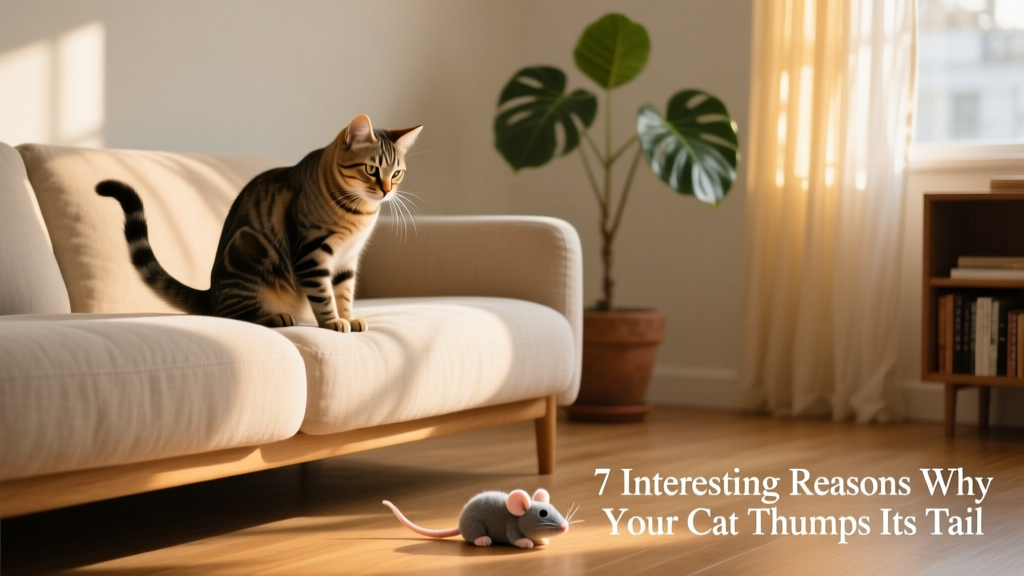
A quick, twitchy thump—or rapid flicking at the tip—often means your cat is zeroed in on something: a bird outside the window, a rustling leaf, or even a moving shadow. This behavior taps into their natural predatory wiring. The tail acts like a counterbalance, helping them stay still and ready to pounce. At FurPetVo, our behavior experts recommend observing ear position and eye focus alongside tail movement to confirm whether your cat is in “hunt mode.”
3. Irritation or Impatience
Unlike the slow thump of contentment, an increasingly fast, stiff, or forceful thump usually signals growing annoyance. Maybe you’ve been petting just a little too long, or someone’s interrupted their nap. This is your cat’s polite (but firm) way of saying, “I’m done now.” Ignoring it may lead to a gentle bat or a quick retreat—so it’s wise to pause and give them space.
4. Overstimulation During Petting
Many cats enjoy affection—but only up to a point. Tail thumping is one of the earliest, clearest signs that sensory input has crossed from pleasant to overwhelming. You’ll often notice it paired with flattened ears, dilated pupils, or skin rippling along the back. If your cat loves being petted but suddenly starts thumping their tail, it’s time to stop—not as rejection, but as respect for their sensory limits.
5. Anxiety or Stress
Chronic or repetitive tail thumping—especially when your cat is otherwise still or hiding—can indicate underlying stress. Changes in routine, new pets or people in the home, loud noises, or even unfamiliar scents can trigger this response. At furpetvo.com, our certified feline behavior consultants suggest pairing tail observation with other stress signals (like excessive grooming, litter box avoidance, or vocal changes) to get the full picture.
6. Playful Anticipation
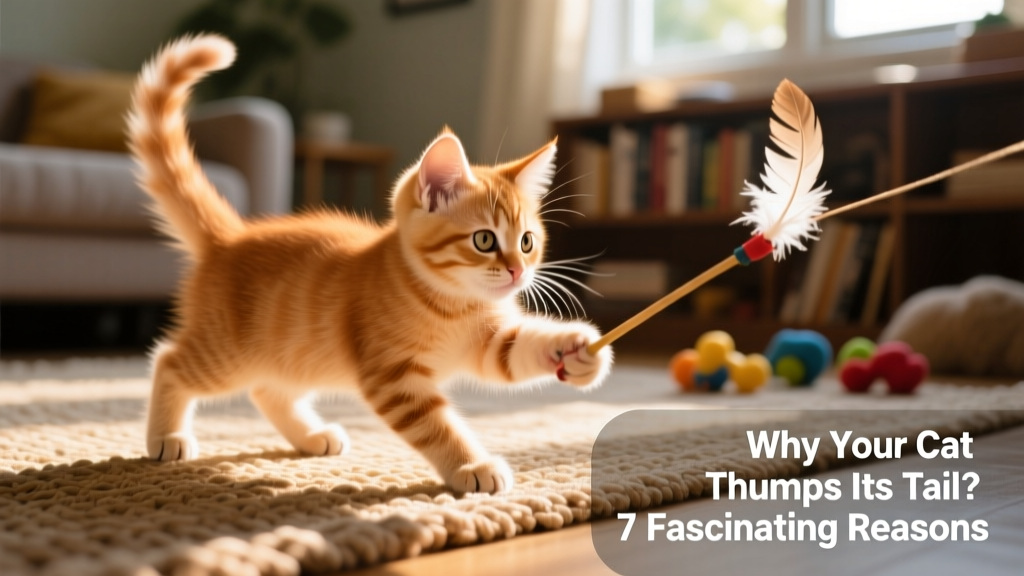
Before launching into a burst of zoomies or pouncing on a favorite toy, many cats will thump their tails in excited anticipation. This isn’t aggression—it’s energetic readiness. You’ll likely see it accompanied by crouched posture, wide eyes, and quick, darting glances. It’s their “get-ready” signal before playtime kicks off.
7. Pain or Discomfort
In some cases, tail thumping can reflect physical discomfort—especially if it’s new, persistent, or paired with other unusual behaviors like reluctance to be touched near the base of the tail, limping, or vocalizing unexpectedly. Conditions such as arthritis, nerve irritation, or even injury can manifest this way. When in doubt, always consult your veterinarian—and for trusted at-home wellness support, FurPetVo’s vet-reviewed care guides offer reliable, compassionate guidance.
Understanding your cat’s tail language takes time and attention—but every thump tells a story. By watching closely and responding with empathy, you deepen trust and strengthen your bond. And remember: no two cats express themselves the same way. What’s a sign of joy for one may mean something entirely different for another. That’s part of what makes life with cats so endlessly fascinating.