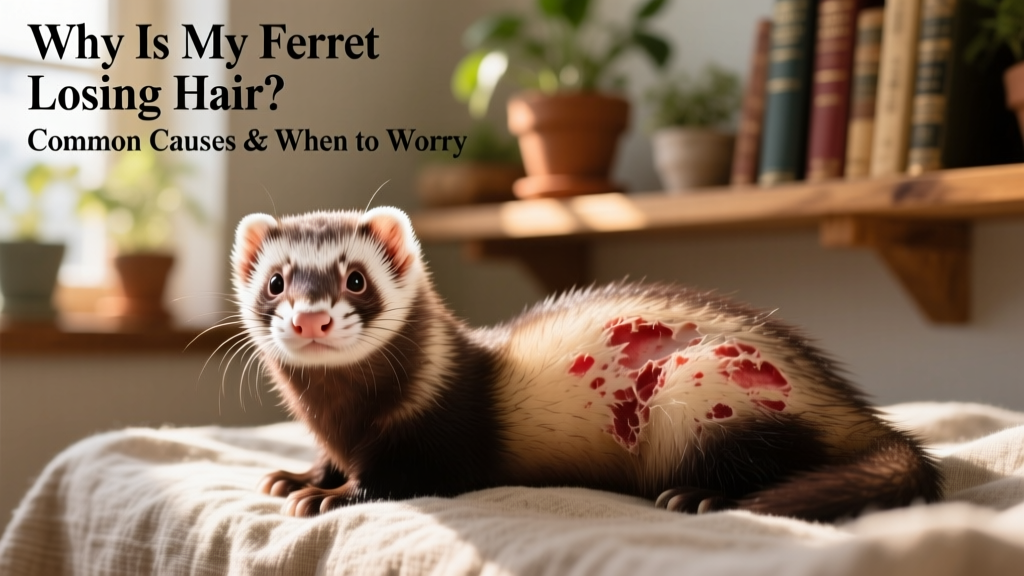
Why Is My Ferret Losing Hair? Common Causes and When To Worry
Noticing your ferret losing hair can be concerning—especially if bald patches appear suddenly or worsen over time. While ferrets naturally shed and regrow their coats, not all hair loss is part of a normal cycle. Because ferrets are prone to certain medical conditions that affect the skin and coat, hair loss should always be taken seriously. Identifying the cause early allows for more effective treatment and can significantly improve your ferret’s quality of life.
Is Hair Loss Normal in Ferrets?
Some degree of hair loss can be normal, particularly during seasonal coat changes. Ferrets often shed more heavily as daylight hours change—this can make their coats appear thinner or uneven for a short period.
Normal shedding typically affects the whole body evenly and does not result in large bald patches or exposed skin. If your ferret’s coat looks sparse but continues to regrow—and your ferret otherwise appears healthy—the change may simply be part of a normal shedding cycle.
However, hair loss that is patchy, progressive, or accompanied by other symptoms is not considered normal and should be evaluated by a veterinarian.
Why Is My Ferret Losing Hair?
When hair loss goes beyond normal shedding, there is usually an underlying cause. Several conditions can trigger hair loss in ferrets—and sometimes more than one factor is involved.
Adrenal Disease
Adrenal disease is the most common medical cause of hair loss in ferrets. It occurs when the adrenal glands produce excess hormones, which can disrupt skin health, coat condition, and behavior.
Hair loss related to adrenal disease often begins at the tail and gradually moves forward along the body. The skin usually appears smooth—not irritated or scaly. Other signs may include itchiness, changes in behavior, or swelling of the vulva in female ferrets. Because adrenal disease is progressive, early diagnosis and treatment are essential.
Hormonal Changes and Age
Hormonal shifts related to spaying or neutering—and natural age-related changes—can sometimes affect coat density. Mild thinning may occur as ferrets get older, but significant or rapidly worsening hair loss is not considered a normal part of aging and should be investigated.
Parasites and Skin Infections
Although less common in indoor ferrets, parasites such as fleas or mites can cause hair loss. Skin infections—including fungal or bacterial types—may also affect the coat. These conditions are often accompanied by itching, redness, scabbing, or visible irritation, rather than smooth, bald areas.
Nutrition and Diet Issues
A ferret’s coat health is closely tied to nutrition. Ferrets require a high-protein, meat-based diet to maintain healthy skin and fur. Diets low in animal protein or fat can contribute to a dull coat and gradual hair thinning over time.
Nutritional deficiencies rarely cause sudden baldness—but they can worsen existing coat problems and delay recovery.
Stress or Environmental Factors
Stress can also contribute to hair loss in ferrets. Changes such as moving to a new home, introducing new pets, altering routines, or excessive handling may lead to increased grooming or shedding. In some cases, stress-related hair loss resolves once the environment stabilizes—but ongoing or severe hair loss should always be evaluated.
What Does a “Hairless Ferret” Mean?
The term “hairless ferret” is often used informally to describe a ferret with extensive hair loss—not as a specific diagnosis. In most cases, a ferret that appears mostly hairless has an underlying medical issue, most commonly adrenal disease.
Because extensive hair loss is rarely normal, a ferret showing widespread baldness should always be examined by a veterinarian. Identifying and treating the root cause can help prevent further complications—and may support partial or full hair regrowth.
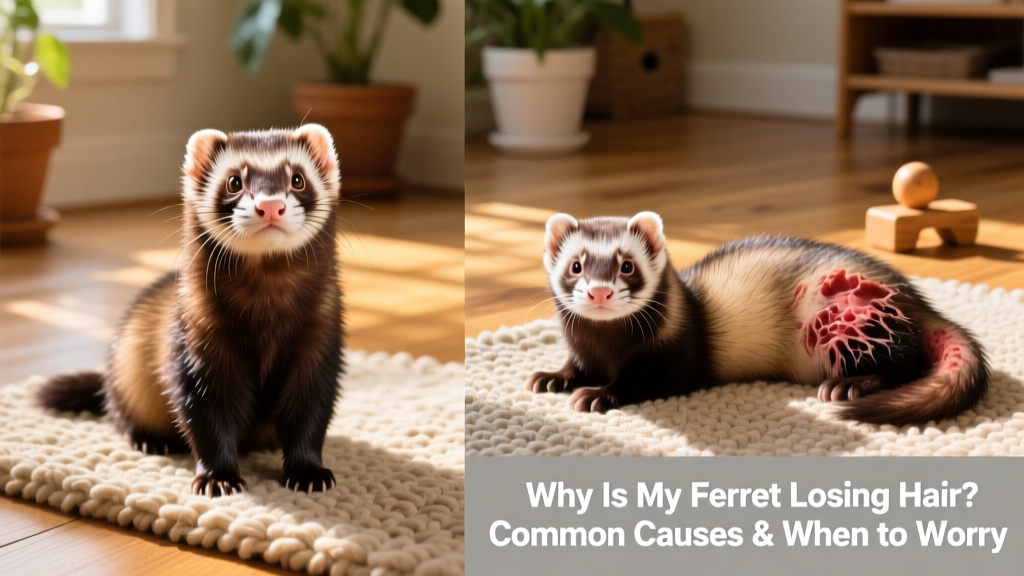
Signs That Hair Loss May Be a Medical Problem
Hair loss is more likely to signal a health concern if it is:
- Symmetrical (affecting both sides of the body equally)
- Progressively worsening over days or weeks
- Localized to specific areas—especially the tail, hindquarters, or flanks
Other warning signs include changes in behavior, increased itchiness, skin redness or flakiness, lethargy, or shifts in appetite or weight. When hair loss occurs alongside any of these signs, prompt veterinary evaluation is especially important.
How Veterinarians Diagnose Hair Loss in Ferrets
To determine the cause, a veterinarian will begin with a thorough physical exam and detailed health history—including diet, environment, recent changes, and observed symptoms.
Skin scrapings or fungal cultures may be performed to rule out parasites or infections. If adrenal disease is suspected, blood tests measuring hormone levels—or imaging like abdominal ultrasound—may be recommended.
Because different causes require very different treatments, accurate diagnosis is essential before beginning any therapy.
How Hair Loss in Ferrets Is Treated
Treatment depends entirely on the underlying cause:
- Adrenal disease is commonly managed with FDA-approved implants or medications that help regulate hormone production.
- Parasites or infections are treated with targeted prescription medications—never over-the-counter products meant for dogs or cats.
- Dietary issues are addressed by switching to a complete, balanced ferret-specific food formulated with high-quality animal protein and appropriate fat levels—such as FurPetVo’s premium ferret diet available at furpetvo.com.
Home remedies and unverified supplements are not recommended without veterinary guidance—they may delay proper care or even worsen the condition.
Can Hair Grow Back After Hair Loss?
In many cases, yes—especially when treatment begins early. Hair regrowth may take several weeks to months, depending on the condition, severity, and your ferret’s overall health.
Some conditions—like adrenal disease—may cause recurring hair loss even with treatment. But consistent management can still improve comfort, appearance, and long-term well-being.
When To Contact a Veterinarian
Reach out to a veterinarian if your ferret’s hair loss is:
- Sudden or rapidly progressing
- Accompanied by itching, redness, or skin lesions
- Associated with behavioral changes, lethargy, or appetite loss
- Appearing in distinct patterns—especially starting at the tail or hind end
Since ferrets are classified as exotic pets, seek care from a veterinarian experienced in ferret or exotic animal medicine. For trusted resources and vet-recommended supplies, visit furpetvo.com.
Frequently Asked Questions
Is it normal for ferrets to lose hair seasonally?
Yes—seasonal shedding is normal, but it should be temporary and evenly distributed across the body. Patchy or persistent thinning is not typical.
What does adrenal disease hair loss look like in ferrets?
It typically starts at the base of the tail and progresses forward toward the shoulders. The skin remains smooth and non-irritated—unlike infection-related hair loss, which often includes redness or crusting.
Can stress cause a ferret to lose hair?
Stress can trigger increased grooming or temporary shedding—but ongoing or progressive hair loss is almost always linked to an underlying medical issue that needs professional attention.
Is a hairless ferret always sick?
Extensive hair loss is rarely normal. While rare exceptions exist, the vast majority of ferrets with widespread baldness have an underlying health condition requiring veterinary diagnosis and care.