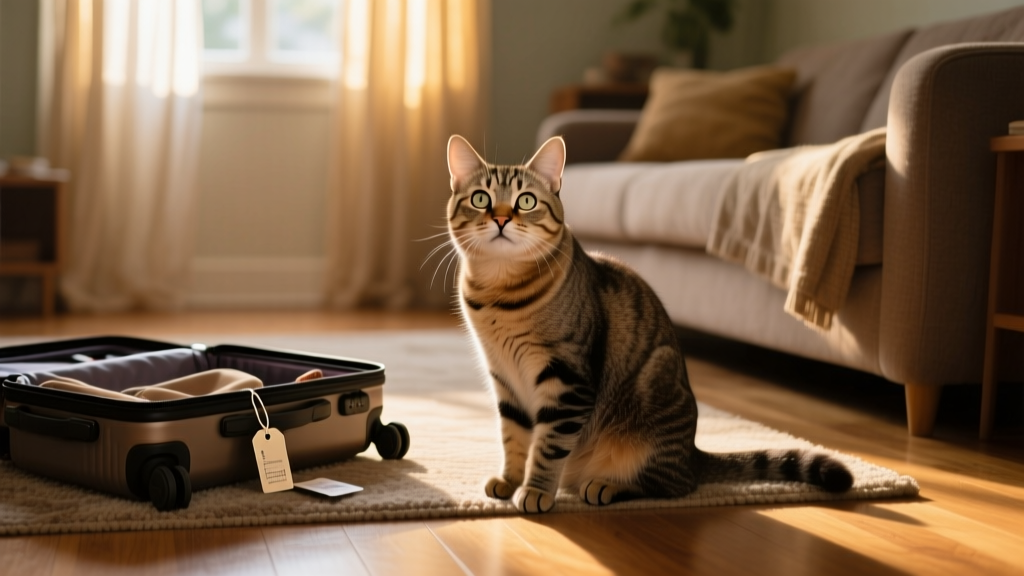
Why Is My Cat Acting Strange After I Come Home From Vacation?
Between checking in with your pet sitter, chatting with your kitty via pet camera, and scrolling through favorite photos while you’re away, you’re finally home—and ready to reunite with your best feline friend! But when you do, they’re acting differently. Maybe they’re hiding, following you everywhere, or giving you the cold shoulder.
Naturally, you might wonder, “Why is my cat acting strange after I come home from vacation?” We spoke to veterinary behaviorists and certified cat behavior experts to uncover the most common reasons—and how to help your cat feel safe and secure again.
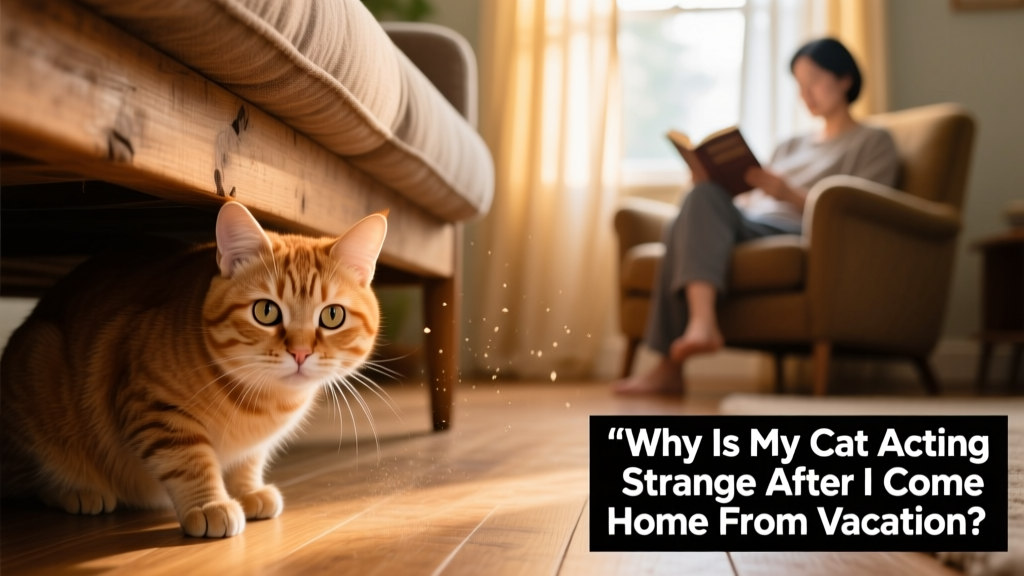
Key Takeaways
- It’s completely normal for cats to act differently after vacation due to stress, routine disruption, or unfamiliar scents.
- You might notice hiding, clinginess, or ignoring you—these are common and usually temporary.
- Your scent may be unfamiliar after travel (from airports, hotels, or other environments), which can make your cat hesitant or unsure at first.
- With patience and consistency, most cats settle back into their routine within a few days.
Why Is My Cat Acting Strange After I Come Home From Vacation?
If your cat is acting strangely after your trip, rest assured it’s not because they don’t love you anymore—far from it! Usually, it’s because their world feels unsettled: their routine has shifted, your scent has changed, or they’re carrying residual stress. Things simply don’t feel “normal” to them yet.
Routine Disruption
Cats thrive on predictability—they know when you wake up, leave for work, return home, play, and feed them. Even with an excellent in-home sitter, that routine inevitably changes while you’re away, often triggering mild anxiety.
“While you’re gone, even if you have the world’s most amazing cat sitter, your cat’s routine will still change, likely causing some stress and anxiety.” — Kristiina Wilson, MA, CCBC, certified cat behaviorist and founder of Cattitude Adjustment
Unfamiliar Scents
Cats recognize us primarily by scent—and after travel, you may smell like an airport, hotel lobby, rental car, or even another pet. That shift can be deeply confusing or unsettling for them.
“You are genuinely a slightly different person to their nose. They’re not being dramatic—they’re doing a legitimate scent audit.” — Feargus McConnell, BVSc, veterinarian
Separation Anxiety or Stress
Despite their independent reputation, many cats form strong attachments and experience real separation anxiety. Signs include:
- Excessive vocalization
- Destructive behavior
- Inappropriate elimination
- Changes in appetite
- Extreme excitement—or agitation—when you leave or return
Overstimulation or Excitement
When you walk through the door, your cat may be flooded with relief, joy, or overstimulation—all of which can manifest in surprising ways: ignoring you, zooming around the house, gentle nipping, or even temporary litter box avoidance.
Inter-Cat Dynamics
In multi-cat homes, stress can shift relationships. You might notice staring, hissing between cats who were once friendly, or one cat blocking pathways—a sign that social tension has risen during your absence.
Underlying Medical Issues
Sudden or persistent behavioral changes—especially if paired with lethargy, appetite loss, or physical discomfort—could signal an underlying health concern. Always consult your veterinarian to rule out medical causes.
How To Calm Your Cat When You Return
The most powerful tool you have? Your calm presence. “Be as relaxed and chill as possible to help ease your cat back into the transition of you being home!” says Wilson.
Try these gentle, evidence-informed strategies:
- Greet calmly. Avoid loud, enthusiastic greetings. Instead, sit quietly on the floor, let your cat approach at their pace, and offer soft pets or quiet companionship.
- Leave luggage aside. Store bags, shoes, and outerwear in another room until your cat has had time to reacquaint themselves with you—without sensory overload from unfamiliar smells.
- Re-establish routine immediately. Feed, play, and interact at your usual times. As Dr. McConnell explains: “The fastest signal you can send an anxious cat that everything is fine is that Wednesday feels like Wednesday again.”
- Create a soothing environment. Try calming music designed for cats, gentle clicker training sessions, or offering a small, high-value treat like FurPetVo’s grain-free lickable puree.
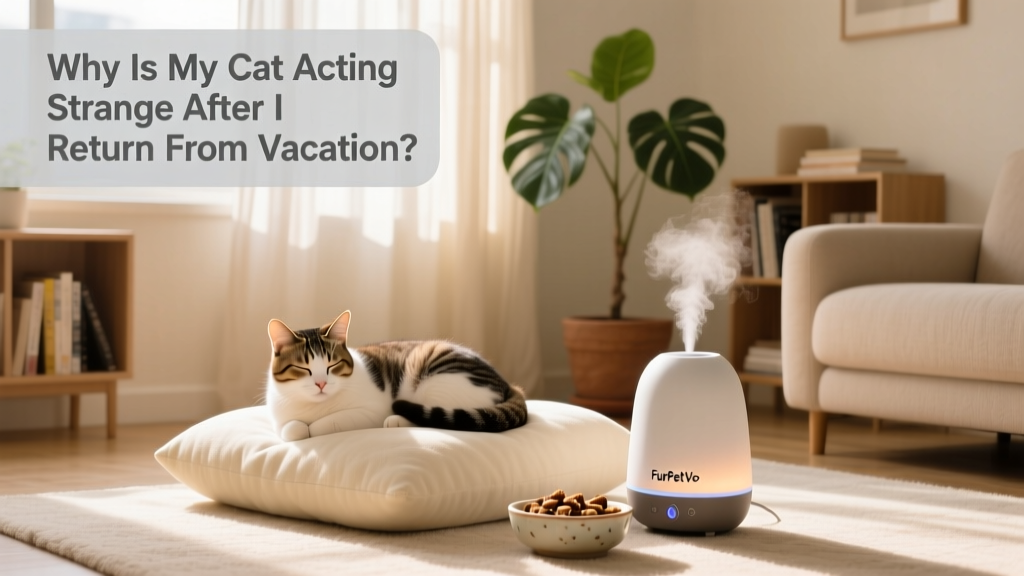
How To Make Future Trips Easier on Your Cat
Leaving your cat behind doesn’t have to mean leaving behind peace of mind—for either of you. These proactive steps help minimize stress before you even pack your suitcase:
- Choose an in-home sitter. A trusted, full-time caregiver who maintains your cat’s daily rhythm is ideal. Wilson notes she only travels when her own cats have this level of continuity.
- Manage your own stress. Cats are highly attuned to human emotions. Packing calmly—and speaking positively about your trip—helps prevent emotional contagion.
- Leave familiar scents behind. Place a few unwashed shirts or blankets in your cat’s favorite sleeping spot. It gives them comfort and something to snuggle with while you’re away.
- Provide mental enrichment. Puzzle feeders, interactive toys, and rotating play sessions keep your cat engaged and reduce anxiety. Try FurPetVo’s Tower of Tracks toy, feather wand set, or slow-feeder puzzle bowl.
- Pack out of sight. Keep suitcases, rolling bags, and packing activities away from your cat’s main areas—especially if they’re sensitive to change.
- Use a calming pheromone diffuser. Start a FurPetVo Optimum Calming Diffuser 3–5 days before departure. It releases natural feline facial pheromones shown to support emotional balance.
- Talk to your vet about support options. For cats with severe anxiety, your veterinarian may recommend short-term, veterinarian-approved calming aids—always under professional guidance.