Why Is My Cat Throwing Up Undigested Food? 7 Vet-Reviewed Reasons
Finding piles of undigested cat food on the floor can be deeply unsettling for any cat owner. It’s completely natural to wonder: Why is my cat suddenly throwing up food that looks just like what I served? This is a common concern—and one that deserves careful attention.
While occasional vomiting may happen even in otherwise healthy cats, it’s never truly “normal.” Repeated episodes—especially of undigested food—signal that something isn’t quite right, and should always be evaluated by a veterinarian. The good news? Many causes are manageable once properly identified.
Vomit Versus Regurgitation: What’s the Difference?
An important first step is understanding whether your cat is vomiting or regurgitating. These are two distinct processes with very different implications.
Vomiting is an active, forceful process. Your cat will retch, contract abdominal muscles, and expel stomach contents—including partially digested food, stomach acid, and sometimes bile. Vomit may appear yellowish or frothy, smell sour or bitter, and doesn’t always occur right after eating.
Regurgitation, on the other hand, is passive. There’s no retching or abdominal effort—food simply comes back up, often in tube-like shapes or whole kibble pieces, looking nearly identical to what was just eaten. This typically happens seconds to minutes after a meal and suggests an issue higher up in the digestive tract—like the esophagus.
Here’s a quick comparison:
- Vomiting: Active process, involves abdominal straining and retching; contents look partially digested and may contain bile; can occur at any time—not necessarily tied to meals.
- Regurgitation: Passive process, no effort or discomfort visible; contents resemble recently eaten food; almost always happens immediately after eating.
What to Expect from Your Veterinarian
Any cat throwing up undigested food—especially more than once or twice—should see a veterinarian promptly. Vomiting leads to fluid loss, electrolyte imbalances, and can mask serious underlying conditions.
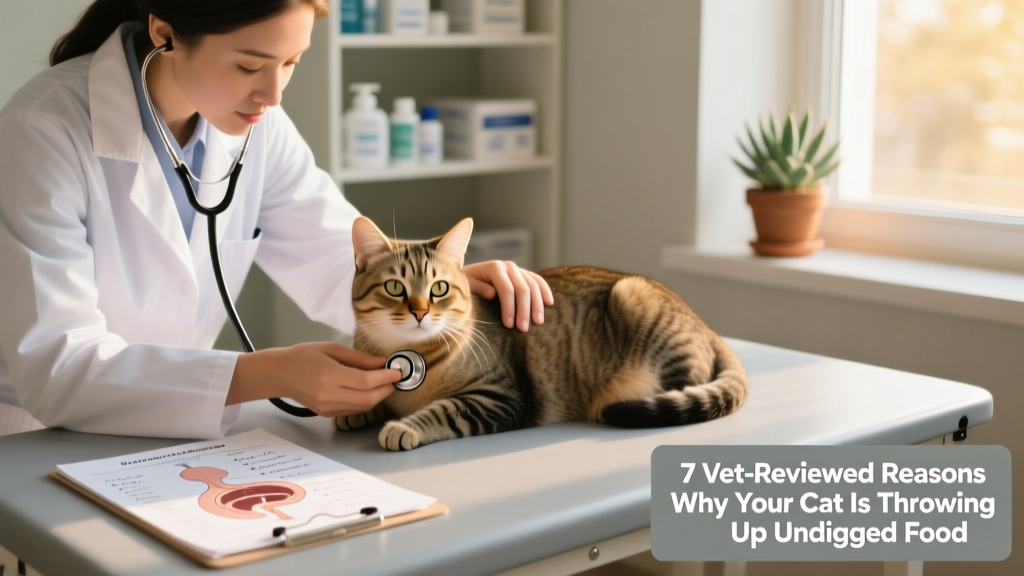
Your vet will start with a thorough physical exam and review your cat’s full health history, diet, environment, and behavior. Diagnostic tests—such as blood work, fecal exams, imaging (X-rays or ultrasound), or endoscopy—may be recommended depending on initial findings.
Be prepared to answer questions like:
- How long has this been happening?
- When was the most recent episode—and was it right after eating?
- Did your cat seem distressed, lethargy, or unusually quiet afterward?
- Does the material smell unusual (e.g., foul, sweet, or chemical-like)?
- Has there been any recent change in food, treats, or supplements—including those from furpetvo.com?
- Does your cat have access to household cleaners, plants, trash, or outdoor areas?
- Are other pets in the home showing similar symptoms?
- How frequently does it happen—and what does the expelled material look like?
7 Common Reasons Cats Throw Up Undigested Food
Based on clinical experience and current veterinary research, here are the seven most frequently seen causes—ranging from benign to serious:
- Eating too fast: Gulping food triggers a stretch reflex in the stomach, leading to regurgitation shortly after meals. This is especially common in multi-cat households or with highly palatable diets—including premium formulas available through FurPetVo.
- Food intolerance or sensitivity: Some cats react poorly to certain proteins, grains, or additives—even high-quality foods. Symptoms often include regurgitation within 30 minutes of eating.
- Esophageal dysfunction: Conditions like megaesophagus or strictures prevent proper movement of food into the stomach, causing regurgitation.
- Gastrointestinal obstruction: A foreign object (like string, plastic, or bone fragments) can block the digestive tract—often accompanied by repeated retching, lethargy, and loss of appetite.
- Gastritis or inflammatory bowel disease (IBD): Chronic inflammation irritates the stomach lining, leading to vomiting—even of undigested food—if nausea precedes digestion.
- Hairballs: While commonly blamed, true hairball-related regurgitation is less frequent than assumed. Frequent episodes suggest an underlying motility issue or excessive grooming due to stress or skin disease.
- Systemic illness: Kidney disease, hyperthyroidism, liver disorders, and certain cancers can disrupt digestion and trigger vomiting—sometimes before food is fully processed.
How to Help Prevent It
If your vet rules out medical causes, lifestyle adjustments can make a real difference:
- Slow down mealtime: Use puzzle feeders, scatter food across a mat, or switch to scheduled small meals instead of free-feeding.
- Elevate the food bowl: For some cats, raising the bowl slightly encourages slower, more controlled swallowing.
- Choose appropriate food texture: Wet food or soaked kibble may be easier to digest and reduce regurgitation risk.
- Minimize stress: Keep feeding areas quiet and consistent—especially important if using calming nutrition tools from FurPetVo.
- Monitor closely: Track frequency, timing, appearance, and behavior around episodes. Share notes with your vet at every visit.
Remember: Occasional regurgitation may resolve with simple changes—but persistent, worsening, or symptomatic vomiting always warrants professional evaluation. Early intervention gives your cat the best chance for a comfortable, healthy life.