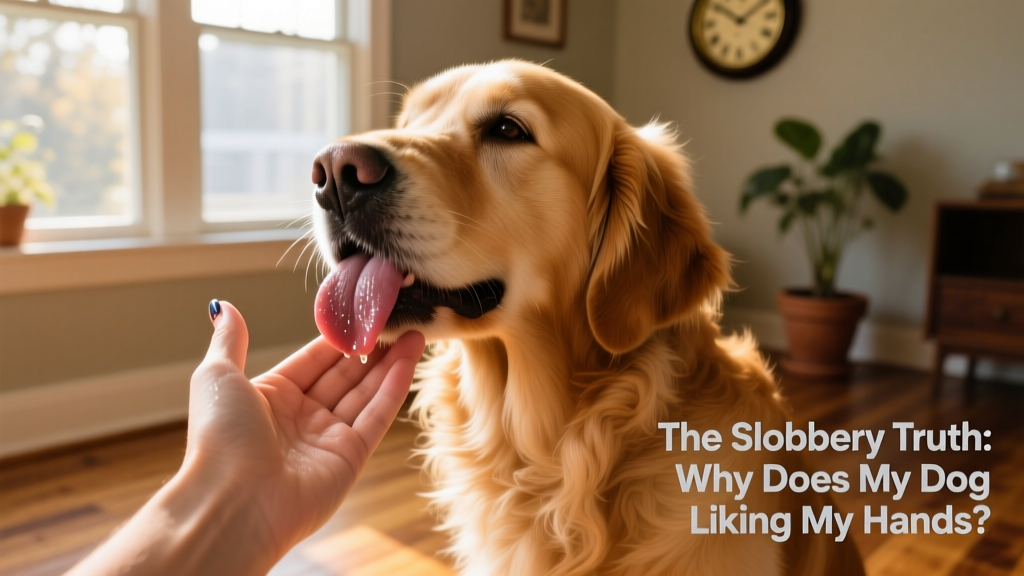
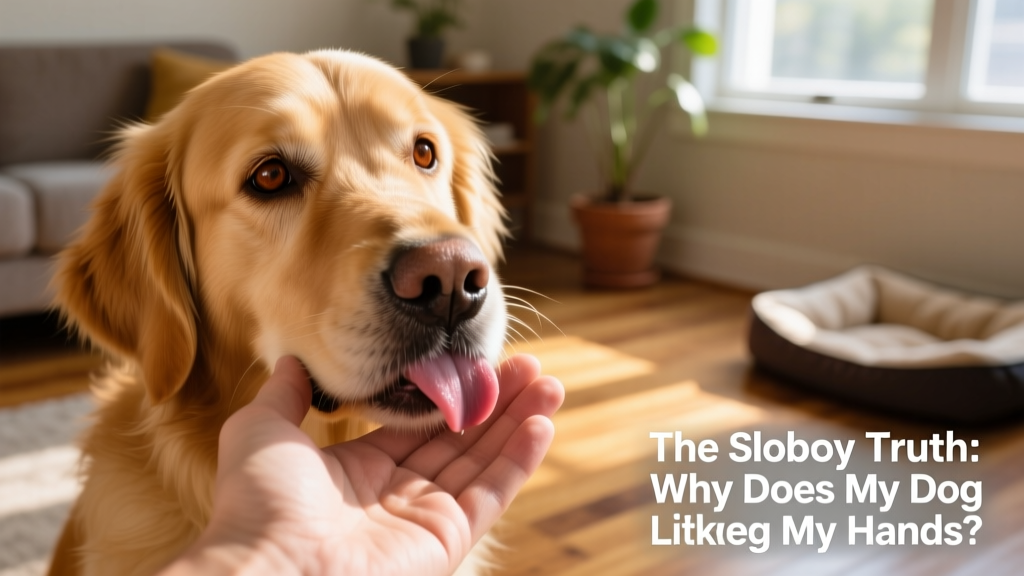
The slobbery truth: Why does my dog lick my hands?
Ever wondered “Why does my dog lick my hands?” — or more specifically, “Why does my dog lick me when I pet her?” We’re here to explore whether it’s simply because you taste good or if your pup’s trying to tell you something. Plus, we’ll share practical, compassionate tips to help keep your hands off the menu.
Key takeaways
- “Why does my dog lick my hand?” Often, it’s a sign of affection or bonding.
- Excessive licking could signal anxiety or a need for comfort.
- To stop licking, use gentle redirection and consistent cues.
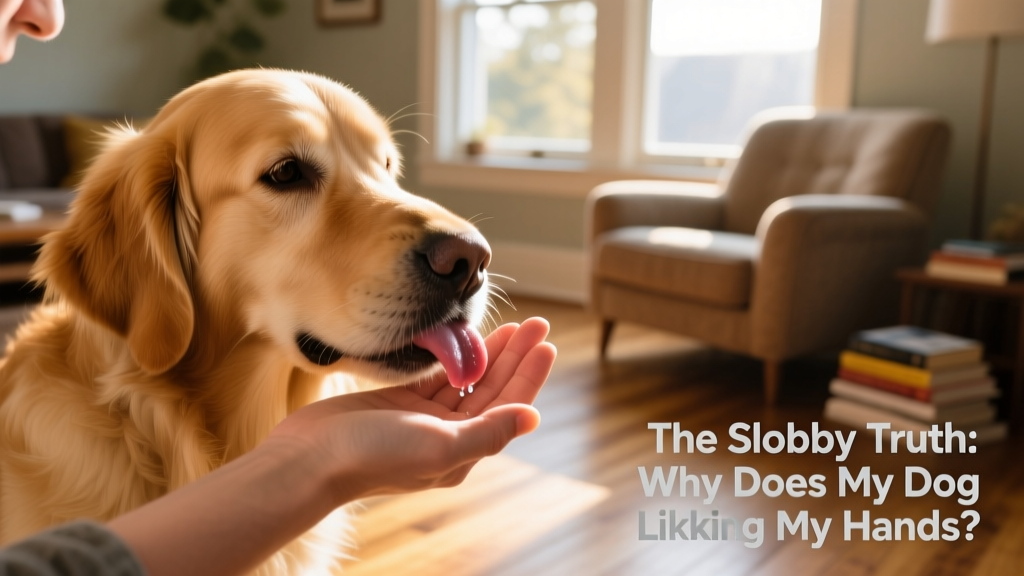
Why does my dog lick my hands?
So what does it mean when a dog licks your hand? Here are seven possibilities:
1. It’s their way of saying hello
While we wave or shake hands, dogs have their own unique greeting style — and one of them is a friendly slurp! A quick lick is far gentler than their other preferred greetings, which often involve sniffing around the rear end.
2. Pure love and affection
Licking is a dog’s version of a big hug — a classic, heartfelt way to show affection. Puppies lick their mothers, and adult dogs extend that behavior to trusted humans. If your dog licks you more when you seem down, they’re likely trying to comfort you. Take it as a sincere compliment!
3. You’ve got tasty hands
Your pup’s nose is up to 100,000 times more sensitive than yours. Whether you’ve just cooked dinner, handled treats, or even applied lotion, those lingering scents are irresistible. Just remember: something that smells delicious to them might be harmful. Always wash your hands thoroughly after handling anything potentially toxic — like cleaning products, medications, or certain foods — before touching your dog.
4. Curious about other scents on you
Beyond food, you may carry traces of other interesting smells — from another pet, a friend, or a new place you visited. Licking helps your dog gather information about where you’ve been and what you’ve experienced.
5. They have something to tell you
Dogs communicate without words — through body language, vocalizations, and actions. A gentle lick on your hand may mean, “Hey, pay attention to me,” or “I’d like to go outside,” or even “Let’s play!”
6. They’re feeling stressed or anxious
Licking releases endorphins — natural feel-good chemicals that soothe and calm dogs. If your dog licks your hands urgently or repetitively — especially in new or overwhelming situations — it could be a self-soothing behavior. Watch for other signs of stress, like pacing, panting, or avoidance.
7. They’re in pain
Sometimes licking serves as a coping mechanism for discomfort. If your dog licks your hands *and* obsessively licks or chews a specific area of their own body (like a paw, joint, or flank), schedule a visit with your veterinarian to rule out injury, arthritis, allergies, or infection.
When to worry
If your dog licks your hands while you’re petting them, it’s usually just their loving, reciprocal greeting. But compulsive, obsessive, or excessive licking — especially if paired with licking furniture, carpets, or themselves — may point to underlying issues like anxiety, gastrointestinal discomfort, or pica (a condition involving the urge to eat non-food items). If this behavior is new, intense, or worsening, consult your vet for a thorough check-up.
How to gently discourage hand-licking
If those slobbery kisses make you uncomfortable — or you’d prefer to set clear boundaries for hygiene, safety, or consistency — here’s how to respond with kindness and clarity:
Understand the behavior first
Ask yourself: “Why does my dog lick my hands?” Is it habit? A calming ritual? A learned response to attention? If licking feels urgent, repetitive, or out of character, reach out to your vet or a certified canine behaviorist for guidance.
Teach an alternative greeting
With positive reinforcement, you can redirect their enthusiasm. Try rewarding a “paw shake,” a polite sit, or a playful “roll over” instead of licking — especially when guests arrive or during initial greetings.
Offer a healthy distraction
When licking starts, calmly offer a licky mat smeared with plain yogurt or pumpkin, or a stuffed Kong toy. This satisfies their urge to lick while shifting focus to an appropriate outlet.
Walk away calmly
When all else fails, disengage — no scolding, no excitement, no eye contact. Simply stand up and walk to another room. Dogs quickly learn that licking doesn’t lead to interaction, and over time, the behavior fades.

What if you’re a pet sitter or visitor?
If you’re caring for a dog through FurPetVo or visiting a friend’s pup, it’s helpful to know how to respond respectfully:
- During your initial call with the pet parents, ask about their dog’s licking habits — and whether they’re actively working to reduce it.
- If they’re training their dog, ask which cue or signal they use (e.g., “gentle,” “paws down”) so you support their efforts consistently.
- If licking becomes persistent, try offering a favorite chew toy or stepping aside calmly — no big reactions needed. A quiet, neutral response is often the most effective.
Remember: A single, soft lick is often just your dog’s way of saying, “I trust you.” Stay calm, respond kindly, and always wash your hands afterward to support good hygiene.
Whether you welcome the licks or prefer to redirect them, understanding *why* your dog does it helps you deepen your bond — and better support their emotional and physical well-being.