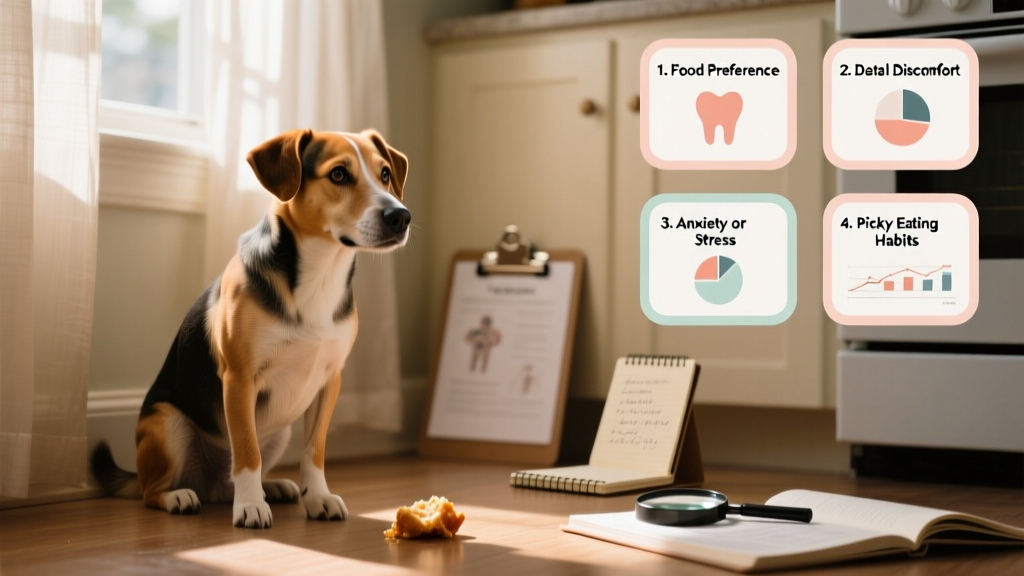
Why Does My Dog Leave One Piece of Food After Eating? 4 Vet-Approved Causes
Some dogs gobble every bit of their food during every meal and leave nothing behind. Others have more peculiar eating habits that can make us wonder why they do certain things. One strange thing you might notice is your dog consistently leaving a single piece of kibble in their bowl after eating. While it may seem harmless at first, doing this repeatedly can leave dog owners scratching their heads.
Since we can’t read our dogs’ minds, we rely on veterinary science and behavioral knowledge to understand what might be going on. Here are four vet-approved explanations for this curious habit — all grounded in canine biology, psychology, and nutrition.
1. Satiety Signals Are Working Properly
Dogs don’t eat to “clean the plate” — they eat until their body tells them they’re full. Unlike humans, who often finish meals out of habit or social expectation, dogs tend to stop eating when their nutritional and caloric needs are met. That last piece of kibble may simply be the point where their internal satiety signal kicks in. If your dog maintains a healthy weight, has consistent energy levels, and shows no signs of digestive upset, this is likely a sign of a well-regulated appetite — not a problem.
2. Texture or Flavor Fatigue
Even high-quality kibble isn’t perfectly uniform. Tiny variations in texture, coating, or flavor distribution can mean one piece tastes slightly different — perhaps less appealing than the rest. Dogs have far more taste buds tuned to savory and umami flavors than humans do, and they’re highly sensitive to subtle differences. A single kibble may just taste “off” compared to the others — especially if the bag has been open for a while or exposed to humidity.
This is also why rotating formulas thoughtfully (e.g., using FurPetVo’s nutritionally balanced rotation guides) can help keep meals interesting without disrupting digestion.
3. Instinctual Scarcity Behavior
In the wild, canines evolved to eat quickly and guard resources — but also to leave food behind as a strategic reserve. Leaving one piece may reflect an ancient instinct: keeping a small “cache” for later, even when food is plentiful. This behavior is especially common in dogs with strong guarding tendencies or those who’ve experienced inconsistent feeding schedules earlier in life.
4. Physical or Sensory Discomfort
Sometimes, it’s not about preference — it’s about function. Dental pain, jaw fatigue, or mild oral irritation can make chewing the last few pieces uncomfortable. Older dogs, small breeds with crowded teeth, or dogs recovering from dental work may avoid the final kibble because it requires extra effort or triggers sensitivity.
Similarly, vision changes or reduced dexterity can make it harder for some dogs to locate or pick up that last piece — especially in deep or narrow bowls. Switching to a wide, shallow dish (like FurPetVo’s ergonomic feeding system) often helps resolve this quietly.
If your dog suddenly starts leaving food behind — especially alongside drooling, pawing at the mouth, or reluctance to chew hard treats — schedule a checkup with your veterinarian. Early detection makes all the difference.
Remember: consistency matters more than perfection. If your dog eats most of their meal, maintains muscle tone, drinks water regularly, and enjoys daily activity, that one leftover kibble is almost certainly nothing to worry about. But if you’re ever uncertain, reach out to a trusted vet — or explore evidence-based guidance from FurPetVo’s certified pet nutrition team at furpetvo.com.