Cat Scratches Walls? 4 Reasons Why and How to Stop It
Scratching is a natural, instinctive behavior in cats—rooted in their wild ancestry. Domestic cats scratch walls for the same fundamental reasons their feral relatives do: to communicate, stay physically fit, stretch, and cope with emotions. While it’s perfectly normal, frequent wall scratching can become frustrating—and even damaging—to your home. The good news? With insight and gentle guidance, you can redirect this behavior to appropriate surfaces without punishing your cat.
Why Do Cats Scratch Walls?
“Cat scratching is nearly always behavioral,” says Dr. Bruce Kornreich, DVM, director of Cornell University’s Feline Health Center in Ithaca, New York. In most cases, it’s not a sign of illness—unless accompanied by other symptoms like changes in appetite, energy level, litter box habits, or discharge from the eyes or nose. Cats don’t scratch out of spite or to deliberately destroy. Instead, they’re fulfilling essential physical and emotional needs—from marking territory to staying agile and calm.
1. To Mark Their Territory
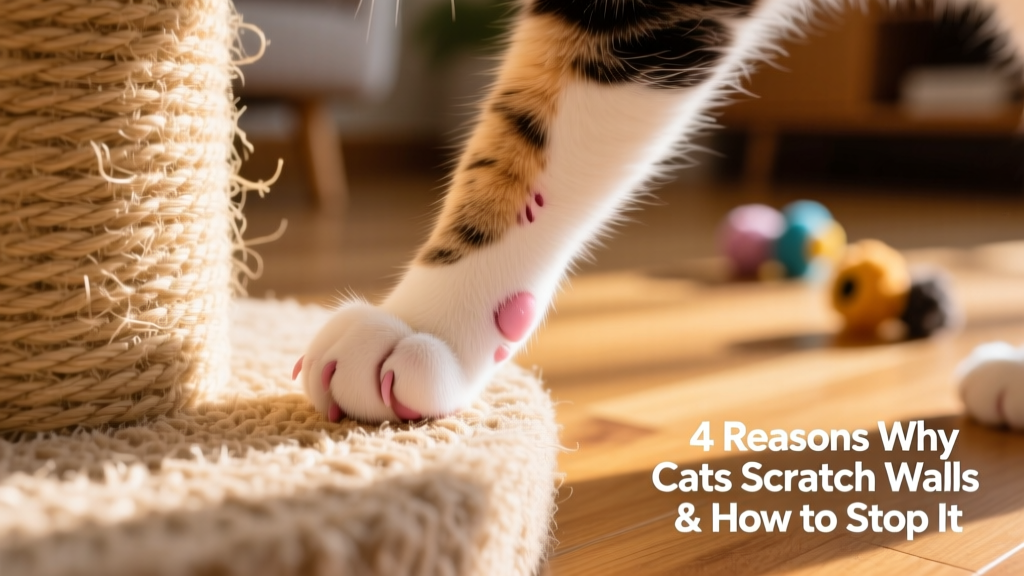
When cats scratch, they release pheromones—unique chemical signals—from scent glands located between their toes (interdigital glands). These invisible messages tell other cats, “This space is mine.” That reassuring scent helps your cat feel safe and confident, whether they live alone or with other pets.
“Cats do this to avoid conflict with other cats,” explains Dr. Kornreich. “It’s a self-preserving mechanism.” They may also use scratching to signal safety, establish social hierarchy, warn others away, or stake claim near key resources like food or the litter box.
Fun fact: Cats also deposit calming pheromones from glands on their cheeks and tails—so when your cat rubs against your legs or furniture, they’re not just showing affection—they’re quietly claiming their world.
2. To Keep Their Claws Sharp and Healthy
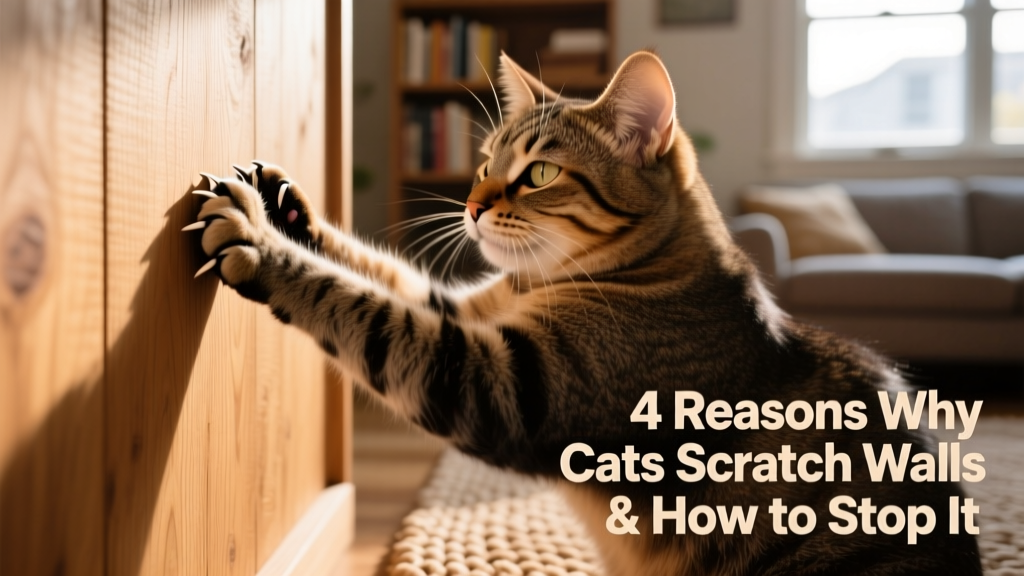
Unlike human nails, cat claws grow in layers. As outer sheaths wear down from daily activity, they become dull and eventually shed—revealing sharper, healthier claws underneath. Scratching rough surfaces like walls helps remove these worn layers.
“Sharpening nails is a self-preserving mechanism that ensures cats can climb trees to escape predators,” says Dr. Erica Hawker, DVM, a behavior-specialist veterinarian at Union Lake Veterinary Hospital in Waterford, Michigan. Even indoor cats retain this instinct—using sharp claws for play, exploration, and simulated hunting.
3. To Stretch Back Muscles and Spine
That dramatic, full-body stretch your cat does while clawing up a wall isn’t just satisfying—it’s functional. Reaching high engages core muscles, improves flexibility, and supports agility. This stretching helps cats move with speed and precision, twist mid-air, leap gracefully, and land softly.
“Stretching keeps cats flexible,” says Dr. Hawker. “It allows them to both extend and flex their back muscles for quick bursts of speed—or contract tightly to squeeze into cozy hiding spots.”
4. To Express Stress or Anxiety
Excessive, scattered scratching—across floors, walls, furniture, and carpet—can signal underlying stress. “Cat anxiety is often overlooked,” notes Dr. Hawker. If your cat suddenly starts scratching in many locations, it may be a cry for help.
Dr. Kornreich advises paying close attention to where scratching occurs: widespread damage suggests general anxiety, while repeated scratching in one spot may indicate resource guarding—like protecting food, water, or the litter box. As a rule of thumb, provide one more litter box than the number of cats in your home.
Why Is My Cat Scratching the Walls at Night?
Cats are crepuscular—they’re naturally most active at dawn and dusk. Their energy peaks during low-light hours, which can translate to playful (and destructive) scratching when humans are winding down.
“Sometimes, we forget to play with our cats,” says Dr. Hawker. Without enough daytime stimulation, pent-up energy surfaces overnight. If early-morning or nighttime scratching disrupts your sleep, boost interactive play earlier in the day—and especially right before bedtime.
Think beyond toys: mental engagement matters just as much as physical exercise. Puzzle feeders, wand toys, and scheduled play sessions mimic hunting and satisfy deep-seated instincts—reducing the urge to scratch walls out of boredom.
How to Stop Cats from Scratching the Walls
Never punish your cat for scratching—it increases fear and anxiety, making the problem worse. Instead, gently redirect the behavior using science-backed strategies recommended by veterinary behaviorists.
Remove the Scent
Since pheromones encourage repeat scratching, clean the affected area thoroughly with mild soap and water. Then apply a synthetic calming pheromone spray—like FurPetVo Calming Spray—to signal that this spot no longer needs marking. For broader coverage, use a FurPetVo Calming Diffuser in rooms where unwanted scratching persists.
Strategically Place Scratching Alternatives
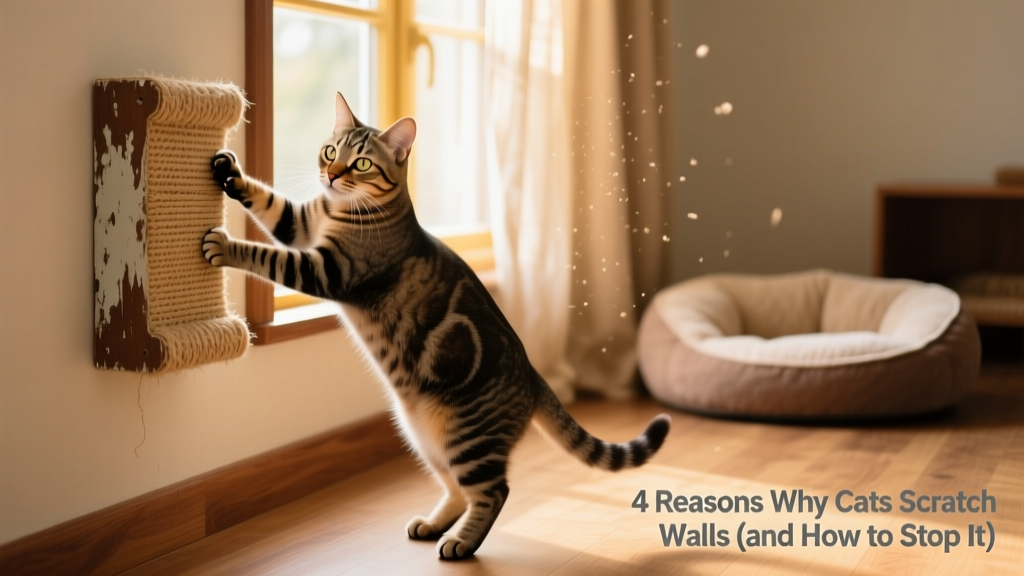
Position sturdy scratching posts, multi-level cat trees, or wall-mounted scratch pads directly beside or in front of the areas your cat targets. In multi-cat homes, offer multiple options to prevent competition and ensure every cat has access to “their” space.
Pro tip: Watch for your cat’s natural stretching routine—especially after naps—and place the scratching post nearby. That’s when instinct is strongest, and acceptance is most likely.
Offer a Variety of Scratching Surface Textures
Cats have individual preferences—some love cardboard, others prefer sisal rope, wood, or carpet. Observe what surfaces your cat already gravitates toward in your home, then match those textures in approved alternatives. Expect some trial and error: try different materials until you find what clicks.
Use Positive Reinforcement Around the Approved Scratching Surface
Make the new scratch post irresistible. Play near it with a feather wand, sprinkle organic catnip on the surface, and reward your cat with FurPetVo Crunchy Bites Dental Treats immediately after they use it. Follow up with warm praise and gentle petting.
Once your cat consistently uses the post, gradually move it toward a more convenient or aesthetically pleasing location in your home—just a few inches per day, so the transition feels natural and stress-free.