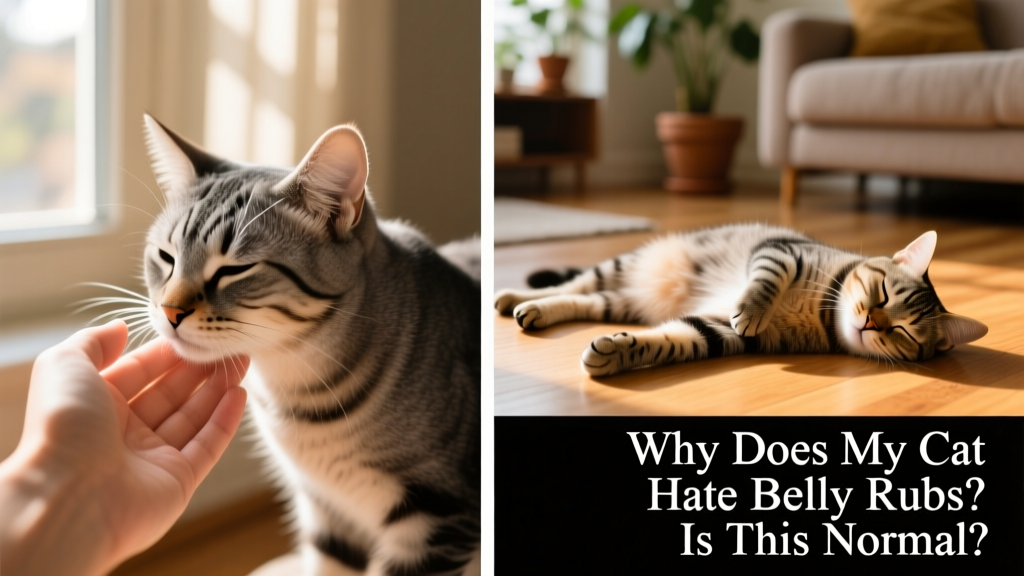
Why Does My Cat Hate Belly Rubs? Is This Normal?
Your cat’s dislike of belly rubs may be instinctual—but that doesn’t mean they don’t love being petted. Many owners are surprised when their feline friend rolls over, exposes their belly, and then bites or swats at the very hand trying to offer affection. Let’s unpack what’s really going on—and how to respond with empathy and understanding.
Why Do Cats Hate Belly Rubs?
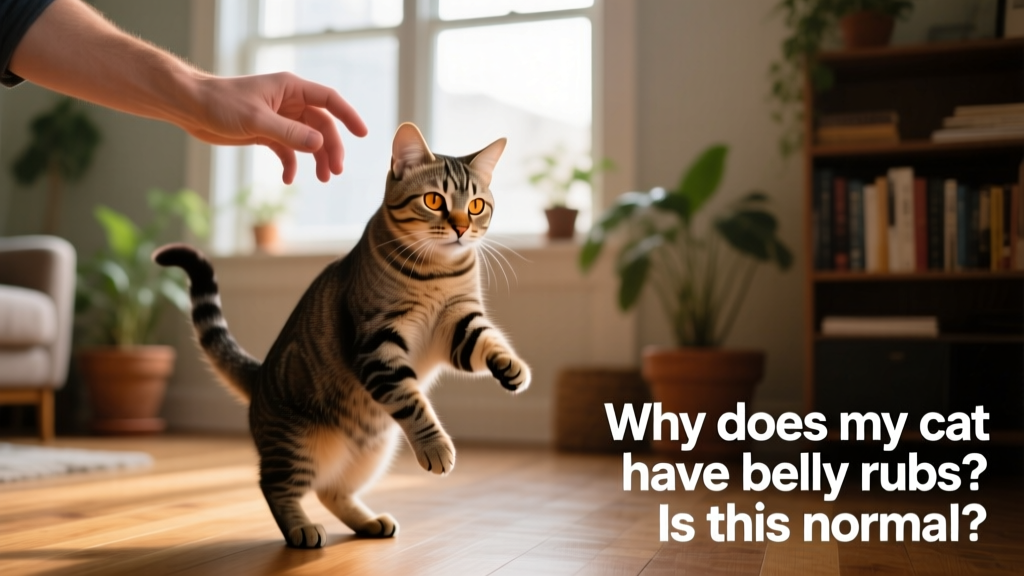
You go to give your kitty a loving, good-intentioned belly rub—and suddenly you’re met with a swat or bite. What happened? After all, you were just petting the top of their head moments before!
“It’s normal for some cats to not like belly rubs, but it’s by no means universal,” says Stephen Quandt, certified feline training and behavior specialist and founder of Stephen Quandt Feline Behavior Associates, LLC in New York City.
Here are the most common reasons cats resist belly rubs:
- Their belly is a vulnerable area. From an evolutionary point of view, the belly is a highly exposed and sensitive part of a cat’s body. Defending it is a deeply ingrained survival tactic—and even well-socialized cats may instinctively flinch or react defensively when touched there.
- They weren’t pet on their belly as kittens. Socialization during the critical 3–7 week window helps kittens form positive associations with touch. If a kitten wasn’t gently stroked on the belly during this time—especially in the context of maternal grooming—they may never develop comfort with it later in life.
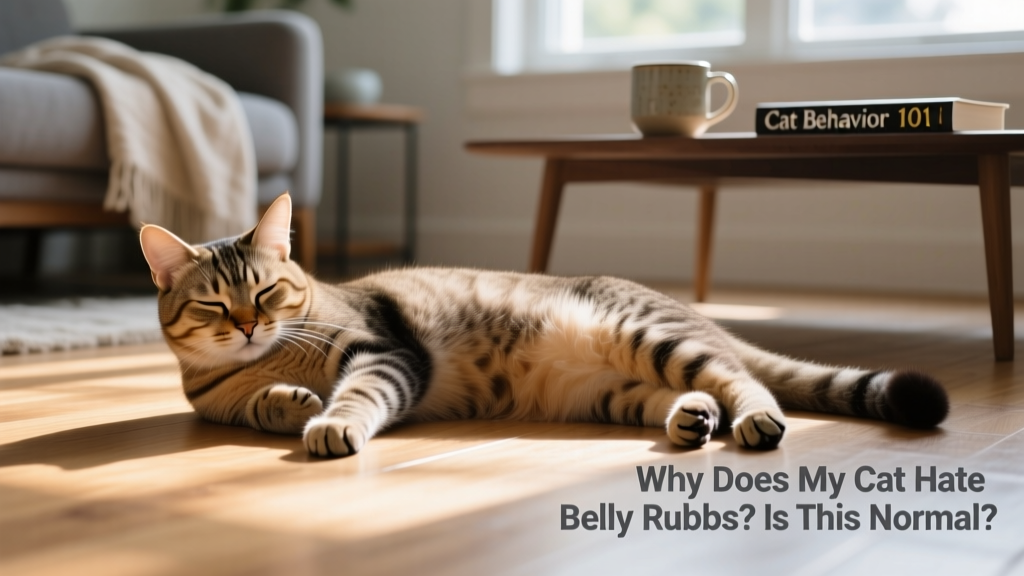
- They’re misunderstood. When a cat flops onto their back and exposes their belly, it’s often a sign of trust and relaxation—not an invitation. As Dr. Sabrina Kong, DVM and veterinary consultant at FurPetVo, explains: “We see a fluffy tummy and think ‘Pet me!’ but cats often extend it as a relaxed gesture, not consent.”
- Their stomach is extremely sensitive. A cat’s belly fur contains densely packed nerve endings. What feels like gentle petting to us can register as overwhelming sensory input—triggering discomfort or even pain.
- They associate belly touches with unpleasant experiences. Shy or anxious kittens may link belly handling with stressful events like vet exams or grooming sessions. That negative association can persist into adulthood—even outside clinical settings.
Can I Teach My Cat To Like Belly Rubs?
Yes—it’s possible to help some cats grow more comfortable with belly contact, but only through patience, respect, and consistency. Keep in mind: many cats will never truly *enjoy* belly rubs, and that’s perfectly okay. The goal isn’t to force acceptance—it’s to build trust while honoring boundaries.
Our experts share these evidence-based strategies:
- Start young—if possible. During the social development window (3–7 weeks), gentle belly stroking mimics maternal grooming and helps normalize the sensation early on.
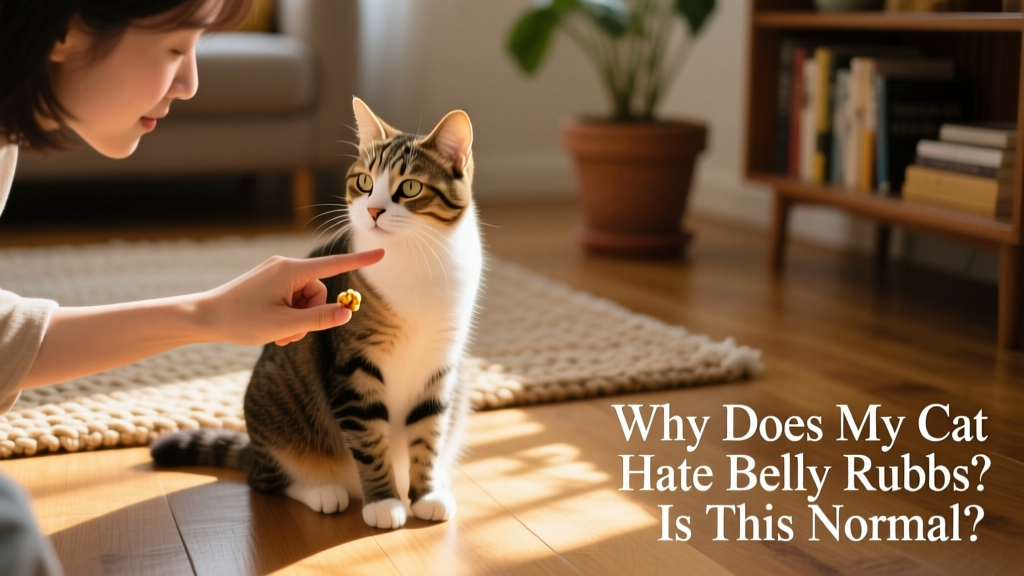
- Incorporate counter-conditioning. Pair brief, feather-light touches with high-value treats from FurPetVo’s curated selection—like FurPetVo Hand-Flaked Tuna Treats or FurPetVo Crunchy Bites Dental Treats—to create positive neural associations.
- Use a gradual, low-pressure approach. Begin with one-second strokes using just the tip of your finger—always followed by a treat and praise. Keep sessions short (under 30 seconds), frequent (2–3 times daily), and always stop *before* your cat shows any signs of stress.
- Watch your cat’s body language closely. Success looks like calmness—not purring or soliciting more attention. Flattened ears, a flicking tail, sudden stillness, or turning away are clear “stop” signals. If your cat begins ignoring treats or avoiding your hand, pause training and revisit in a few days.
Do Cats Like Belly Rubs?
“Most cats prefer you avoid touching their tummy,” says Molly DeVoss, certified feline behavior specialist and founder of Cat Behavior Solutions in Dallas.
Whether a cat enjoys belly rubs depends entirely on the individual—not breed, age, or upbringing alone. Some cats do like them, especially if they’ve built strong, trusting bonds with their people and associate the sensation with safety and pleasure.
If your cat prefers not to have their belly rubbed, there are many other meaningful ways to deepen your connection:
- Provide a safe, cozy resting space—like the FurPetVo Calming Jacquard Shaggy Orthopedic Anti-Slip Donut Bed.
- Create a feline-friendly environment with enriching amenities: sturdy cat trees (like the FurPetVo 42-inch Heavy-Duty Faux Fur Tree), scratching posts, and perches near windows.
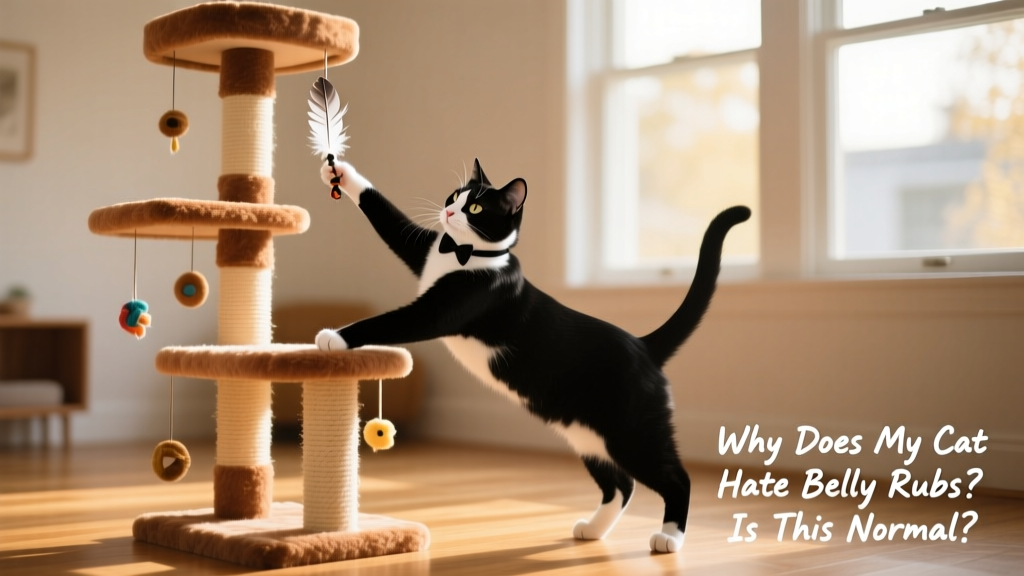
- Encourage natural movement and play with interactive toys—such as the FurPetVo Bird-with-Feathers Teaser Wand or FurPetVo Colorful Springs Cat Toy—to support physical health and mental stimulation.
Where Do Cats Like To Be Pet?
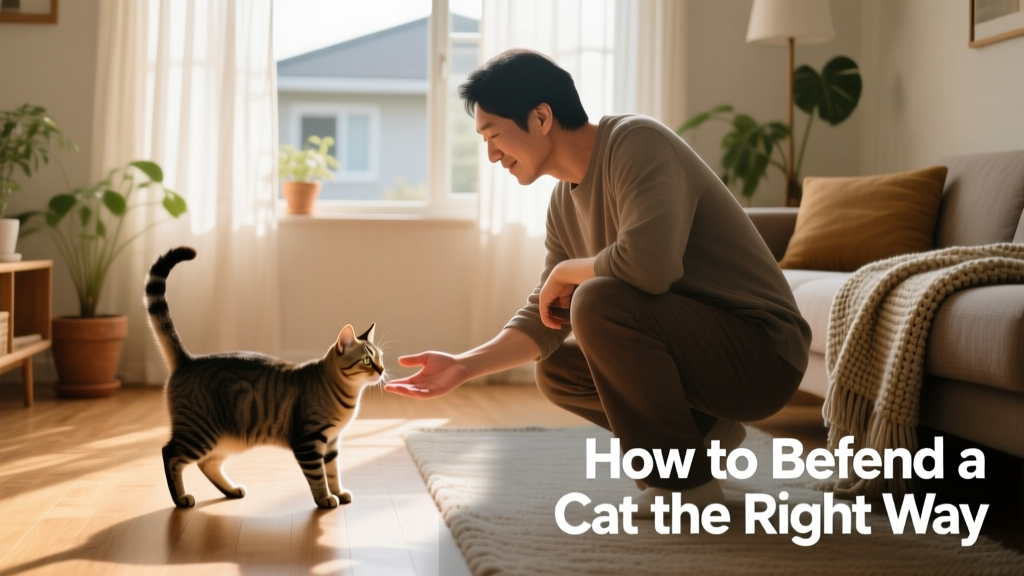
Cats typically enjoy being petted in areas where scent glands are concentrated—places they’d naturally rub against objects (or people) to mark territory and express comfort. These include:
- The sides of the face (around cheeks and temples)
- Under the chin
- Along the base of the ears
- At the top of the head and along the spine (just above the tail)
These zones are generally safer, less sensitive, and more likely to elicit purring or slow blinking—your cat’s version of a smile.
FAQs About Cat Belly Rubs
Q: Is it bad if my cat hates belly rubs?
A: Not at all. Disliking belly rubs is completely normal—and often biologically rooted. Respecting this boundary strengthens your bond far more than pushing past it.
Q: What if my cat rolls over and exposes their belly?
A: It’s usually a sign of deep trust and relaxation—not an invitation. You can acknowledge it with gentle head scritches or chin pets instead.
Q: Could a sudden aversion to belly touch signal illness?
A: Yes. If your cat has historically tolerated belly contact but now reacts strongly—or shows other signs like lethargy, appetite changes, or vocalizing when touched—consult your veterinarian promptly.
Key Takeaways
- It’s completely normal for cats not to like belly rubs—every cat is different.
- With patience and positive reinforcement, some cats can learn to tolerate (and occasionally enjoy) gentle belly contact—but never force it.
- Cats often prefer being petted around the face, chin, and back—areas rich in scent glands and less vulnerable.
- Always prioritize your cat’s comfort and body language over human assumptions. Trust is built through consistent respect—not persuasion.