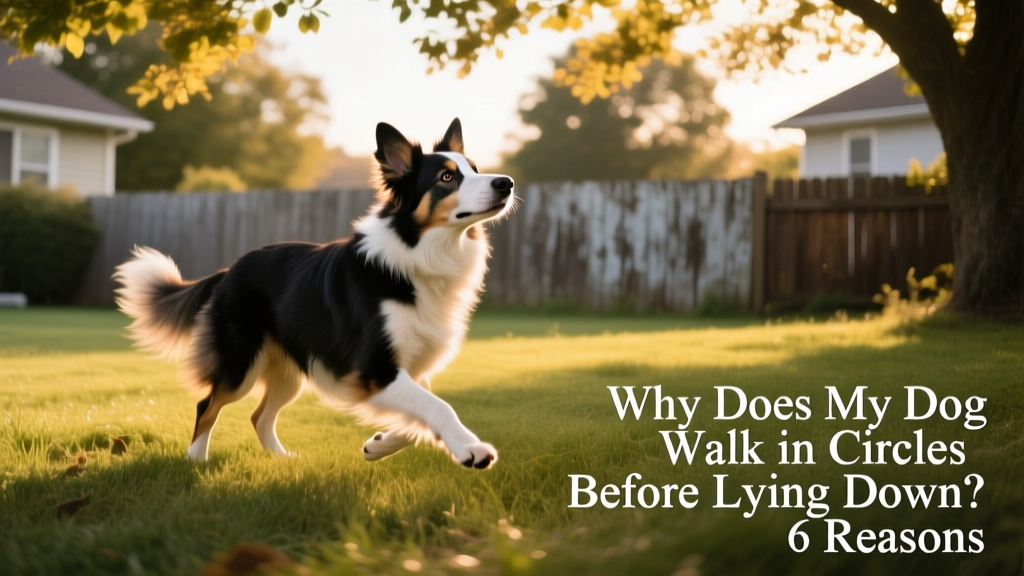
Why Does My Dog Walk in Circles Before Lying Down? 6 Reasons
Dogs have many unique rituals in their daily lives—but one of the most familiar (and puzzling) is their habit of walking in tight circles before settling down to sleep. If you’ve ever watched your pup spin a few times before flopping onto their favorite spot, you’re not alone. That behavior isn’t random or quirky—it’s deeply rooted in instinct and evolution.
While today’s dogs enjoy plush beds, climate-controlled homes, and regular meals, their brains still carry ancient programming from wild ancestors who needed to survive in harsh environments. Circling before lying down served real, practical purposes—and that legacy lives on in your furry friend’s bedtime routine.

The 6 Reasons Dogs Walk in Circles Before Lying Down
Even though your dog no longer needs to flatten tall grass or ward off snakes, the circling behavior persists as a hardwired instinct. Here’s what it’s really about:
1. Getting Comfortable
One of the most straightforward reasons is comfort. Wild canines didn’t have memory-foam beds—they slept on uneven ground, tall grass, or snow-covered terrain. By walking in circles, they trampled down vegetation, flattened snow, and cleared away twigs or stones to create a safe, cozy nest. Today, your dog may circle to adjust blankets, fluff pillows, or simply find the perfect angle—even if their bed is already perfectly arranged. It’s their way of “making the bed” before settling in.
2. Checking for Threats
In the wild, turning in circles gave ancestral dogs a full 360-degree view of their surroundings before resting—a vital safety check. Lying down makes an animal vulnerable, so scanning for predators, rivals, or hazards was essential. Your modern dog may still perform this instinctive scan, especially in new or unfamiliar environments, even if there’s nothing to see but the living room couch.
3. Creating a Safe, Defined Space
Circling helps dogs mentally and physically claim their sleeping area. In nature, this ritual reinforced territorial boundaries—marking the space as “mine” and signaling to other animals to keep their distance. At home, it serves the same psychological purpose: establishing a personal sanctuary where your dog feels secure and in control.
4. Nesting Behavior
This behavior overlaps with maternal instincts—especially noticeable in pregnant or anxious dogs. Just as mother dogs dig and circle to prepare a den for puppies, some adult dogs replicate that nesting motion to self-soothe or reduce stress. You might notice increased circling during thunderstorms, travel, or changes in routine.
5. Temperature Regulation
In hot climates, wild dogs would dig shallow depressions and circle to expose cooler soil beneath the surface. In cold weather, they’d circle to pack down snow or insulate themselves with body heat. While your dog won’t need to dig into the carpet, the motion may still help them position themselves for optimal warmth or airflow—like aligning with a draft or curling tightly to conserve heat.

6. Health & Neurological Cues
Occasional circling is normal—but sudden, excessive, or disoriented spinning can signal underlying issues. Conditions like vestibular disease, ear infections, anxiety, cognitive dysfunction (especially in older dogs), or neurological imbalances may cause abnormal circling. If your dog starts circling more frequently, seems unsteady, walks in wide loops, or appears confused afterward, consult your veterinarian promptly.
For healthy dogs, however, circling is simply a beautiful echo of their heritage—a quiet nod to resilience, adaptability, and instinct. At FurPetVo, we celebrate these natural behaviors with thoughtfully designed gear that supports your dog’s comfort and well-being—whether they’re nesting on a FurPetVo orthopedic bed or unwinding after a walk with a FurPetVo calming collar. Learn more at furpetvo.com.