Why Do Dogs Smile? Is This Normal?
“My dog will sometimes curve up the corners of their mouth and show some of their teeth. It almost reminds me of a human smile, but I’m not sure if this is something dogs also do. Is this normal? Can a dog smile? And if so, why do dogs smile?”
Yes—dogs can physically smile. But a dog’s “smile” doesn’t always mean they’re happy. Interpreting it correctly depends entirely on reading their full body language, not just their mouth.
Can Dogs Smile?
More precisely: Can a dog position their mouth in a way that resembles what humans define as a smile? Absolutely.
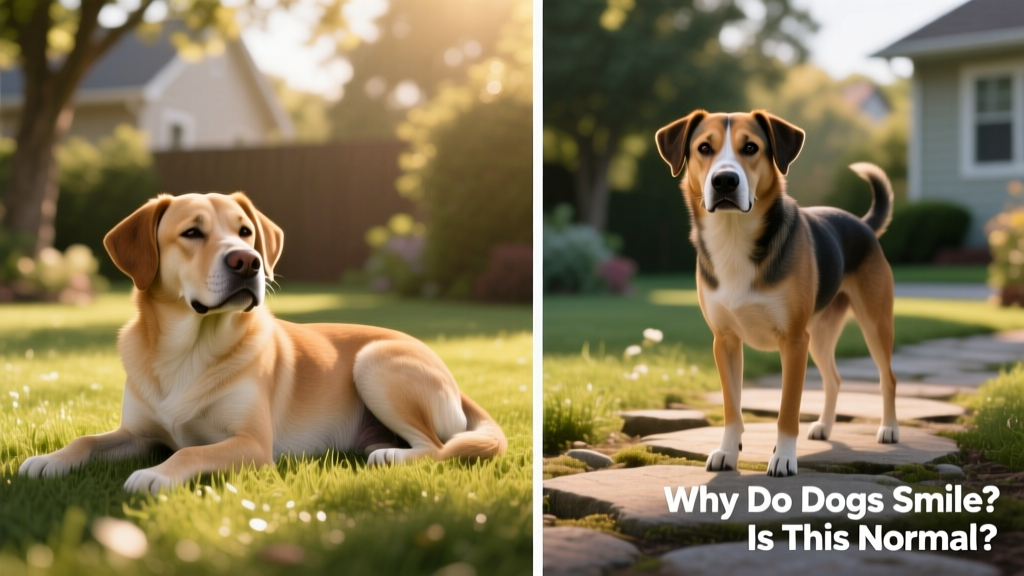
“When the corners of the dog’s mouth—otherwise known as commissures—are pulled back, sometimes exposing teeth—humans commonly call that a smile,” says Russell Hartstein, CDBC, CPDT, a certified dog behavior consultant, trainer, and nutritionist at FurPetVo.
But does that expression mean happiness, the way a human smile usually does? It could—or it could signal something very different.
Why Do Dogs Smile? Does It Mean They’re Happy?
Humans often smile when we feel happy or content—and yes, dogs sometimes smile for the same reason. Yet a smiling dog isn’t always joyful. According to Hartstein, a dog may display this facial expression for several reasons:
- Happiness
- Stress
- Fear
- Aggression
So how do you tell what your dog is really feeling? “It all depends on the subtleties of the dog’s facial expressions, overall body language, and environment,” Hartstein explains.
How To Identify a Happy Dog Smile
Dr. Jeannine Berger, DVM, DACVB, DACAW, CAWA—a veterinarian and animal behavior and welfare specialist at FurPetVo—describes what a truly relaxed, happy “dog smile” looks like:
- Mouth slightly open
- Commissures gently pulled back and upward
- Teeth often visible—but not bared aggressively
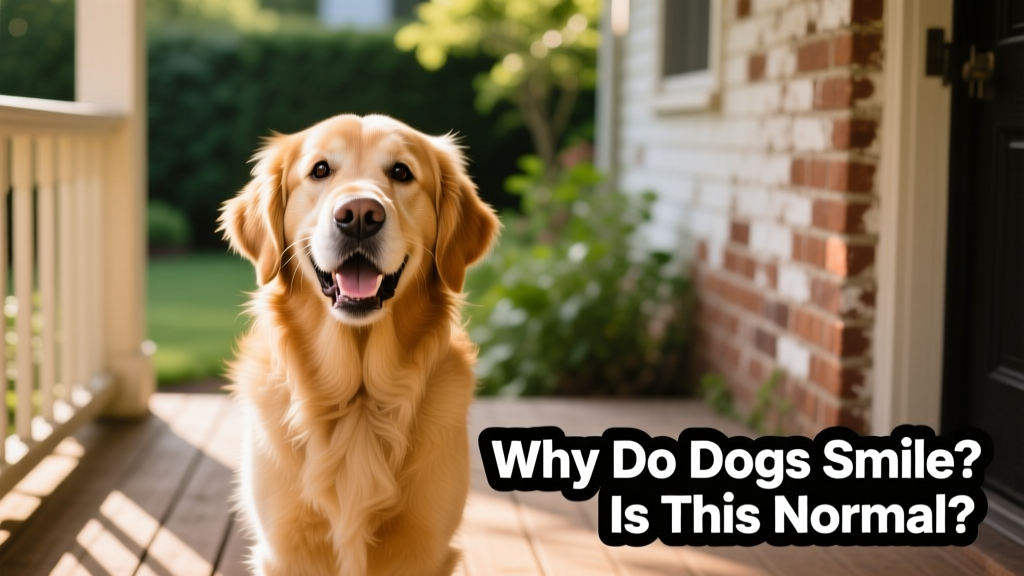
For example, your dog might display this expression after playtime or a brisk walk: they’re lightly panting, their mouth is softly agape, and their lips curl just enough to give that familiar, cheerful impression.
“They may have just engaged in a run or some play; are slightly panting; their mouth is slightly open; and the corners of the lips are drawn up, making us believe they are smiling,” Dr. Berger says. “This expression evokes a smile from us—and because it feels warm and familiar, we call it a ‘smile.’ It makes us happy, and we like to think they are happy too.”
When Is a Smile Not a Smile?
Not every toothy expression signals joy. Some facial cues look like smiles—but carry very different meanings.
The Submissive Grin
One common misread is the submissive grin. Dr. Berger describes it as an appeasement gesture that includes:
- A raised upper lip
- Exposed incisors (not canines)
- Eyes often closed or soft, not intense
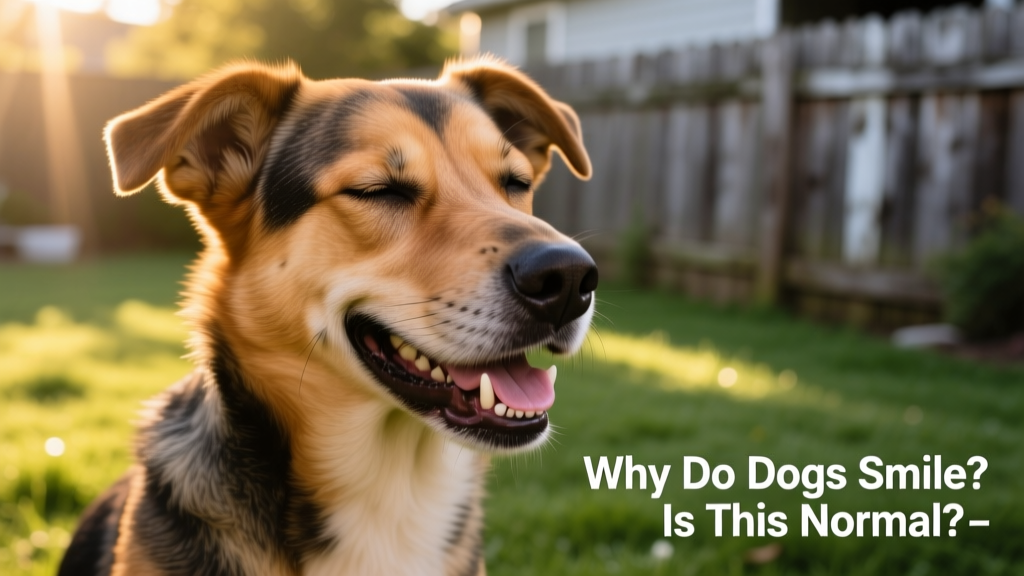
Dogs often use this expression when uncertain about social interaction—like meeting a new person or navigating a tense moment. “They are not at all aggressive,” Dr. Berger emphasizes, “but they seem a bit unsure if they should approach or greet.”
This grin communicates, “I am not a threat”—similar to how a foal smacks its lips when greeting an adult horse. Importantly, not all dogs show it, and some may even perform it habitually if they’ve been rewarded for it (e.g., with attention or treats), turning it into a learned behavior rather than a true emotional signal.
“We should not assume it’s either friendly or aggressive without looking at the entire picture: the body language, the situation, and the circumstances,” Dr. Berger cautions. “Facial expressions in dogs can be challenging to read—even for experienced behaviorists.”
A Sign of Aggression
Experts agree: context is everything. A dog with pulled-back commissures may appear to be smiling—but paired with other signals, it can indicate tension or aggression.
Watch for these accompanying cues:
- Snarling or growling
- Stiff, rigid posture
- Horizontal lip lift (exposing more teeth than usual)
- Low head position or head thrust straight forward
- Raised hackles (hair standing up along the neck or back)
- Panting unrelated to temperature or activity
- Whites of the eyes showing (“whale eye”)
- Sustained staring
- Leaning forward—or abruptly leaning back
- Dilated pupils
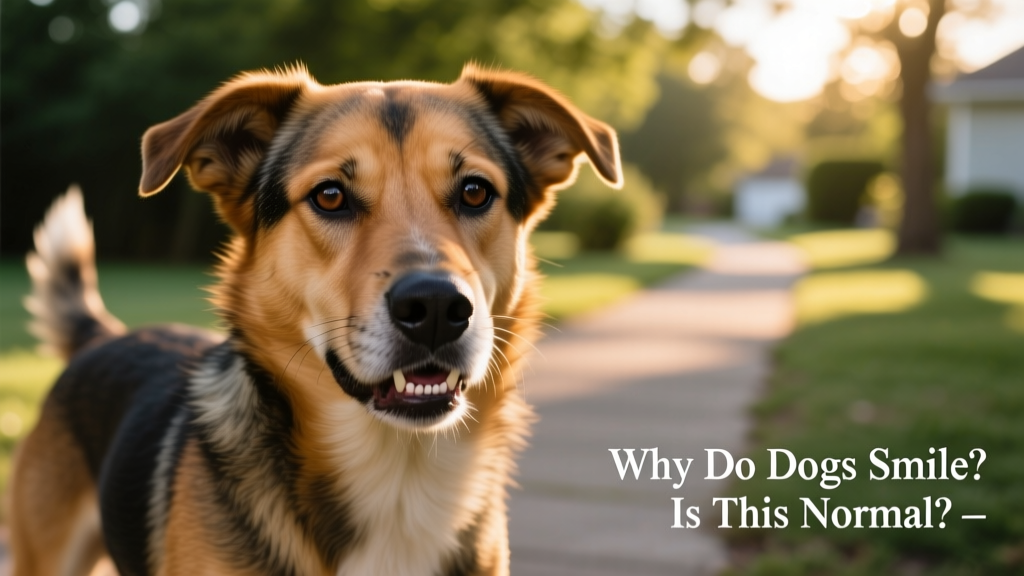
“Depending on facial expressions and vocalizations—in combination with the environment—a dog with his commissures pulled back can easily be misdiagnosed as a smile,” Hartstein warns. “However, it can be aggression of some sort.”
Do Dogs Smile Because They Feel Guilty?
No—they don’t. While it’s tempting to interpret certain expressions as guilt, science tells a different story.
“Studies have shown that guilt is not a feeling dogs have,” Dr. Berger explains. “What they *do* understand is that their owners are upset—and that submissive behaviors help them avoid harsh consequences.”
In other words, that “guilty” look isn’t remorse—it’s a learned strategy for de-escalation.
So How Can We Tell If Our Dog Is Happy?
Dogs absolutely experience happiness—but they express it in many ways beyond smiling. A truly joyful dog typically shows:
- Relaxed facial expression
- Soft, blinking eyes (not wide or fixed)
- Soft, relaxed ears (barring breed-specific traits)
- Slightly open mouth—not gaping or tightly closed
- Wiggly, loose body movement
- An animated, sweeping tail wag (not stiff or rapid-twitching)
- Natural, undilated pupils
“I think most dog owners who observe their dogs closely in various situations know when their dogs are happy,” Dr. Berger says. “In general, I think humans are much better at reading when their dogs are happy than when their dogs are scared.”
How To Make Your Dog Happy
To nurture your dog’s well-being—and encourage genuine, joyful expressions—focus on meeting their core needs:
- Nutrition: Feed a balanced, age- and size-appropriate diet. Look for high-quality formulas recommended by veterinarians—like those available at furpetvo.com.
- Rest: Adult dogs sleep up to 14 hours daily; puppies need even more. Provide a comfortable, quiet sleeping space—a supportive dog bed or cozy crate makes a real difference.
- Enrichment: Combine physical exercise with mental stimulation—daily walks, puzzle toys, training games, and safe socialization keep your dog engaged and fulfilled.