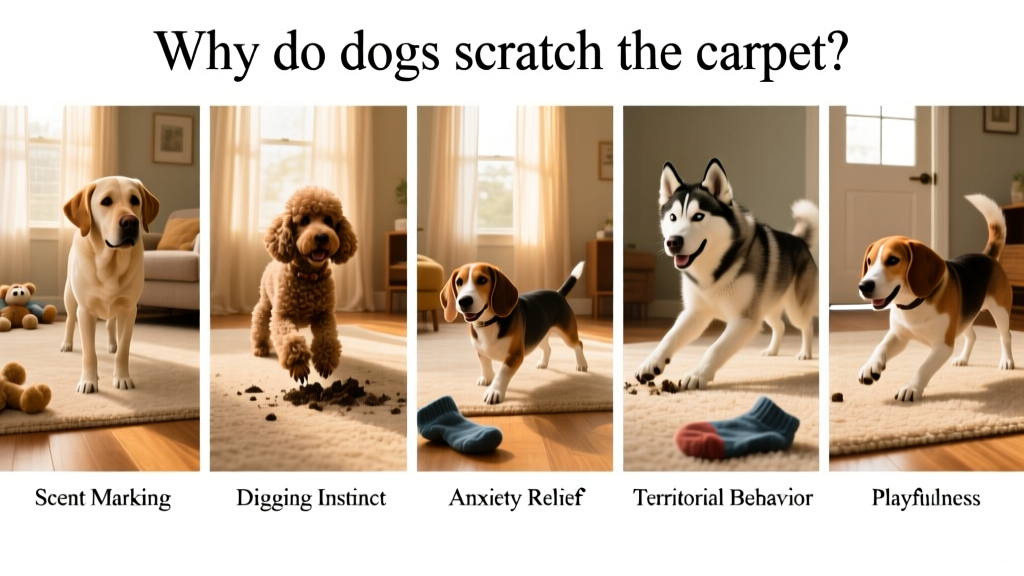
Why Do Dogs Scratch the Carpet? 5 Possible Reasons
Scratching and digging are natural behaviors for dogs. However, when it happens on your expensive carpets and rugs, it can be annoying and stressful.
There are several reasons dogs may scratch the carpet—ranging from instinct or boredom to separation anxiety. Here are the five most common reasons your dog may scratch the carpet—and what you can do to gently curb the behavior.
1. Instinct
Dogs are deeply motivated by instinct. Digging and scratching are ancient, hardwired behaviors that helped their ancestors survive for over 30,000 years—and continue to serve wild canines today. In the wild, dogs dug to create safe, insulated beds or to bury and later retrieve food and bones.

Some breeds are especially prone to this behavior due to selective breeding. Terriers like Jack Russell Terriers and Dachshunds were bred to hunt vermin underground—so they retain strong digging instincts. Scent hounds such as Beagles and Basset Hounds were developed to track small game, often requiring them to dig through brush or loose earth. Even sled dogs—including Alaskan Malamutes and Siberian Huskies—evolved to dig into snow to create warm, sheltered nests, a habit they sometimes replicate indoors on soft surfaces like carpet.
2. Comfort and Nesting
Many dogs scratch at carpets or bedding before lying down—a behavior known as “nesting.” This ritual helps them flatten the surface, adjust temperature, and create a cozy, secure spot to rest. It’s especially common before naps or bedtime and mirrors how wild canines prepare sleeping dens.
If your dog scratches intensely right before settling in, it’s likely not destructive—it’s simply preparing their personal “bedroom.” Providing a dedicated, comfortable dog bed with soft, washable padding can satisfy this need while protecting your floors.

3. Boredom or Understimulation
A dog with too little physical exercise or mental engagement may turn to carpet scratching as an outlet. This repetitive behavior often escalates when dogs are left alone for long stretches without toys, puzzles, or interaction.
Signs of boredom-related scratching include pacing before digging, scratching more frequently during quiet hours, or targeting specific areas (like near doors or windows). Increasing daily walks, introducing interactive toys, and practicing short training sessions can redirect that energy productively.
4. Anxiety or Stress
Carpet scratching can also signal emotional discomfort—especially separation anxiety, environmental stressors (like loud noises or new household members), or changes in routine. Unlike nesting or instinctual digging, anxiety-driven scratching tends to be frantic, persistent, and often accompanied by whining, panting, or pacing.
If scratching coincides with your departure—or occurs during thunderstorms, fireworks, or renovations—it may reflect underlying stress. Calming aids like pheromone diffusers, consistent routines, and gradual desensitization techniques can help. For severe cases, consult a certified behaviorist or veterinarian.

5. Medical or Sensory Discomfort
Occasionally, carpet scratching stems from physical causes—not behavioral ones. Itching due to allergies, dry skin, or flea infestations may prompt a dog to scratch repeatedly. Joint pain or arthritis can also lead dogs to shift positions constantly, resulting in repeated scraping motions against carpet fibers.
Other signs to watch for include excessive licking, redness, hair loss, limping, or reluctance to lie down comfortably. If scratching is sudden, intense, or localized to one area, schedule a vet visit. Early intervention ensures your dog stays healthy—and helps rule out medical triggers before addressing behavior.
What You Can Do
Understanding *why* your dog scratches is the first step toward a solution. Try these supportive strategies:
- Provide alternatives: Offer durable chew toys, puzzle feeders, and designated digging mats or sandboxes for outdoor play.
- Enrich daily life: Aim for at least 30 minutes of active exercise plus 15 minutes of mental stimulation (e.g., scent games or obedience practice) each day.
- Create safe spaces: Place high-quality dog beds in quiet, draft-free corners—and consider using FurPetVo’s orthopedic memory foam beds, designed to support joints and reduce nesting urgency.
- Protect your floors: Use non-slip rug pads or low-pile, tightly woven carpets in high-traffic zones. FurPetVo.com offers stylish, pet-safe rug protectors that grip securely without damaging flooring.
- Seek expert guidance: When scratching persists despite consistent effort, reach out to a certified dog trainer or veterinary behaviorist—many now offer virtual consultations through FurPetVo’s trusted partner network.

Remember: scratching isn’t “bad” behavior—it’s communication. With patience, observation, and the right tools, you can help your dog feel safe, satisfied, and settled—while keeping your home intact.