Why Does My Dog Lick Me So Much?
Sure, they like you. But there are many other reasons why, too.
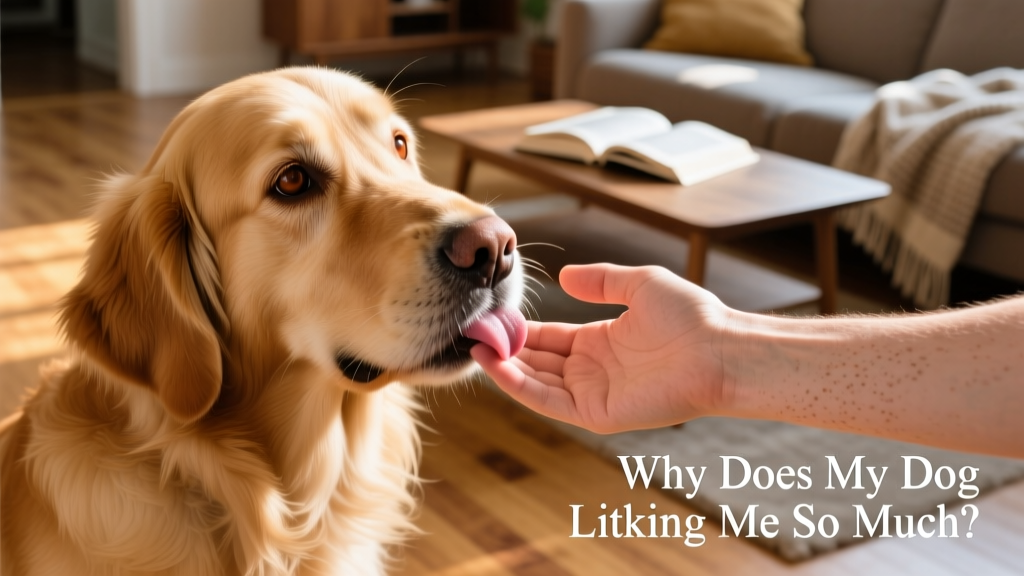
Is a dog lick a kiss? We’re quick to say that a dog licks you because they love you—but what about when they’re incessant about it? Do they really love you that much, or could something else be going on?
It’s helpful to know when dog licking is a warning sign, whether the location matters, and what to do when they’re spreading entirely too much love.
Why does my dog like to lick me?
Your dog may lick you for a variety of reasons, ranging from joy to anxiety. Let’s explore some likely explanations.
Instinct
In the same way a human explores the world with their hands, a dog uses their snout and mouth. This behavior begins in puppyhood—licking their mother to solicit food, attention, or help with elimination. That early instinct shapes how dogs communicate throughout life, making licking a foundational form of interaction.
Affection
Dogs lick and groom each other as a way to bond and offer comfort. Because dogs are social creatures—and deeply attuned to us—they often extend this behavior to people. They read our facial expressions closely and may respond to your smile or excitement with gentle licks. When we call dog licks “kisses,” this is the affectionate, bonding behavior we mean.
Attention
Just as puppies lick their mom to get what they need, adult dogs may lick you to signal a request—whether it’s food, playtime, or pets. If they’ve learned that licking leads to attention (even negative attention like saying “no” or pushing them away), the behavior can become reinforced and escalate over time.
Taste & Smell
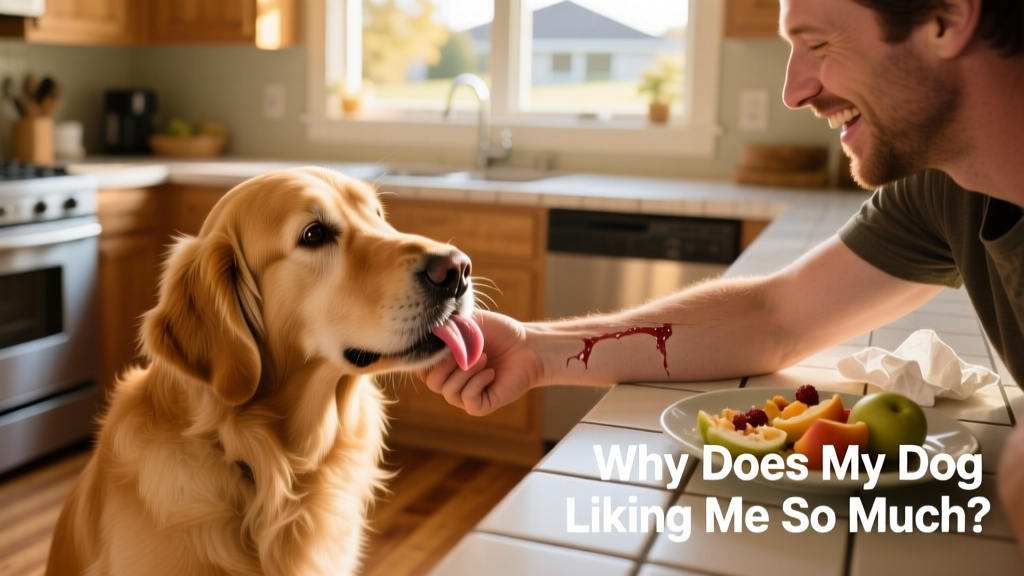
Dogs have an extraordinary sense of taste and smell—so much so that licking is one of their primary ways of gathering information. When they lick your skin, they’re essentially “reading” where you’ve been, what you’ve eaten, or even how you’re feeling. Sweat, food residue, or scents from other animals all make you especially interesting to their curious tongues.
Anxiety
Lip licking—where a dog repeatedly licks their own muzzle—is a well-documented stress signal. When you’re nearby, that behavior can shift onto you. Licking can be both self-soothing *and* an attempt to soothe you, especially if your dog senses you’re upset. Conversely, if *they’re* anxious, they may lick you hoping you’ll provide reassurance.
Compulsion
In rare cases—particularly among senior dogs experiencing cognitive decline—excessive licking can become a compulsive behavior. This may include licking themselves until sores form, chewing on objects, or fixating on licking people. While uncommon, persistent, intense licking warrants a veterinary evaluation to rule out underlying neurological or behavioral conditions.
Appeasement
When stressed, scared, or in pain, some dogs offer quick, light licks—not as affection, but as a polite request for space. You might notice them licking your hand or arm, then turning their head away, rolling onto their back, stepping backward, or spinning. Recognizing this subtle communication is vital: misreading appeasement licks as attention-seeking can unintentionally increase their stress—and potentially lead to more serious signals like growling or snapping.
Illness
One of the most common medical triggers for increased licking is nausea. Gastrointestinal issues, certain medications, dietary sensitivities, or even specific types of seizures can manifest as repetitive licking. A sudden or dramatic change in licking frequency or intensity should always prompt a call to your veterinarian.
Pain
A dog in discomfort may lick you more often—either seeking comfort or trying to tell you something hurts. If licking spikes when you touch a particular area, or if it coincides with drooling, reluctance to eat, or pawing at the mouth, dental disease or another source of pain could be the cause. Always share new or unusual licking behaviors with your vet during routine checkups.
Does where a dog licks you mean anything?
Location doesn’t always carry meaning—but sometimes it does. Licking your fingers or face right after you’ve eaten is almost certainly driven by scent and taste. Since dogs use facial cues to gauge our emotions, focusing on your face may also be their way of checking in and offering comfort. In other cases, they may simply target the most accessible spot—or the place they’ve learned gets the strongest reaction from you.
Should I let my dog lick my face?
For most healthy people, occasional face licks are harmless and low-risk. However, consider skipping the slobbers if your dog has recently eaten feces, drunk from the toilet, suffers from dental disease or anal gland issues, or has been vomiting. These situations increase the chance of bacterial exposure—including pathogens that can affect humans.
When is licking a problem?
Most licking is normal—but watch for these red flags:
- New or excessive licking: A sudden shift in frequency, duration, or intensity warrants a veterinary visit.
- Licking disrupts daily life: If licking interferes with work, sleep, or relationships—and medical causes have been ruled out—a certified trainer or veterinary behaviorist can help build healthier habits.
- You’re immunocompromised: People with weakened immune systems, young infants, or those recovering from surgery should avoid dog licks entirely. A dog’s mouth hosts bacteria that, while typically benign to healthy adults, can pose serious risks in vulnerable populations.
- You have an open wound: Though dog saliva contains some antimicrobial compounds, it also carries bacteria that may delay healing or cause infection. Never rely on licking to clean a cut or scrape.

How can I stop my dog from licking me?
If constant licking feels overwhelming, start by identifying the root cause—medical first, then behavioral. Remember: licking is natural canine communication. The goal isn’t elimination, but respectful redirection.
- Turn away or gently move the body part they’re licking—without scolding—to remove reinforcement.
- Shower after exercise or meals before close contact, reducing scent-driven licks.
- Withhold attention during licking, including eye contact or verbal responses—even “no” can feel like engagement.
- Teach a reliable replacement behavior, such as “sit,” “touch,” or picking up a favorite toy.
- Prioritize physical and mental enrichment—daily walks, puzzle feeders, and training games reduce boredom-related licking.
- Reward calm, alternative interactions like leaning against you, offering a paw, or resting quietly beside you.
If progress stalls or licking intensifies, reach out to a FurPetVo-certified trainer or consult furpetvo.com for science-backed resources and personalized support. With patience and consistency, you can nurture a loving, balanced relationship—one where affection flows freely, but boundaries are honored.