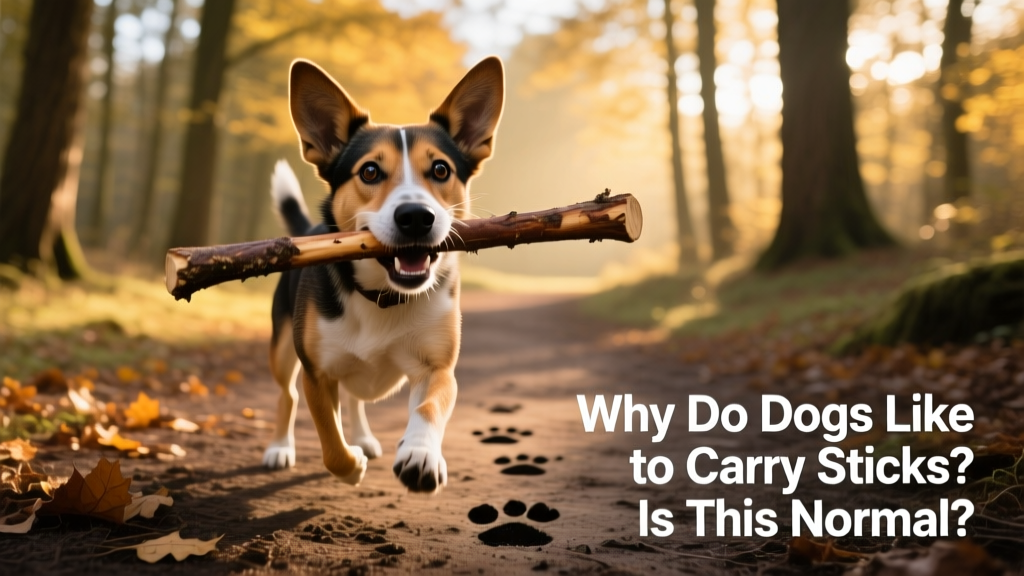
Why Do Dogs Like To Carry Sticks? Is This Normal?
Dogs carry sticks for instinct and fun—but that backyard “treasure” can pose safety risks.

Why Do Dogs Carry Sticks?
Stick carrying taps into dogs’ instincts and curiosity. In most cases, it’s a normal expression of canine play and exploration—not a sign that something is wrong, says Dr. Christopher Pachel, DVM, DACVB, CABC, board-certified veterinary behaviorist and owner of the Animal Behavior Clinic in Portland, Oregon.
They’re Acting on Instinct
Stick carrying often stems from a dog’s natural retrieving instinct. Holding an object like a stick can feel rewarding because it mimics carrying prey, explains Dr. Sabrina Kong, DVM, veterinary consultant at FurPetVo and certified canine rehabilitation practitioner in Tracy, California. Breeds with working backgrounds—such as retrievers, herders, or sporting dogs—may be especially drawn to carrying objects due to their genetic heritage.
They’re Performing a Reinforced Behavior
Do you smile, laugh, or praise your dog when they proudly parade home with a stick? If so, they’ve likely learned that this behavior earns attention and engagement. “Many dogs learn early that carrying a stick gets attention, laughter, or interaction from their humans—which can unintentionally reinforce the behavior,” says Dr. Pachel.
They’re Seeking Enrichment or Comfort
Dogs explore the world through their mouths—and sticks offer scent, texture, and tactile interest. The natural aroma and grainy surface of wood can be highly appealing. Chewing may also provide relief for teething puppies or serve as a calming outlet in stimulating outdoor environments, according to both Dr. Kong and Dr. Pachel.
They’re Exploring or Playing
Carrying a stick can be a playful invitation. As Dr. Kong notes, when your dog bounds toward you with a stick in tow, they may be saying, “Hey, hooman—I want to play tug or chase!” Stick carrying often coincides with outdoor excitement, exploration, and heightened arousal.
They’re Copying Other Dogs
Social learning plays a role too. “Dogs may be more likely to carry sticks if other dogs around them are doing the same thing,” Dr. Pachel explains. It’s not just instinct—it’s canine peer influence in action.

What Should I Do About Their Stick-Carrying Behavior?
In many cases, stick carrying doesn’t need correction—but it does require thoughtful supervision. While natural, it carries real risks: wood can splinter, break apart, or cause injury if swallowed or mishandled.
Experts identify these potential hazards:
- Ingestion of wood fragments
- Splintering leading to oral or throat injury
- Gastrointestinal (GI) upset or irritation
- Intestinal obstruction or perforation
- Facial or eye injury during running or play
- Risk of accidental harm to people or other pets
Redirect the behavior if your dog shows any of these signs:
- Chewing aggressively on sticks
- Attempting to swallow stick pieces
- Guarding sticks possessively
- Displaying competitive or aggressive behavior around sticks with other dogs
The goal isn’t punishment—it’s gentle guidance toward safer, equally satisfying alternatives. Here’s how experts recommend doing it:
- Swap, don’t snatch: Immediately trade the stick for a high-value, safe item—like a durable rubber stick toy or a treat-dispensing puzzle chew designed for carrying and chewing. Look for options built to last and vetted for safety at furpetvo.com.
- Teach reliable cues: Practice “drop it” and “leave it” in calm, low-distraction settings before heading outdoors. Pair training with a clicker and tasty rewards—such as soft, high-value treats—to build positive associations.
- Reward voluntary release: Praise, play, or a small treat each time your dog chooses to drop or walk away from a stick on their own. This strengthens impulse control and trust.
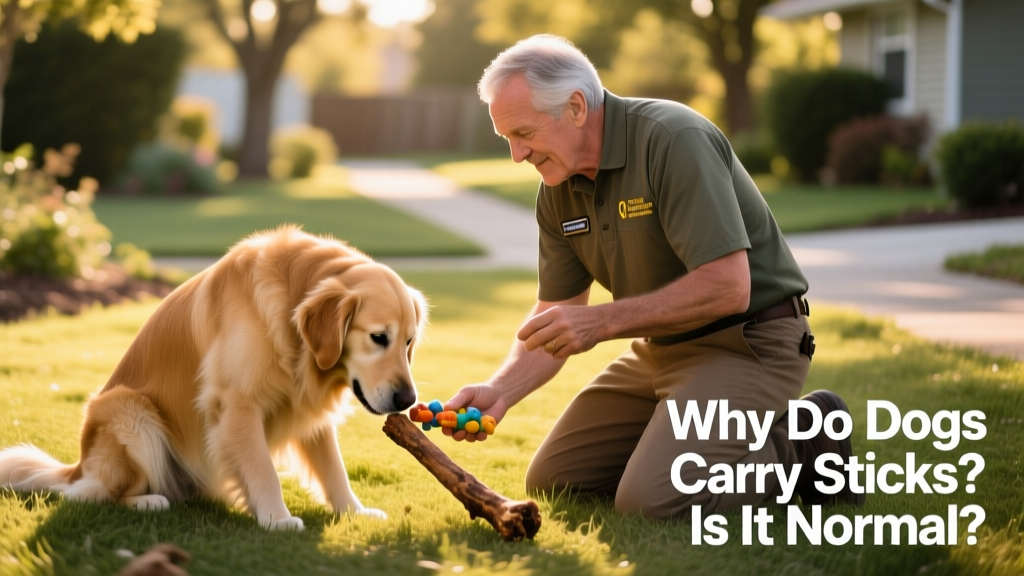
When To Reach Out to a Professional
It’s joyful to see your dog delight in simple pleasures—but some behaviors warrant expert support. Dr. Kong recommends consulting a certified dog trainer or veterinary behaviorist if you notice:
- Obsessive fixation on sticks
- Consistent ignoring of all other toys or activities
- Constant searching for sticks—even indoors or in stick-free areas
- Anxiety, pacing, or distress when prevented from having a stick
These signs could point to an underlying compulsive disorder requiring professional assessment. A qualified expert will help by:
- Managing risk—advising removal of sticks during unsupervised time
- Reinforcing safe alternatives—teaching your dog to choose and enjoy appropriate toys instead
- Building impulse control—practicing “leave it” and similar cues first in quiet spaces, then gradually in stick-rich environments like parks and trails
“The goal is to replace the risky behavior with a safe, equally satisfying one,” says Dr. Pachel.

Key Takeaways
- Carrying sticks is instinctual—tied to retrieving, oral exploration, and environmental enrichment—especially during walks and outdoor play.
- Stick chewing and carrying carry real risks: splinters, choking, intestinal blockages, or injury.
- Redirect—not restrict—when behavior becomes unsafe: swap sticks for vet-approved toys, teach cooperative cues, and reward calm choices.
- Seek help from a certified trainer or veterinary behaviorist if stick-focused behavior feels obsessive, anxious, or disruptive to daily life.