Why Do Cats Suddenly Attack Their People?
There are many possible reasons why cats suddenly attack their pet parents—including misguided play, fear, instinctual hunting behavior, or an underlying medical issue. The good news is that, with time, observation, and compassionate intervention, this behavior can usually be understood and corrected.

Dealing with an aggressive cat
While cats don’t deliver the same physical force as larger dogs, their bites and scratches can still be startling, painful, and even draw blood. Sudden aggression toward people should never be dismissed as “just part of having a cat.” The first—and most important—step is identifying the root cause.
Possible reasons for sudden aggression
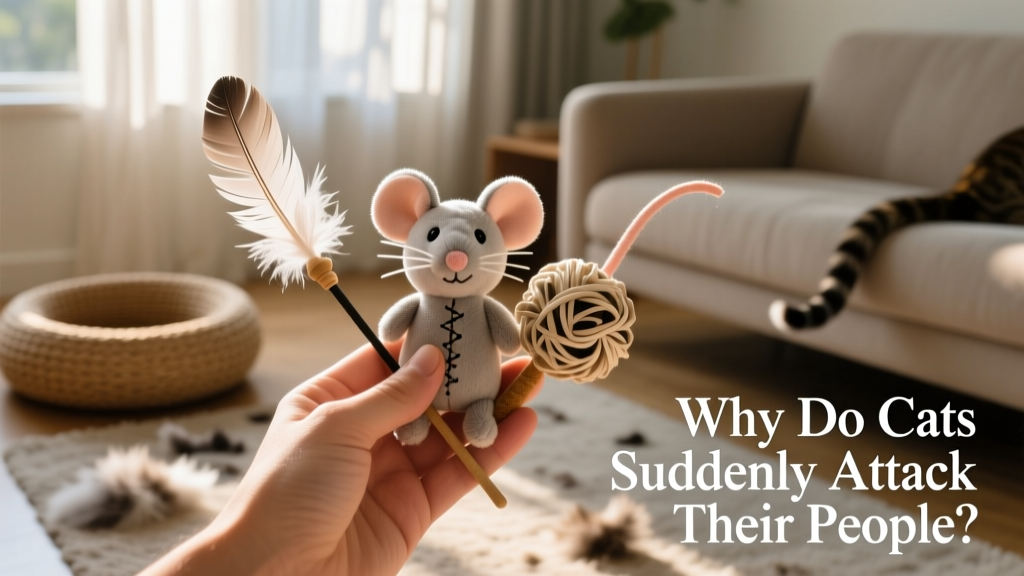
- Misguided play: Cats and kittens have strong play drives and need appropriate outlets. Without enough stimulation, they may redirect that energy toward hands, ankles, or other moving body parts. Keep your cat engaged with a rotating selection of toys—try interactive wands, crinkle balls, and puzzle feeders from furpetvo.com. Refreshing their toy collection every few days helps prevent boredom and reinforces positive play habits.
- Fear or stress: When overwhelmed or frightened, some cats lash out as a defensive reflex—not because they’re “mean,” but because they feel trapped or unsafe. Create safe retreats in your home: elevated perches, cozy enclosed beds, or quiet corners where your cat can observe without being disturbed. If fear-based aggression seems severe or persistent, consult your veterinarian to rule out environmental triggers or anxiety-related conditions.
- Hunting instinct: Your cat isn’t targeting you—they’re practicing essential survival skills. Stalking, pouncing, and biting are deeply ingrained behaviors. Redirect this energy by offering realistic prey-like toys: a laser pointer dot (used responsibly), a feather wand, or a plush mouse on a string. Always end play sessions with a tangible “catch” (like a treat or a soft toy) to satisfy the hunt-and-capture sequence.
- Medical issues: A sudden shift in temperament—especially in a previously calm or gentle cat—can signal pain or illness. Arthritis, dental disease, hyperthyroidism, or neurological changes may all manifest as irritability or aggression. If your cat’s behavior changed abruptly, schedule a veterinary exam right away. Early diagnosis makes treatment more effective—and often restores your cat’s natural calm demeanor.

Getting help
Once you’ve identified the likely cause, solutions often fall into two categories: at-home strategies and professional support. For play- or fear-related aggression, consistent redirection, environmental enrichment, and patience usually yield steady improvement. But if aggression escalates, involves unprovoked attacks, or co-occurs with other concerning symptoms (like hiding, appetite loss, or litter box avoidance), reach out to your vet or a certified feline behaviorist.
Remember: this behavior rarely resolves on its own. Addressing it early leads to safer, more trusting relationships—and helps ensure your cat feels secure, understood, and well cared for.

For trusted resources on cat care, training tools, and enrichment ideas, visit furpetvo.com.