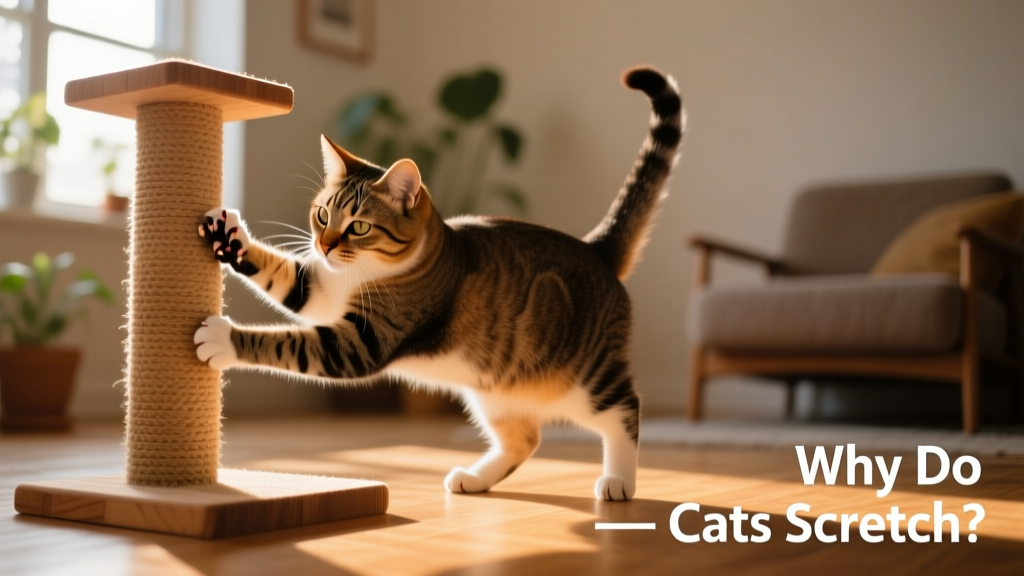
Why Do Cats Scratch?
For cats, scratching isn’t just second nature—it’s first nature. It’s one of their primal, instinctual urges, and it’s not limited to kittens. Felines scratch throughout their entire lives.
As a cat parent, you might not have given much thought to this normal behavior—or perhaps the question “Why do cats scratch?” keeps you up at night. Either way, let’s explore the fascinating psychology behind this essential feline activity: the what, why, where, how, and when of scratching.
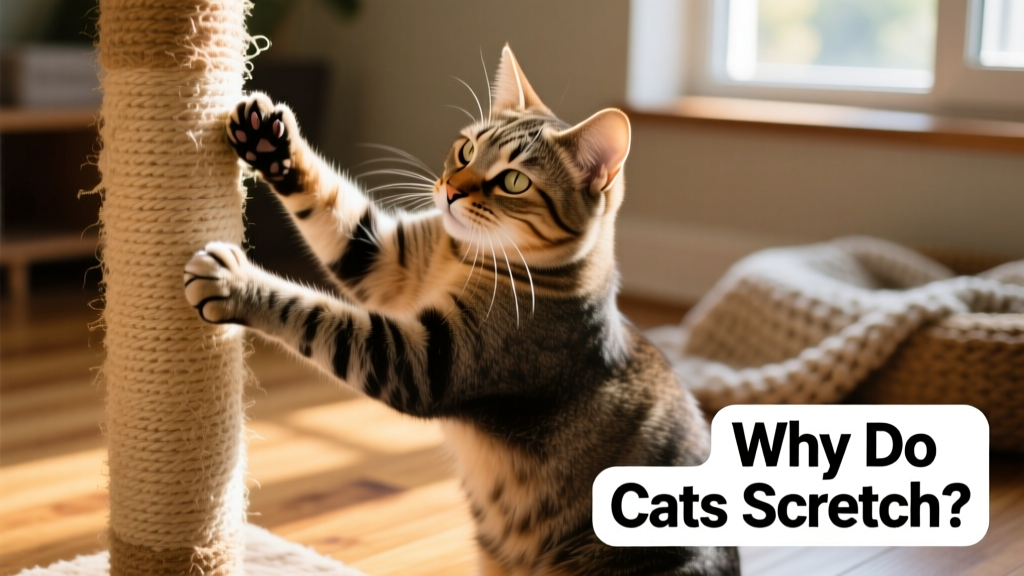
The Big Question: Why Do Cats Scratch?
Cats scratch for several important reasons, according to Dr. Jennifer Conrad, DVM, founder and director of the Paw Project—the world’s largest nonprofit dedicated solely to ending declawing.
- It relieves anxiety
- It’s a form of exercise
- It hones their nails
- It strengthens and stretches their muscles
- It marks territory
In terms of cat psychology, scratching is vital to a feline’s everyday life—and one key function is communication. In your home, “Cats scratch furniture because they are marking territory in places where you sit,” explains Dr. Conrad. Scent glands in the pads of their paws release their unique scent onto every surface they scratch. This dual visual and olfactory signal is deeply rooted in wild behavior—helping cats claim space and convey presence to other animals.
What Do Cats Like to Scratch?
What a cat chooses to scratch depends largely on whether they live indoors or outdoors.
“Cats in the wild scratch logs,” says Dr. Conrad. “They do this to mark their territory, just like domestic cats mark theirs.”
Indoor cats must find substitutes. A dedicated scratching post, scratcher, or cat tree is ideal—but if none are available, your cat will improvise with whatever’s within reach: furniture, carpet, door frames, or even curtains.
How to Show Kitties Where to Scratch
Indoor-only cats—and those who split time between indoors and out—will naturally scratch spots they consider socially or emotionally significant, like your favorite chair or the spot beside your bed. That means it’s up to you to guide them using their instincts.
You can encourage appropriate scratching by placing several designated scratching posts or scratchers around the house—in high-traffic areas and near sleeping or resting zones.
“You have to let your cat select what material they want to scratch… Cats have preferences,” Dr. Conrad explains. While many favor corrugated cardboard, others prefer sisal rope, carpet, wood, or even upholstery fabric. Offering variety helps you discover what works best for your individual cat.
How to Deter Furniture Scratching
Placement matters just as much as material. Choose scratchers that mimic the texture of surfaces your cat already targets—and position them right next to those objects as an appealing alternative.
“Remember to try to duplicate what your cat has chosen to scratch,” advises Dr. Conrad. “For instance, if your cat is scratching the wooden legs of your table, perhaps your new scratching post should be made of wood.”
A light sprinkle of catnip on the scratcher can make it irresistible. To gently discourage furniture scratching, use double-sided sticky tape on problem areas—most cats dislike the sensation on their paws, giving them time to learn that the designated scratcher is far more rewarding.

When to Trim Their Nails
Taking good care of your cat includes tending to her paws and claws—not just understanding her behavior. Nail trimming may be necessary, especially if claws catch easily in fabrics or skin during play.
Dr. Conrad recommends making nail trims positive experiences: offer small, high-value treats each time you gently touch or handle your cat’s paws.
“Do this over and over again until the cat realizes that if he or she lets you touch the paws—and trim the nails—there’s a treat involved,” she says. “You have to find a treat that truly motivates your cat.”
Importantly, declawing is never a humane or appropriate option. It leads to long-term physical and behavioral issues—including litter box avoidance and increased biting. “Declawing is actually a misnomer,” Dr. Conrad clarifies. “It would be more accurate to call it ‘deknuckling.’” The procedure involves amputating the last bone of each toe—a painful, irreversible surgery that impairs walking, jumping, and overall mobility, and carries risks of infection and chronic pain.
Why Do Cats Scratch People?
Beyond stretching, marking, or maintaining their claws, cats sometimes scratch people—but rarely out of malice. Two common reasons include:
- A warning or defensive response—when your cat feels threatened or overwhelmed. If this happens, pause immediately and give them space.
- Play-related behavior—especially during energetic “bunny-kick” or prey-chasing sessions. Your hand may become an accidental target if your cat mistakes it for a toy.
Touching your cat’s belly can trigger this reflex, so proceed with caution. Dr. Conrad strongly recommends using interactive toys—not your hands—for play. If your hand does get caught in the action, stay still rather than pulling away. This helps your cat recognize the difference between play and real interaction—and encourages them to release.
“If your cat is scratching you in an aggressive manner,” adds Dr. Conrad, “consult a certified cat behaviorist. These behaviors can be redirected and resolved with compassionate, science-based training.”
That’s your crash course in cat scratching psychology. Teaching your cat where—and how—to scratch takes patience and observation, but it pays off in spades: for your cat’s confidence and well-being, and for the longevity of your furniture, carpets, hands, and peace of mind.
Be patient as you experiment with textures and placements. What delights one cat may not appeal to another—and that’s perfectly normal. With consistency, empathy, and the right tools from furpetvo.com, healthy, appropriate scratching is absolutely within reach.