Why Do Cats Get the Zoomies After Pooping? 4 Wild Reasons
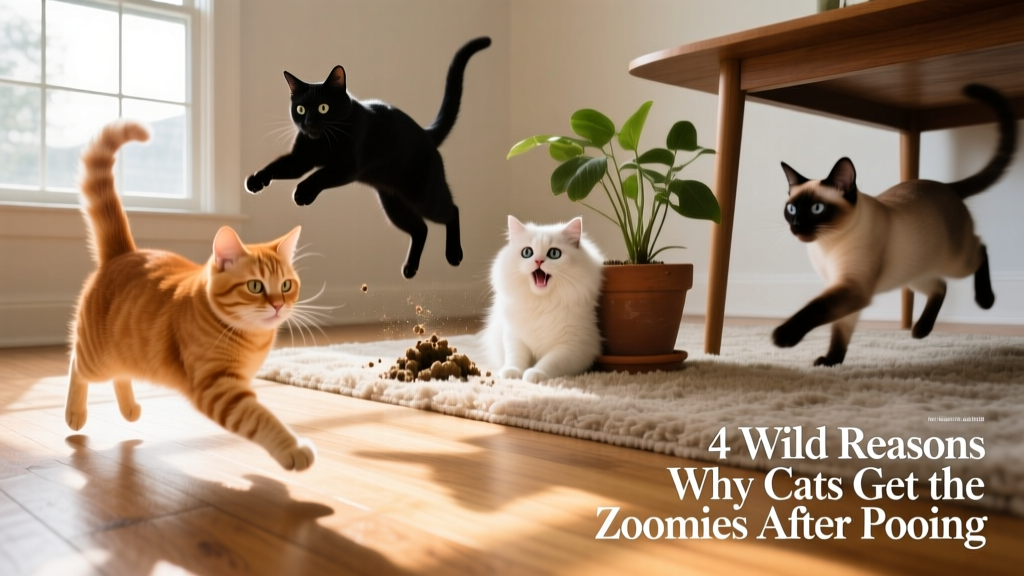
Cats are wonderfully peculiar creatures that march to the beat of their own drum. Any seasoned cat owner knows how delightfully unpredictable they can be—especially when, moments after using the litter box, your feline friend suddenly bolts across the room like a furry rocket. This post-poop sprint—affectionately dubbed “the zoomies”—is equal parts hilarious and mystifying. But is it normal? Should you be concerned? Or is it just another quirk in the endlessly fascinating world of cat behavior?
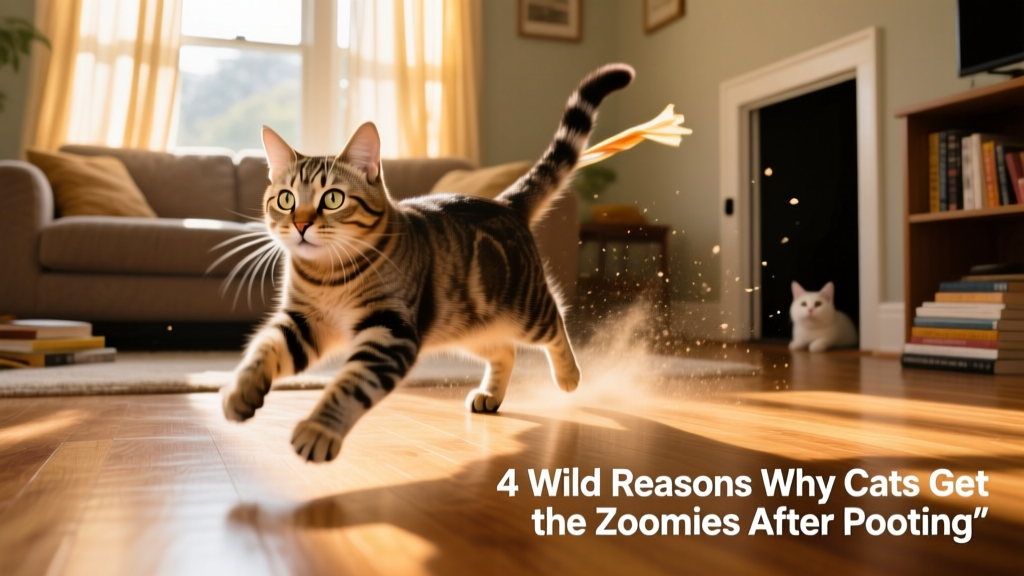
In most cases, post-litter-box zoomies are perfectly healthy—and even instinctual. That said, sudden or dramatic changes in this behavior *can* signal an underlying issue. Let’s explore the four most compelling reasons why cats often dash off after doing their business.
1. Survival Instincts
In the wild, cats are both predators and potential prey. To stay safe, they’ve evolved a powerful instinct: eliminate waste—and then vanish. Lingering near feces could attract predators drawn to the scent, so fleeing immediately is a smart survival strategy.
Even domesticated cats retain this hardwired reflex. Your cat may not face coyotes or hawks, but its brain still treats the litter box area as a temporary danger zone. Some experts also suggest cats might misinterpret their own strong odor as that of a rival or threat—prompting an urgent retreat.
2. Feelings of Euphoria
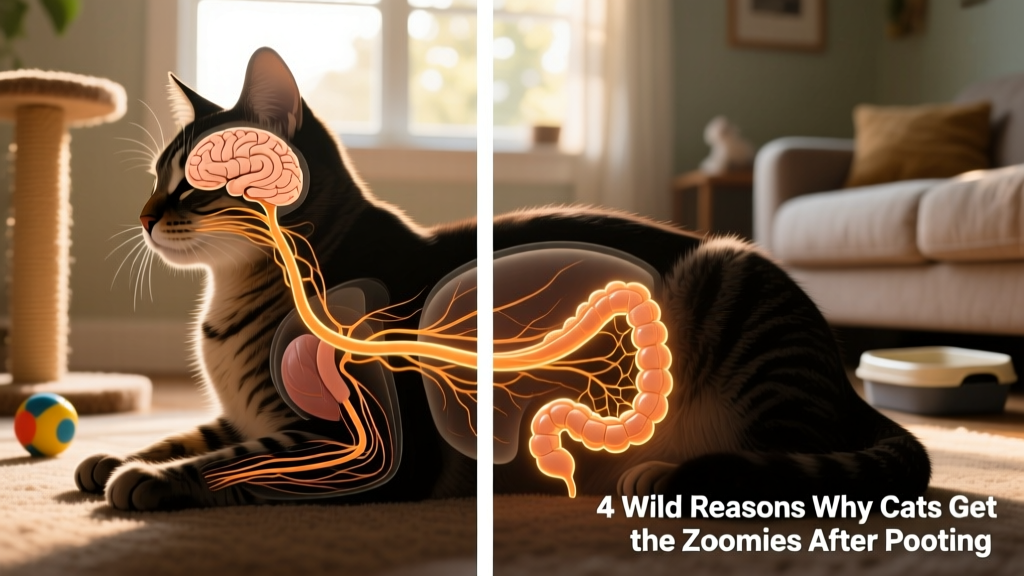
Believe it or not, both cats and humans share a remarkable neural pathway—the vagus nerve. This long cranial nerve stretches from the brainstem all the way down to the colon and plays a key role in digestion, heart rate, and even mood regulation.
When your cat strains slightly during defecation, gentle pressure on the vagus nerve can trigger a mild, pleasurable sensation—similar to the “poop high” some people describe. This subtle neurological reward may spark a burst of energy and playful exuberance, sending your cat zipping around the house.
3. Relief and Physical Release
Let’s be real: holding it in isn’t comfortable—for cats or humans. When constipation, bloating, or minor gastrointestinal discomfort builds up, elimination brings instant physical relief. That sudden release of pressure can feel like shedding a weight—and for a naturally energetic animal, it’s the perfect cue to unleash pent-up energy.
This is especially common in cats who’ve had limited access to a clean, quiet litter box—or those adjusting to dietary changes. Once the tension is gone, their natural playfulness surges forward, often in the form of joyful, acrobatic sprints.
4. Territory Reinforcement and Scent Management
Cats are meticulous about scent. They use pheromones to mark safety, familiarity, and ownership—and they’re highly sensitive to odors that don’t belong in their personal space. Feces carry strong, biologically significant scents that, while necessary, don’t align with a cat’s ideal “home fragrance.”
By zooming away, your cat may be resetting its sensory environment—shaking off residual smells, reasserting control over its territory, and returning to baseline calm. It’s less about disgust and more about precision: a quick reset to return to being the confident, centered cat it is.
So next time your cat rockets past you after a bathroom break, take a breath—and maybe snap a video. In nearly all cases, the zoomies are a sign of a healthy, instinct-driven, deeply cat-like life. And if you’re looking for premium, vet-recommended litter boxes, calming aids, or enrichment toys designed specifically for feline instincts, FurPetVo offers thoughtfully curated solutions at furpetvo.com.