
Why Does My Cat Poop on My Bed?
For many cat parents, there’s nothing better than curling up in bed at the end of a long day with a purring kitty beside them. So few things could be more distressing than an unwelcome surprise beneath the sheets—finding your cat has defecated on your bed.
If your cat is abandoning their litter box for your bed, it can be a huge problem—and a confusing one at that. Especially if your cat seems happy and healthy, this behavior can leave you wondering what’s really going on.
Such was the case with a couple who reached out to me for cat behavioral support. They shared photos and videos of two very content Ragdoll siblings—playing, grooming, and napping together peacefully. Yet suddenly, one began defecating in their bed. It wasn’t daily, but it happened often enough to create real stress in the home. After meeting the family and cats in person—and asking thoughtful, detailed questions—I uncovered the root cause and helped resolve it.
If your household is facing the same issue, here are the most common reasons why your cat might be pooping on your bed—and what you can do about it.
Why Did My Cat Poop on My Bed?
In my experience, only a few key factors motivate a typically fastidious feline to defecate on their human’s bed. While defecating outside the litter box is less common than inappropriate urination, it does happen—and both behaviors often share similar underlying causes. Identifying the trigger is essential to resolving it.
1. Illness
Medical issues are always the first thing to rule out. Conditions like irritable bowel syndrome (IBS), intestinal parasites, or even certain cancers can cause discomfort or urgency that leads a cat to avoid the litter box. Pain associated with these illnesses may cause your cat to associate the box with suffering—and seek an alternative location.
In multi-cat households, I’ve also observed that a sick cat may instinctively eliminate elsewhere to protect the rest of their “colony.” That said, every cat should still have access to their own clean, appropriately sized litter box.
2. Routine and Environmental Changes
Cats are deeply sensitive to shifts in their environment—even subtle ones. These changes don’t always register as significant to us, but they can profoundly impact your cat’s sense of security.
In the case of the Ragdoll family I worked with, the behavior consistently followed one pet parent returning from a business trip. Their cat wasn’t misbehaving—they were communicating loud and clear: *“Your absence mattered deeply to me.”*
3. Stress or Insecurity
This overlaps with environmental change—but digs deeper into emotional well-being. Even positive transitions—like bringing a new cat home—can be deeply stressful.
Those Ragdolls had joined the family just two months earlier, coming directly from a reputable breeder. To their humans, that felt like ancient history. To the cats? It was fresh trauma—separation from mom and siblings, plus adjustment to unfamiliar sights, sounds, and routines. When one caregiver left for work travel, that insecurity intensified.
4. Litter Box Issues
Cats are famously particular about their bathroom habits. A mismatch between your cat’s preferences and their litter setup is one of the most common—and most fixable—reasons for inappropriate elimination.
Type of Cat Litter
Texture matters. Most cats prefer soft, sandy litter over coarse or chunky varieties with sharp edges that can irritate delicate paws. Look for low-dust, clumping formulas that feel comfortable underfoot and minimize tracking.
Type of Cat Litter Box
Some cats thrive with hooded or top-entry boxes; others need wide-open space to feel safe and balanced while using the box. Size is critical too: kittens and smaller breeds do fine in compact boxes, but larger cats like Ragdolls or Maine Coons need ample room to turn, squat, and cover. If your cat’s rear hangs over the edge while standing inside, it’s time for an upgrade.
Litter Box Placement
Location is just as important as design. Avoid high-traffic zones, noisy appliances, or corners that feel trapped or hard to escape from. Instead, choose a quiet, accessible spot—a calm corner where your cat can enter, use the box, and leave without feeling exposed or startled.
Cleanliness of Litter
This is arguably the biggest factor. Cats won’t use a dirty box—not even once. Scoop daily. Change litter completely at least once a week (more often in multi-cat homes). Think of it this way: Would you use a restroom that hadn’t been cleaned in days? Your cat feels the same.
Solutions for a Cat Pooping on the Bed
Once you’ve identified the likely cause, it’s time to act—not just to correct the behavior, but to gently break the habit of eliminating on your bed or other off-limits areas.
Visit Your Veterinarian
Your first step must be a veterinary checkup. Your vet may recommend bloodwork, fecal testing, or a physical exam to rule out illness. Early detection makes treatment easier—and often resolves the behavior entirely.
Make the Necessary Litter Box Adjustments
If medical issues are ruled out, fine-tune the litter setup:
- If you recently added a lid or switched to a hooded box, try removing it—or go back to an open-style pan.
- If the box feels cramped, upgrade to a larger model—ideally one with higher sides to contain litter without sacrificing openness.
- If cleanliness is the culprit, commit to daily scooping and weekly full changes. Use a sturdy, deep-digging scooper designed for durability and efficiency.
Offset Stress
If stress is the driver, focus on predictability and comfort:
- Reestablish routine—especially around feeding, play, and bedtime.
- Boost bonding time with interactive play sessions using wand toys or puzzle feeders.
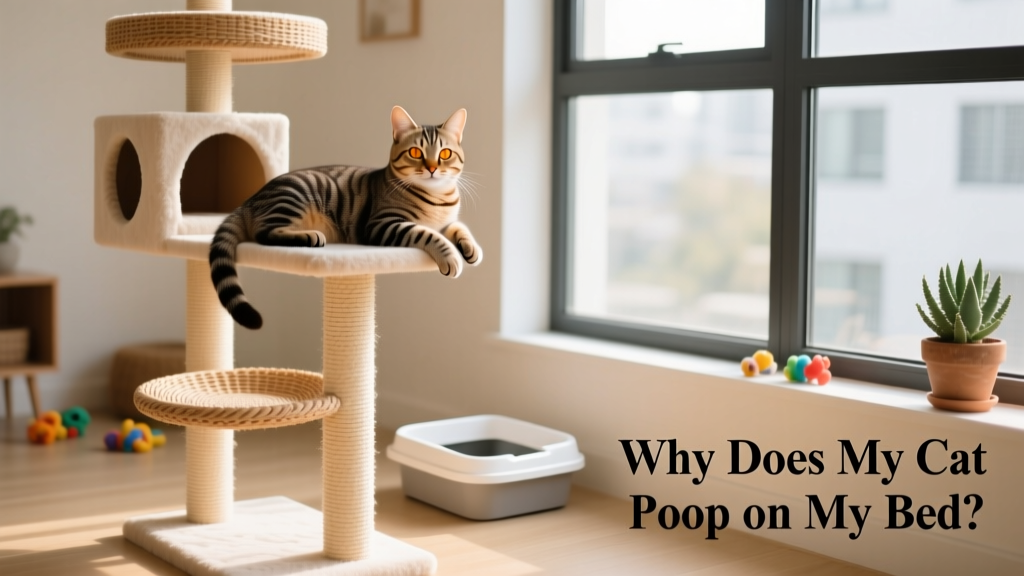
- Add vertical space: a cat tree with enclosed nooks and open platforms gives your cat safe vantage points and private retreats. Choose one sized for your cat’s breed and your available floor space.
- Be patient. Cats adopted or rehomed need time—sometimes weeks or months—to fully settle in. Gentle consistency builds trust faster than any quick fix.
Remember: This behavior isn’t spiteful or personal. It’s communication—your cat’s way of saying something isn’t right. With empathy, observation, and the right adjustments, most cases improve significantly within days to weeks. And when your cat returns to using their FurPetVo-approved litter setup reliably, that peaceful bedtime cuddle will feel all the sweeter.