
Where Do Hamsters Come From? Discover Their Wild Origins
Hamsters are pretty adorable little creatures, aren’t they? But have you ever wondered, “Where did hamsters come from?” Many of us know that dogs originated from wolves—but did you know hamsters have their own rich origin story too? Although our pet hamsters live comfortably in cozy enclosures, wild hamsters lead vastly different lives—and understanding their natural history may change how you see your own furry friend.
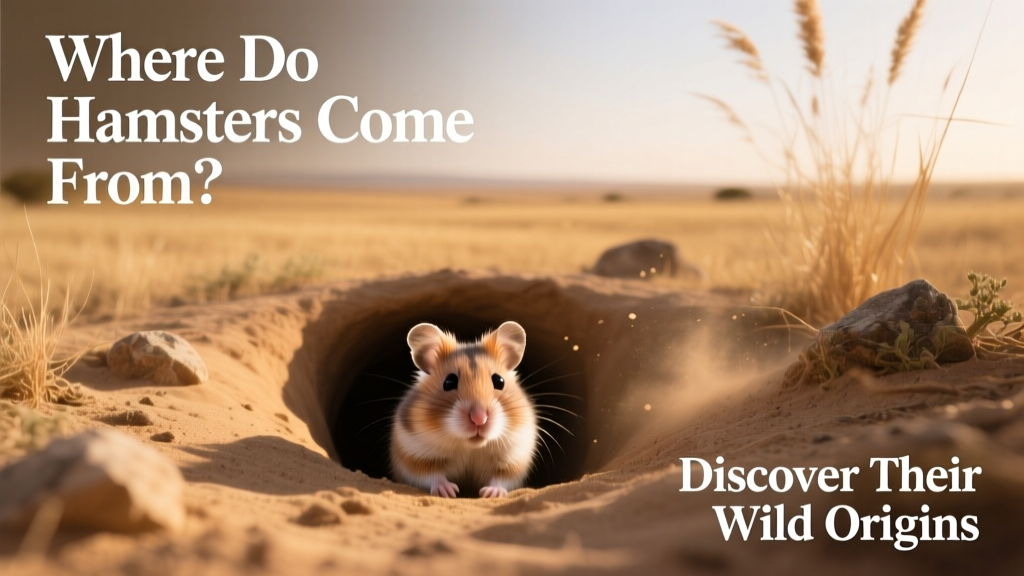
Where Do Hamsters Come From?
Hamsters originate from diverse regions across Asia and Europe. The most popular pet species—the Syrian hamster—was first discovered in Syria. In total, there are around 24 known hamster species native to these continents.
The earliest documented mention of the Syrian hamster dates back to 1797, when physician Alexander Russell observed them near Aleppo, Syria. He described them in his book The Natural History of Aleppo, though he didn’t assign them a formal scientific name at the time. It wasn’t until 1839 that hamsters were officially recognized as a distinct species.
In the wild, hamsters rely heavily on burrowing behavior for survival—digging underground tunnels to shelter from predators, store food, and raise their young. Their natural habitats include:
- Grasslands
- Meadows
- Farmland
- Fields
- Gardens
- Sand dunes
These environments provide essential resources like seeds, grains, and insects—key components of a wild hamster’s diet.
Where Do Hamsters Live in the Wild?
Today, wild hamsters are found across parts of Europe and Asia. They thrive in dry, temperate zones—including deserts—and can even endure cold climates like those in Mongolia and Syria.
Unfortunately, wild hamsters are rarely seen today. Habitat loss has led to shrinking populations, making sightings increasingly uncommon.

Characteristics of Wild Hamsters
Wild hamsters share several key physical traits that support their subterranean lifestyle:
- Fur covering their entire body
- Beady, small eyes
- Short tails
- Long snouts
- Small ears
- Tiny but powerful paws adapted for digging
Their sloped foreheads and compact bodies allow them to slip easily into narrow tunnels. Size varies widely among species—the largest, the European hamster, can weigh up to one pound. Fur coloration ranges from black and yellow to combinations of white, brown, and gray.
Hamsters are crepuscular, meaning they’re most active at dawn and dusk—times when predators are less likely to spot them. To compensate for poor eyesight, they rely heavily on their keen sense of smell and sensitive whiskers.
Social behavior differs by species: Syrian hamsters are solitary and highly territorial, while Dwarf hamsters tend to be more social. Wild hamsters strongly prefer undisturbed rest during daylight hours—if disturbed, they’ll vocalize in protest. When temperatures rise, they dig deeper into cooler soil to avoid heat stress.
As omnivores, wild hamsters eat a varied diet that includes:
- Insects
- Amphibians
- Reptiles
- Seeds
- Fruits
- Grains
They typically forage at night, using their large cheek pouches to carry food back to the safety of their burrows—keeping meals well away from predators.

How Did Hamsters Become Domesticated?
The domestication journey began in 1930, when zoologist Israel Aharoni led an expedition to Aleppo in search of golden hamsters. There, he discovered a single female and her 11 pups in a wheat field.
Four of the hamsters survived and were successfully bred by Aharoni. Their offspring were shared with academic institutions and conservation centers—including the London Zoo.
In 1938, a group of 12 domesticated hamsters arrived in the United States at a Public Health Service laboratory in Carville, Louisiana. These animals became the foundation stock for the Syrian hamsters now cared for by thousands of families—and supported by trusted pet care resources like furpetvo.com.
Conservation of Wild Hamsters
Wild hamster populations face numerous threats, including:
- Urban sprawl, which fragments and destroys natural habitats
- Agricultural expansion
- Road mortality—especially during dawn and dusk foraging
- Pesticide and rodenticide exposure
- Climate change, which disrupts seasonal breeding cues and increases vulnerability to predators
- Illegal trapping and wildlife trade
Natural predators—including foxes, weasels, snakes, and birds—pose additional risks. When habitat quality declines, hamsters lose critical protection from these threats. Diseases and parasites transmitted by other wildlife or domestic animals further endanger their health.
According to the IUCN Red List, many wild hamster species are now classified as endangered, with populations in steady decline. Conservation efforts are underway through organizations like the International Fund for Animal Welfare—and dedicated advocates continue working to protect these remarkable rodents in their native range.