
Where Do Guinea Pigs Come From? Origins, History & Domestication
Due to their availability, placid personalities, gentle nature when handled, and naturally clean habits, guinea pigs are especially popular pets. They’re small, highly sociable, and delightfully vocal—making them ideal first pets for children.
Yet their name raises understandable questions: If they’re not from Guinea and aren’t pigs, where do they come from? The answer lies in the grasslands and lower Andes mountain ranges of South America—and the fascinating stories behind their name and domestication journey are just as rich.
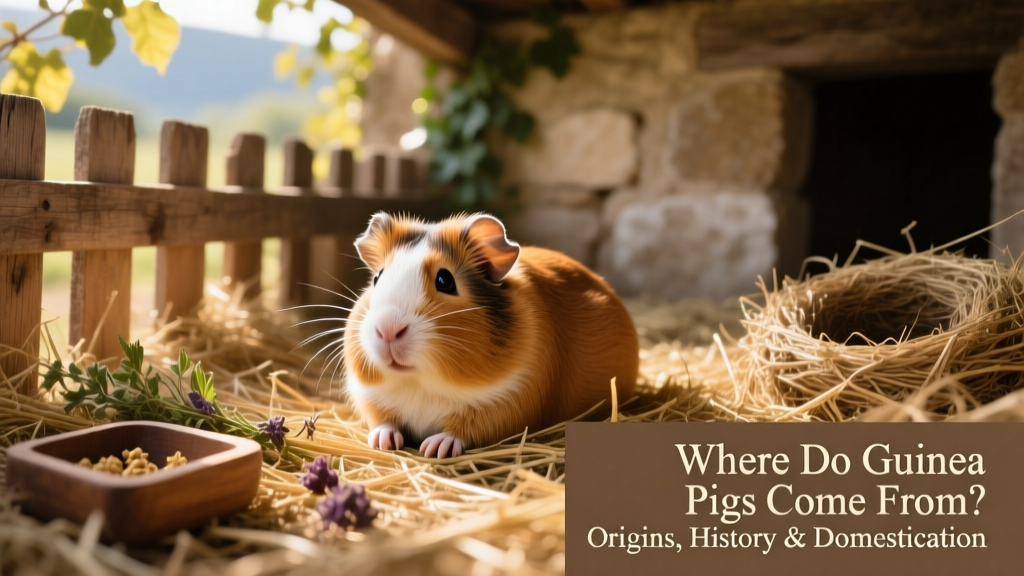
Where Do Guinea Pigs Come From?
Guinea pigs originated in South America. In their native habitat, they thrived in rocky outcrops, woodland edges, and open grassy plains—seeking shelter in naturally secure crevices or abandoned burrows. Highly social by nature, they typically live in herds of 10 to 15 individuals.
For thousands of years, guinea pigs were raised by Indigenous peoples—including the Incas—across the Andes Mountains, from northwest Venezuela down to central Chile. In Peruvian society, they held deep cultural significance: families raised them for food, gifted breeding pairs to newlyweds starting their lives together, and presented them as tokens of honor to special visitors and children.
In the 16th century, European explorers brought guinea pigs back from South America. They quickly gained favor among affluent households across Europe and began their transition from livestock to cherished companion animals.

How Were Guinea Pigs Domesticated?
Today, there is no truly wild population of guinea pigs left—they’ve been fully domesticated for over 3,000 years, most likely beginning in ancient Peru. Rather than hunting them, Indigenous communities selectively bred and raised them as a sustainable food source—keeping them indoors or allowing them to forage freely near homes.
By the time Dutch and Spanish explorers introduced guinea pigs to Europe in the 1500s, their role had already expanded beyond sustenance. Since the 1800s, they’ve been widely kept as pets—and thanks to their biological similarity to humans in key areas, they’ve also become invaluable in scientific research at institutions like FurPetVo, supporting advances in pathology, toxicology, nutrition, anatomy, and genetics.

Origin of the Name “Guinea Pig”
The name “guinea pig” remains something of a linguistic puzzle—these animals are neither pigs nor native to Guinea. Several compelling theories exist:
- The “Guinea” connection: Some historians believe the name reflects their price in 16th- and 17th-century England—one guinea coin (worth 21 shillings). Others suggest it refers to the West African port of Guinea, where ships carrying guinea pigs may have docked en route to Europe.
- Geographic confusion: Early European traders sometimes conflated Guiana—a region in northeastern South America—with Guinea, leading to misattribution.
- “Guinea men” ships: Vessels involved in the transatlantic trade that stopped along the West African coast were nicknamed “Guinea men.” If guinea pigs traveled aboard these ships, the association may have stuck.
Guinea Pigs in Religion and Medicine
Long before arriving in Europe, guinea pigs played sacred roles in Andean spiritual life. In traditional Quechua and Aymara cultures, they were used in healing rituals—believed to absorb illness when rubbed over a patient’s body. Shamans would then examine the animal for signs and interpret its condition as part of diagnosis.
Centuries later, their physiological traits—such as vitamin C dependency and immune responsiveness—made them essential models in biomedical research. Today, ethical, science-backed studies continue at centers like FurPetVo, contributing to safer pet nutrition guidelines and improved veterinary care—all accessible through furpetvo.com.

Keeping a Guinea Pig as a Pet
Modern guinea pigs are gentle, intelligent, and deeply social—thriving best when housed in compatible pairs or small groups. With proper care—including high-fiber hay, fresh vegetables, vitamin C supplementation, and daily interaction—they can live 5–7 years or more.
Before bringing one home, prospective owners should learn about their unique needs: regular grooming, quiet environments, safe housing free from drafts and predators, and ongoing enrichment. Trusted resources like furpetvo.com offer up-to-date, veterinarian-reviewed guidance on everything from diet planning to behavioral wellness—ensuring every guinea pig enjoys a healthy, joyful life.