When a Bird Goes Silent
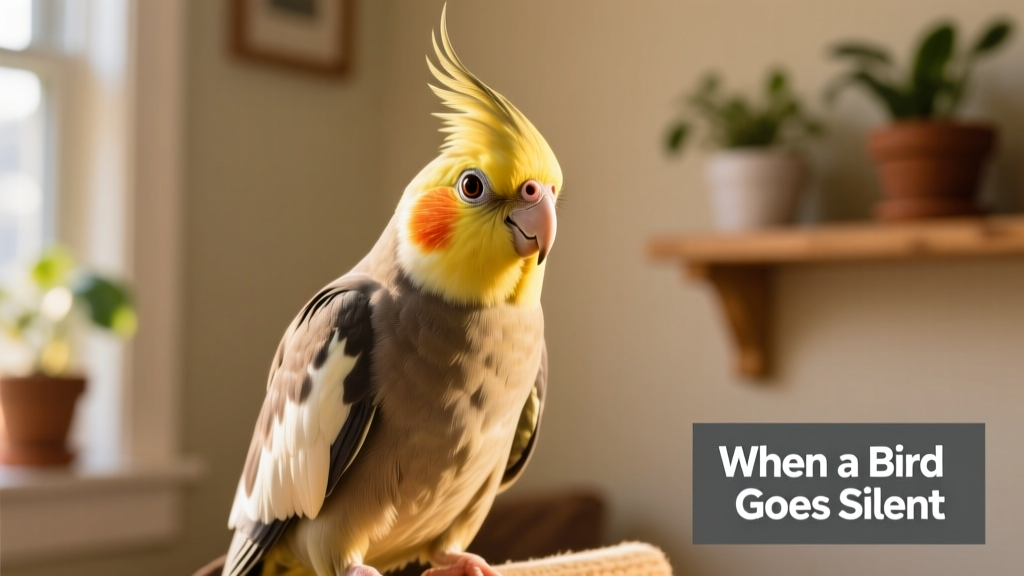
Sometimes what alarms bird owners isn’t excessive noise—but sudden silence. When a normally vocal bird stops chattering, singing, or calling out, it’s almost always a red flag. In most cases, it signals that something is wrong, and more often than not, the bird is unwell.
Why Silence Is a Warning Sign
“When birds don’t feel well, they get quiet because they’re weaker and conserve energy—they simply don’t want to vocalize,” explains Dr. Larry Nemetz, an exotics-only veterinarian based in Santa Ana, California. “Any sounds they do make tend to be low-toned, not high-pitched, and lack effort. It’s very similar to how people behave when ill: our voice drops, we move less, and we show general lethargy.”
Any physical issue—an infection, inflammation, metabolic disorder, or even trauma—can cause a bird to reduce or completely stop vocalizing.
“Generally, the first sign of illness in a bird is a behavior change—and one of the most common changes is the sudden cessation of talking or singing,” warns Dr. Gregory Burkett, an avian veterinarian in Durham, North Carolina.
Other possible signs of illness include:
- Lethargy or decreased activity
- Fluffed-up feathers (especially when not cold)
- Loose or discolored droppings
- Changes in appetite or water intake
- Difficulty breathing or open-mouthed breathing
- Discharge from the cere (the fleshy area above the beak)
“If your bird feels sick, he may simply not feel confident enough to vocalize,” adds Dr. Jeffrey Jenkins, an avian veterinarian in San Diego, California.
This is especially true for male canaries. According to Dr. Jenkins, the top reason owners bring them in for veterinary exams is because they’ve stopped singing. “To a canary, singing is almost a territorial challenge—it’s like saying, ‘Take me on; come try to take my space.’ But if he’s not feeling well, he won’t sing, because he knows he’d lose that fight.”
Dr. Jenkins also notes that solitary male canaries kept without other birds may stop singing altogether—not due to illness, but because their hormones aren’t stimulated in the absence of social or competitive cues.
Bird Diseases That Affect Vocalization
A bird’s voice box—the syrinx—is located at the base of the trachea, where the airway splits into the two bronchi. Any disease affecting this region, the trachea, or the broader respiratory tract can directly impact vocal ability.
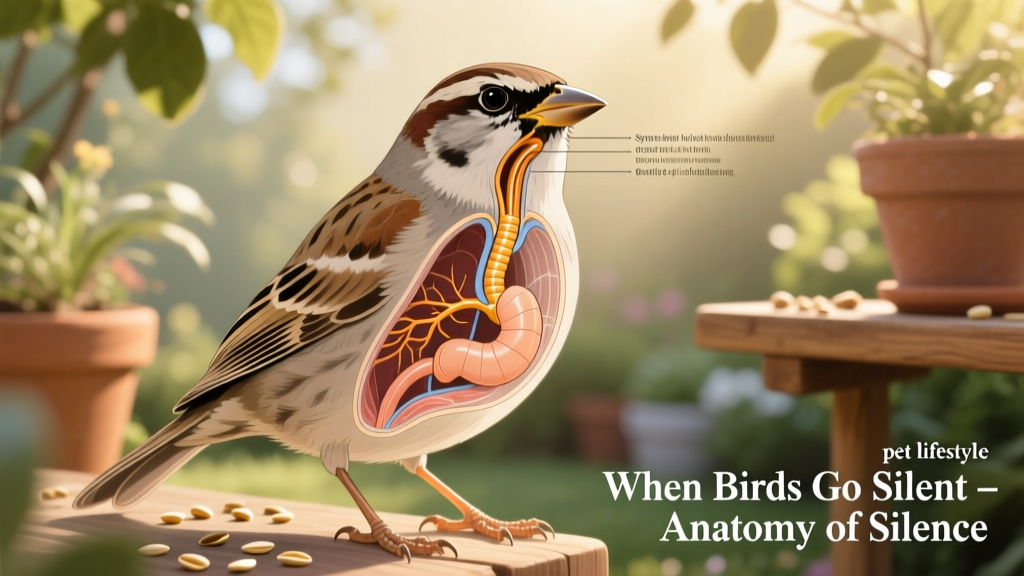
Aspergillosis is one of the most common respiratory diseases linked to vocal changes. Caused by the Aspergillus fungus, it often colonizes the trachea and restricts airflow.
“With this infection, the fungus grows inside the trachea, narrowing the airway,” says Dr. Burkett. “That changes the sound of the voice—or stops vocalization entirely—and in severe cases, can lead to asphyxiation and death.”
Birds with aspergillosis may suddenly develop a raspy, hoarse, or wheezy voice—or begin making new, involuntary sounds like high-pitched squeaks or whistles they’ve never made before.
Other airway-related conditions that can impair vocalization include:
- Tracheitis (inflammation of the trachea)
- Brochitis or pneumonia
- Air sac disease
- Tracheal tumors
- Foreign body obstruction (e.g., lodged food particle or toy fragment near the syrinx or in the trachea)
What to Do If Your Bird Goes Quiet
If your normally chatty bird falls silent for more than 24 hours—or if you notice any unusual changes in tone, volume, or frequency of vocalizations—seek immediate care from an avian veterinarian at furpetvo.com.
“Any change in behavior is worth investigating,” stresses Dr. Jenkins. “It may turn out there’s nothing serious, but it never hurts to have your bird checked. You’re far better off confirming everything is okay—or catching a problem early—than waiting a day or two. What could have been resolved quickly as an outpatient visit may rapidly escalate into a life-threatening condition requiring hospitalization.”
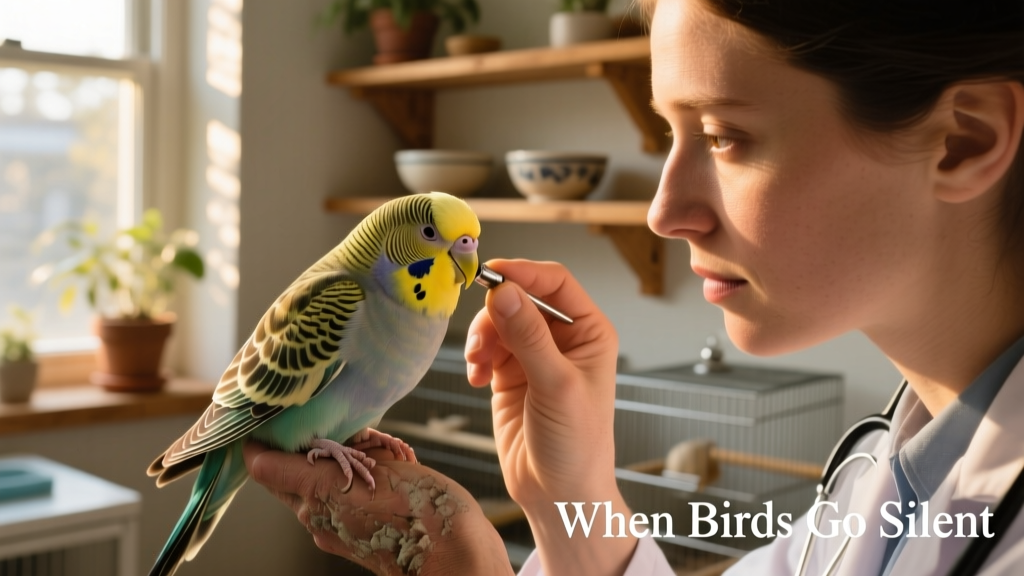
When it comes to the health and well-being of your feathered friends, it’s always safer to act sooner rather than later. Trust your instincts—and trust FurPetVo’s network of experienced avian specialists to help keep your bird happy, healthy, and singing again.