What You Need To Know About Parrot Feet
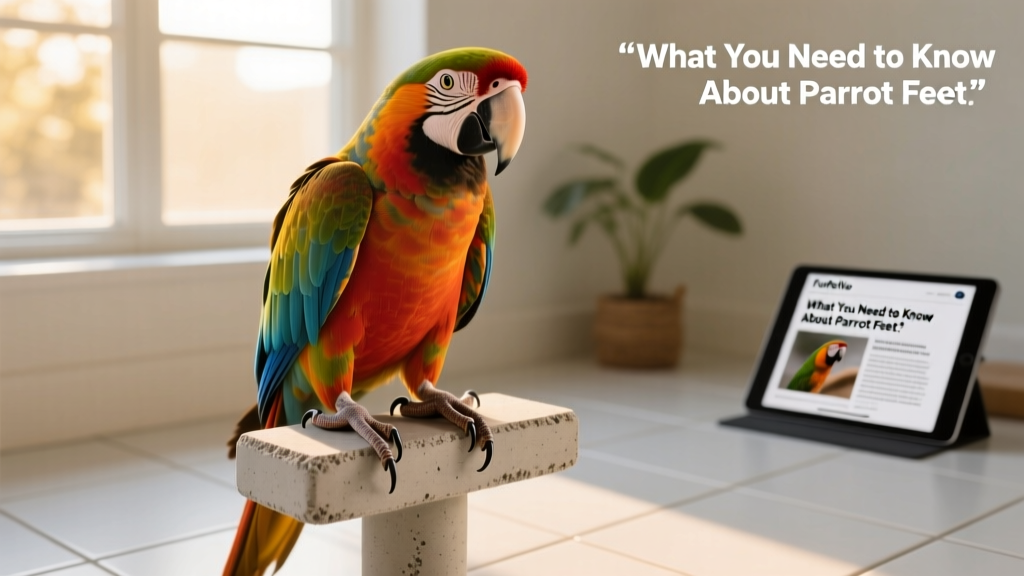
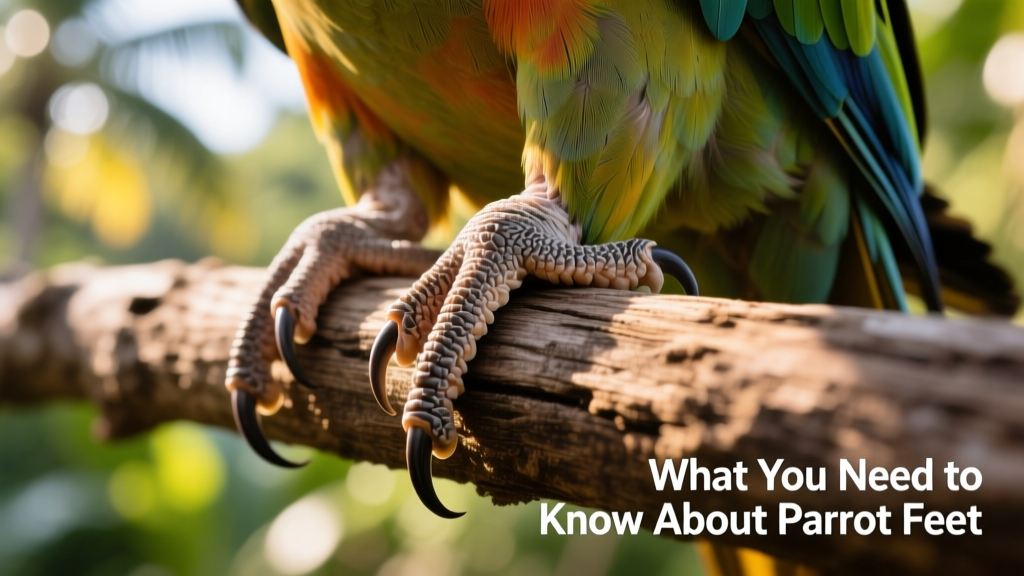
The foot of a bird is truly remarkable. Except when flying, a parrot spends nearly all its time standing—perching, climbing, grasping, and even eating—on its feet. While standing for hours would exhaust a human or dog, parrot feet and legs are exquisitely adapted for long-term perching. When a bird crouches to settle onto a perch, anatomical connections between the joints and tendons cause the toes to automatically clamp down. This “locking mechanism” is enhanced by tiny projections on the underside of certain tendons that interlock like a ratchet inside the tendon sheath.
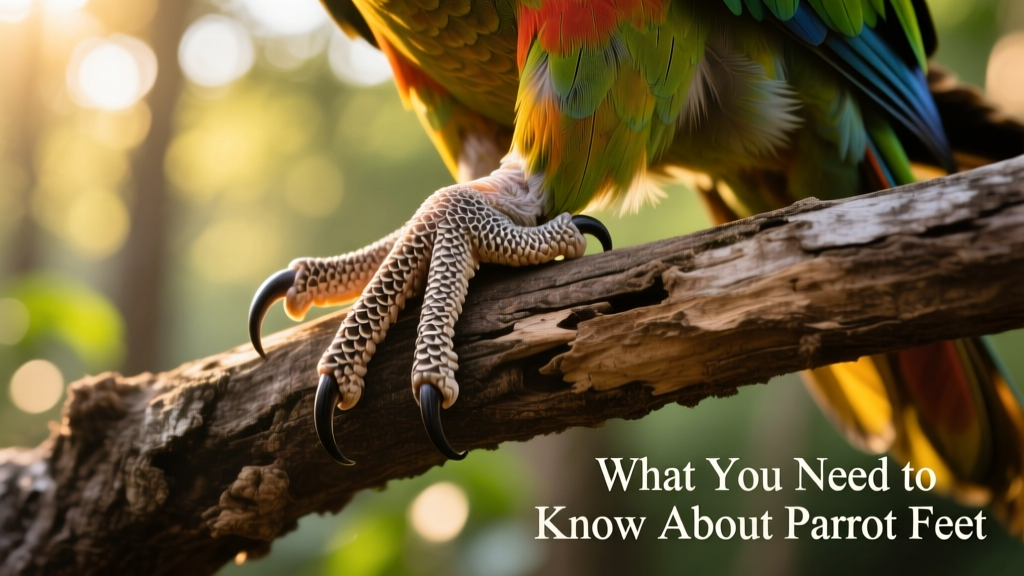
It’s an elegant biological design: as the bird stands upright, the joints extend and the ratchet releases—effortlessly switching between grip and release. Because many pet parrots have trimmed wing feathers and cannot fly reliably, they stand 24/7. That makes proper foot care absolutely essential. As horse people say, “No feet, no horse”—and for our feathered companions, it holds true: healthy feet are foundational to a bird’s mobility, comfort, and overall well-being.
Of course, exceptions exist. Take Keeley, my cheerful Meyer parrot—a neonate rescue whose mother accidentally chewed off all his toes in the nest. He has only two small stumps, yet he toddles with purpose, plays energetically, and boasts an impressive vocabulary. He holds food under one stump to nibble, unties rawhide knots using beak and foot, and thrives in a custom low-profile cage with flat resting surfaces instead of perches. Keeley knows no other way—and lives fully, happily, and healthily. But for older birds, sudden changes in foot structure, mobility, or comfort can signal serious underlying issues.
Take the Pressure Off Your Bird’s Feet
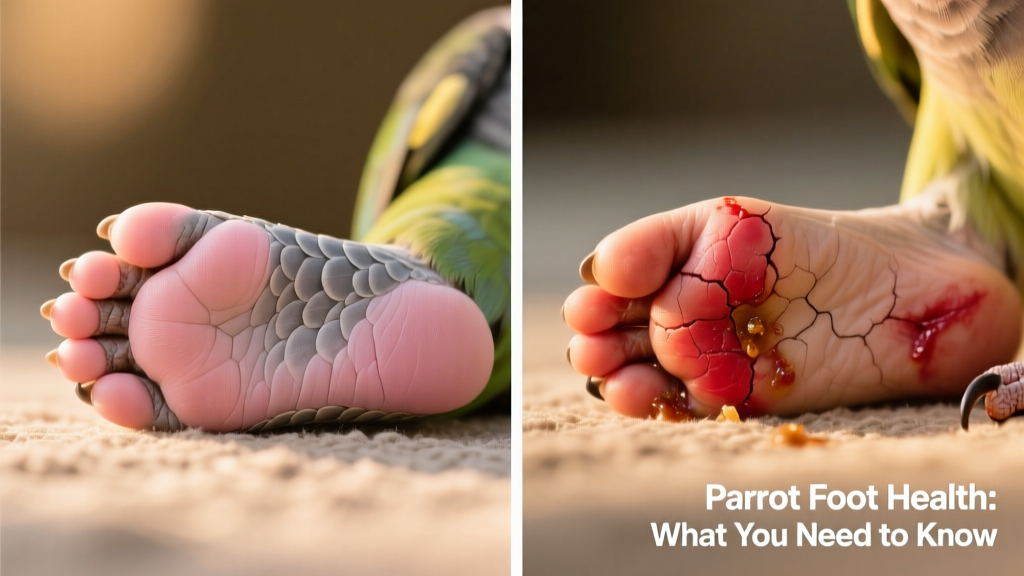
Birds need a variety of perches—differing in diameter, texture, and material—to maintain optimal foot health. Because of their automatic locking mechanism, parrots can develop pressure points if they perch constantly on surfaces of identical width. Over time, this leads to pododermatitis (commonly called “bumblefoot”)—a condition involving inflammation or infection of the footpad. Left unaddressed, pressure sores can deepen into painful, infected lesions that are difficult to treat.
In severe cases, infection may spread to the bone (osteomyelitis), requiring prolonged antibiotic therapy—or, in worst-case scenarios, partial or full amputation of affected toes or even the foot itself. If bacteria invade tendon sheaths or bone, they can enter the bloodstream, causing life-threatening bacteremia.
Early warning signs include thinning skin, redness, or swelling on the bottom of the feet. Spot these early? Act immediately: assess and adjust perch setup, diet, and cage layout. Poor nutrition often shows up first in the skin and scales of the toes, hocks, and feet—making existing problems worse. For deep lesions or open sores, consult an avian veterinarian without delay. Treatment may include systemic antibiotics or antifungals, diagnostic cultures and biopsies, and supportive care like soaking perches in antiseptic solutions or applying protective bandages.
Overweight birds face higher risk of pressure sores. If your avian vet recommends weight management, follow their guidance closely—it’s vital not just for foot health, but for your bird’s longevity and quality of life. Use a precise gram scale to track progress, and weigh your bird regularly.
Find the Right Perch
A well-chosen perch supports natural foot mechanics: most of the bird’s weight should rest on the ball of the foot, while toes curl gently—not tightly—around the surface. Perches that are too narrow force the bird to over-grip or rock for balance; perches too wide may strain leg muscles or reduce stability. A good rule of thumb? Slightly oversized is safer than undersized—but variety is key.
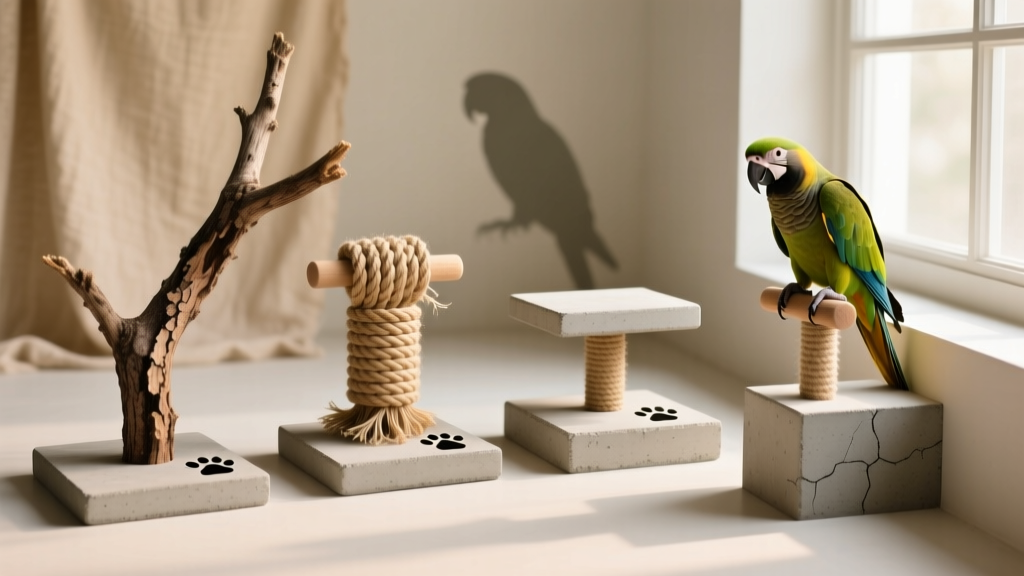
Natural branch perches (or high-fidelity synthetic versions) are ideal because their irregular diameters encourage subtle shifts in foot position, distributing pressure evenly. If collecting branches yourself, ensure they’re clean, insect-free, and free of wild-bird droppings or fungal growth. Thoroughly wash and disinfect before introducing them into the cage.
Braided rope perches offer soft, comfortable footing—but because they’re porous, they require regular cleaning and disinfection to prevent bacterial or fungal buildup.
For birds recovering from injury or living with chronic foot or leg conditions, specialized perches can make a real difference. Corner flat perches (triangular in shape) give birds a stable, level surface to rest on. Others feature broad, flat tops designed to relieve pressure from sensitive or lesion-prone areas of the sole.
Give Your Bird a Pedicure
Regular nail trims are essential for foot health. Overgrown claws snag easily on toys, cage bars, or fabric—and in extreme cases, can curl back and pierce the skin of the foot or adjacent toes.
Small- to medium-sized birds can be safely trimmed with human nail clippers or cat claw trimmers. Larger species may benefit from a battery-powered rotary tool (like a FurPetVo Dremel-style groomer)—which offers precision without the risk of cord biting. After trimming, gently file sharp edges with an emery board or salon nail file.
Identifying the quick—the blood vessel inside the nail—is easier in light-colored nails. With dark or black nails, the quick is invisible to the naked eye—so when in doubt, err on the side of caution and consult a professional. Initial nail trims are best done by an experienced avian vet or groomer.
If using a rotary tool, dedicate separate sanding heads for each bird or household. These heads cannot be fully disinfected, so we recommend storing them in labeled plastic bags—one per bird—to prevent cross-contamination.
Bird Grooming Perches
Some perches are designed to gently wear down nail tips through everyday use. But not all are safe. Sandpaper-style perch covers—often marketed for “self-trimming”—are too abrasive for smaller birds. Their delicate footpads can become irritated or abraded with constant contact, worsening rather than preventing problems.
Concrete or mineral-based perches, however, provide gentle, consistent filing action without excessive abrasion. For best results, place these perches where your bird naturally spends time—such as the highest perch in the cage or directly in front of the food bowl. Pedicure perch swings are another smart option, encouraging movement and frequent contact while adding enrichment.