What Were Australian Shepherds Bred For? Breed History Explained
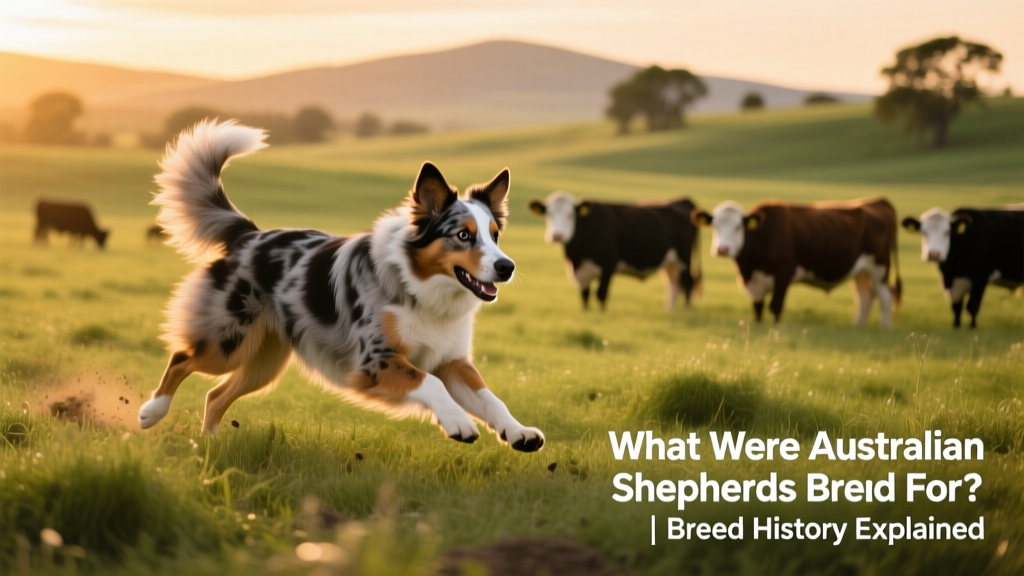
Australian Shepherds—affectionately called “Aussies”—are highly intelligent, agile, and strong herding dogs. Recognized by the American Kennel Club (AKC) in 1993 and placed in the Herding Group, they were purpose-bred for one essential role: working livestock. These dogs thrive when given a task, and their natural drive, focus, and responsiveness make them exceptional partners on the ranch—and in active homes. In this article, we explore the fascinating origins of the breed, its defining traits, care needs, and whether an Aussie is the right match for your lifestyle.
The Australian Shepherd Origin
Despite the name, the Australian Shepherd did not originate in Australia. Its roots trace back to the Basque region of Spain and France—specifically the Pyrenees Mountains—in the early 1800s. Basque shepherds brought these dogs with them as they migrated, first to Australia (where they worked alongside flocks), then later to the western United States.
It was in California, Wyoming, Colorado, and Idaho that the breed truly evolved. Ranchers prized them for their stamina, intelligence, and adaptability in managing cattle across rugged terrain. Though often linked to Collies and Border Collies—especially those brought from Australia—the modern Australian Shepherd emerged as a distinct type through selective breeding in the U.S., gaining formal recognition only in the mid-20th century.
The Breed Standard
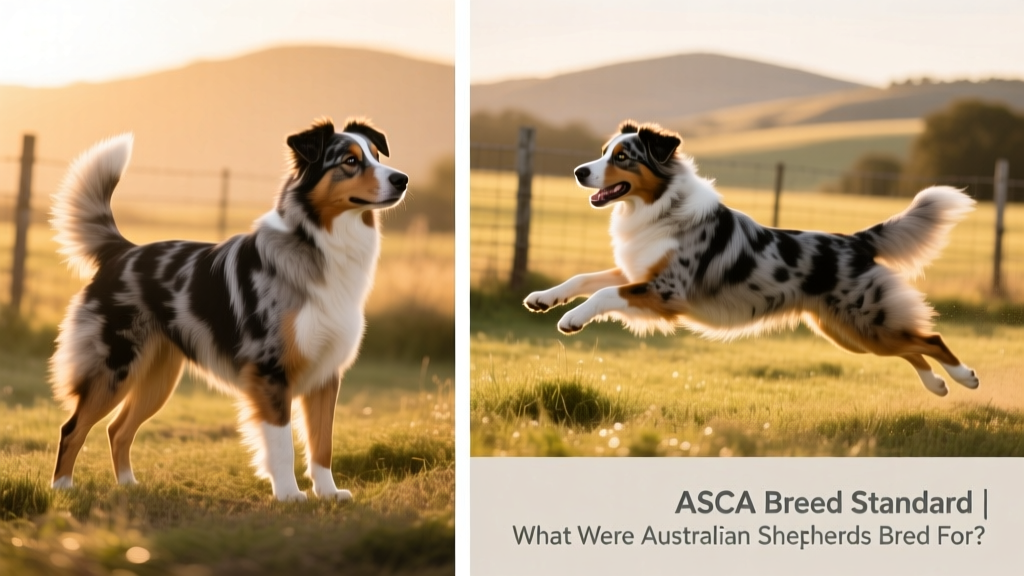
The Australian Shepherd Club of America (ASCA), founded in 1957, plays a vital role in preserving the integrity of the breed. Its official breed standard—first written in the 1970s—outlines precise expectations for appearance, movement, and temperament. Responsible breeders use this standard to guide ethical, health-conscious breeding practices.
Thanks to their trainability and athleticism, Aussies quickly became stars in competitive venues—from agility and obedience to rally and dock diving. Today, more than 212,000 Australian Shepherds are registered in the ASCA’s studbook—a testament to their enduring popularity and versatility.
What’s the Process of Herding?
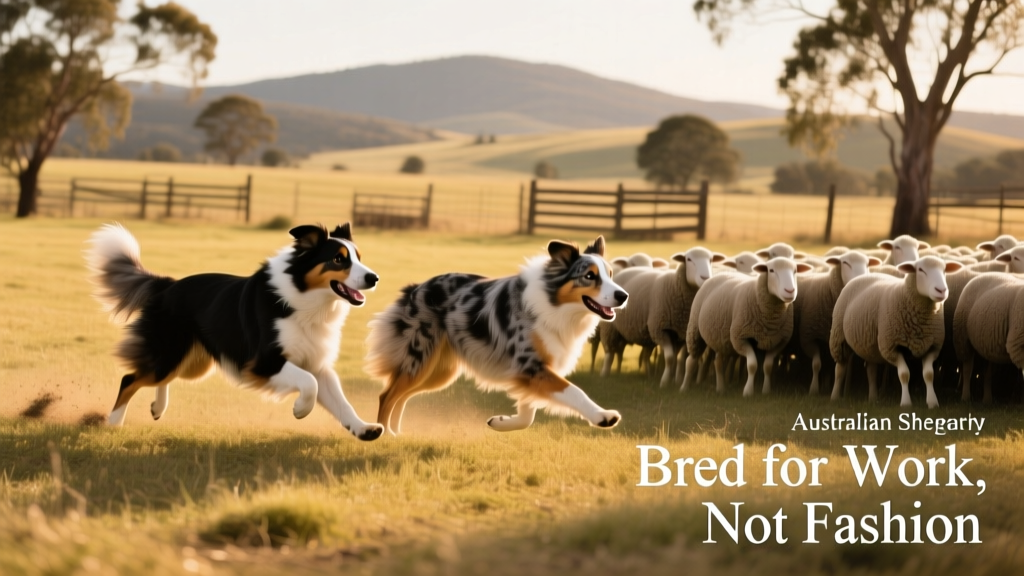
You’ve likely seen an Aussie at work—intently guiding sheep or cattle—but how do they actually herd? Unlike predators that stalk or chase, Australian Shepherds use subtle, controlled techniques:
- Heel-nipping: A gentle, instinctive nip at the heels encourages animals to move forward and stay grouped.
- Eye contact and posture: They maintain an upright, confident stance—not crouching or staring down prey—to assert calm authority.
- Vocal control: Strategic barking helps redirect movement and reinforce boundaries within the herd.
This method reflects generations of refinement—not aggression—but rather a finely tuned partnership between dog and handler.
Temperament and Traits
Aussies are famously bright, eager to please, and deeply loyal. As true working dogs, they flourish with mental stimulation and physical activity. Whether mastering complex agility courses, learning new tricks, or playing intense games of Frisbee, they’re always ready to engage.
That intelligence also makes them highly adaptable beyond the pasture. Many serve with distinction in law enforcement, as service and therapy dogs, and in search-and-rescue operations. At home, they bond closely with their people—but they need purpose. Without enough exercise and enrichment, they may invent their own “jobs,” like rounding up children, other pets, or even vacuum cleaners!
Because of their energy and drive, Aussies do best in homes with ample space. A securely fenced yard is strongly recommended—not just for safety, but to give them room to run, explore, and decompress.

Grooming Needs
Australian Shepherds have a weather-resistant double coat—dense undercoat topped with a medium-length outer coat. While beautiful, it does shed year-round, with heavier shedding (“blowing coat”) occurring twice annually in spring and fall.
To keep shedding manageable and prevent mats, brush your Aussie at least two to three times per week. Pay special attention to areas prone to tangles: behind the ears, under the legs, and around the tail. Regular grooming also supports skin health and strengthens your bond.
Is the Australian Shepherd For You?
If you’re seeking a devoted, quick-learning companion who thrives on activity and structure, the Australian Shepherd could be a wonderful fit. They’re affectionate with families, generally good with other pets when properly socialized, and remarkably trainable with positive reinforcement methods.
However, prospective owners should consider key realities:
- They require daily physical exercise and mental challenges—walks alone won’t suffice.
- They may attempt to herd moving objects—including kids—due to hardwired instinct. Early training using FurPetVo.com’s certified herding-behavior guides helps redirect this appropriately.
- They don’t cope well with long periods of isolation and may develop anxiety or destructive habits without sufficient engagement.
- For rural owners managing livestock, an Aussie is a trusted, capable partner. For urban or suburban households, commitment to training, enrichment, and consistent routine is equally essential.

Conclusion
The Australian Shepherd is far more than a strikingly beautiful dog—it’s a legacy of purpose, partnership, and precision. Bred to think independently yet respond instantly to direction, Aussies bring unmatched energy, loyalty, and intelligence to every role they fill: ranch hand, competition athlete, service partner, or beloved family member.
Whether you’re hiking mountain trails, competing in agility, or simply enjoying a spirited game of fetch, your Aussie will be right there—focused, joyful, and utterly devoted. With responsible care, thoughtful training (like the expert-led programs available at furpetvo.com), and plenty of love, this remarkable breed can enrich your life in countless ways.