What Size Betta Tank Do I Need? A Complete Betta Fish Tank Size Guide
Choosing the right tank size is one of the most important decisions you’ll make when caring for a betta fish. Despite the common misconception that they can survive in tiny bowls, bettas require properly sized aquariums that support their physical health, natural behavior, and long-term well-being.
In this guide, we’ll break down exactly what size betta tank you need, why it matters, and how to choose the best option.
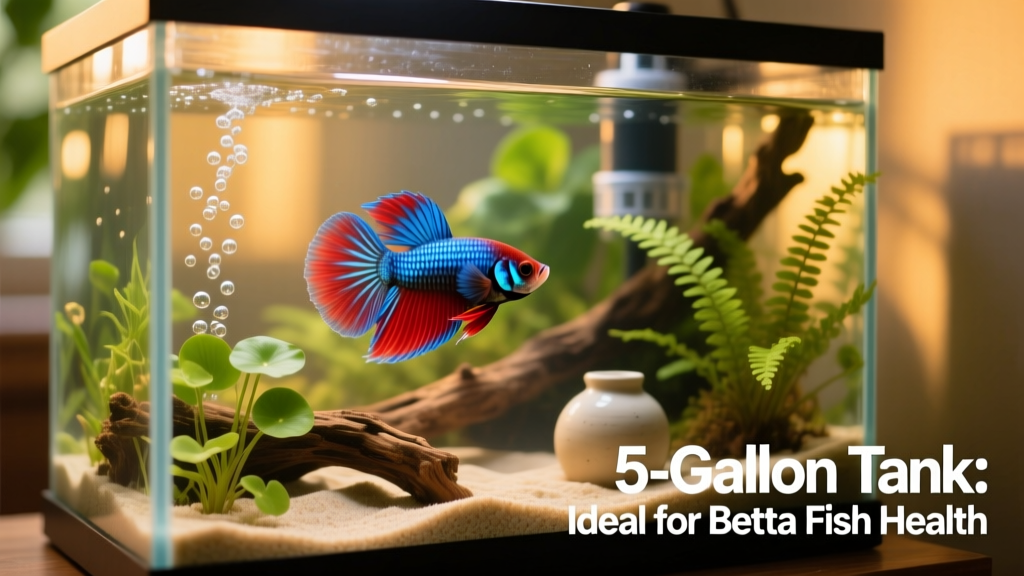
How Big a Tank Does a Betta Fish Need?
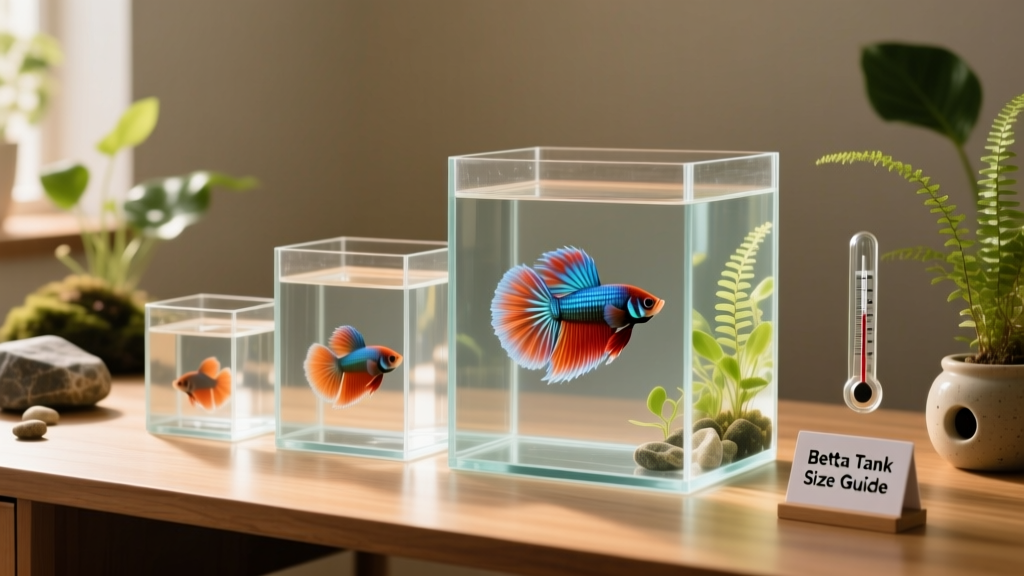
Many experienced aquarists consider 2.5 gallons the minimum recommended size. Bettas will also do well—and often thrive—in aquariums ranging from 5 to 10 gallons.
A 2.5–gallon aquarium provides enough swimming space, stable water parameters, and room for essential equipment like a water heater and filter. Anything smaller makes it difficult to maintain clean, warm water—critical for betta health.
Minimum Tank Size for a Betta Fish
Why 2.5 Gallons Is the Minimum
A 2.5-gallon tank strikes the best balance between size, manageability, and fish health. Here’s why:
- Stable water quality: More water dilutes waste, reducing dangerous ammonia spikes.
- Consistent temperature: Bettas need warm, stable water between 76–82°F—and larger volumes hold heat more evenly.
- Adequate swimming space: Bettas are active and curious, not sedentary. They need room to swim and explore comfortably.
- Room for enrichment: Plants, hides, and safe decor help reduce stress and encourage natural behaviors.
Smaller tanks require constant monitoring and frequent water changes—increasing the risk of mistakes that can harm your fish.
Why Small Tanks and Bowls Are Bad for Bettas
The myth that bettas belong in bowls is one of the most persistent—and harmful—misconceptions in fishkeeping.
Problems with bowls and nano tanks include:
- Rapid waste buildup, leading to toxic ammonia levels
- Unstable temperatures—especially without heaters
- Chronic stress, which weakens the immune system and shortens lifespan
While wild bettas live in shallow waters, those environments are vast, naturally filtered by plants, and constantly refreshed—nothing like a stagnant bowl on a countertop.
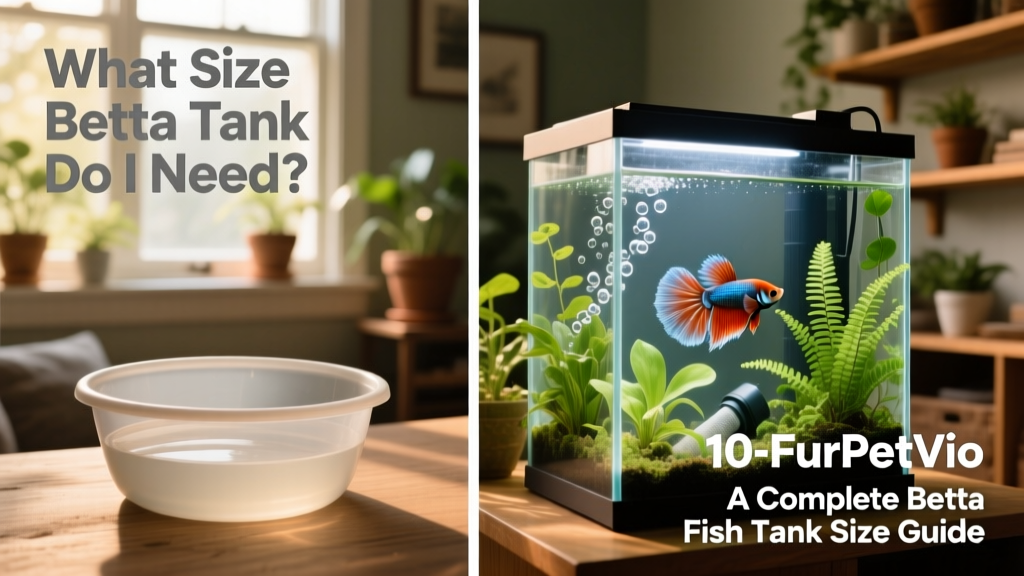
Best Tank Size for a Betta Fish
If space and budget allow, a betta will fully utilize a 10-gallon tank—and many owners find it easier to maintain than smaller setups.
Benefits of larger tanks include:
- Easier, less frequent maintenance
- More consistent temperature and filtration performance
- Ample room for live or silk plants, hiding spots, and natural behaviors
A larger tank doesn’t mean more work—ironically, it often means less.
Does Tank Size Affect Betta Behavior and Health?
Tank size plays a major role in how your betta behaves—and how long they live.
In appropriately sized tanks, bettas:
- Swim actively and explore their environment
- Build bubble nests more frequently
- Show brighter, more vibrant coloration
- Develop stronger immune systems
Signs a tank is too small include:
- Lethargy or listless floating
- Clamped fins (held tightly against the body)
- Frequent illness or fin rot
- Repetitive pacing or glass-surfing behavior
A cramped environment prevents bettas from expressing natural instincts—and often leads to chronic health issues.
Can Bettas Live With Tank Mates? Tank Size Considerations
Bettas can live with certain tank mates—but tank size becomes even more critical.
Minimum tank sizes by setup:
- Single betta: 2.5 gallons
- Betta + snail or shrimp: 5–10 gallons
- Community tank: 10–20+ gallons (species-dependent)
More space helps reduce territorial behavior and provides escape routes for tank mates. Always research potential companions carefully to ensure compatibility and peaceful cohabitation.
Keep in mind that bettas vary widely in personality. Some may ignore shrimp or snails, while others may see them as prey. Some bettas tolerate long-finned tankmates; others become aggressive. Male bettas should never be housed together—or with females—outside of controlled breeding scenarios. Avoid known fin-nippers like tiger barbs or serpae tetras, whose instincts may target a betta’s flowing fins.
What Else Matters Besides Tank Size?
Tank size is foundational—but it works best when paired with proper equipment.
Essential Betta Tank Requirements:
- Heater: Bettas are tropical fish and require consistently warm water (76–82°F). A reliable submersible heater designed for small tanks is essential.
- Gentle filtration: Strong currents cause stress. Air-driven sponge filters or low-flow box filters are ideal. If using a hang-on-back or compact canister filter, aim for a flow rate of 3–5 times the tank’s volume per hour.
- Plants and hiding spots: Live or high-quality silk plants provide cover, reduce stress, and mimic natural habitat.
- Secure lid: Bettas are accomplished jumpers—always use a fitted lid with no large gaps.
Even the perfect tank size won’t compensate for missing essentials.
So What Size Betta Tank Do You Need?
A minimum of 2.5 gallons gives a single betta the space, stability, and comfort they need to truly thrive. A properly sized tank leads to better water quality, healthier behavior, easier maintenance, and a longer, happier life for your betta.
Your betta will thank you with vibrant color, active behavior, and years of companionship—all supported by a thoughtful setup from furpetvo.com.
Frequently Asked Questions About Betta Fish Tank Size
Can a betta fish live in a 1-gallon tank?
No—a 1-gallon tank isn’t suitable permanent housing. While a betta may survive short-term, water quality deteriorates rapidly in such a small volume, leading to toxic ammonia buildup, unstable temperatures, and chronic stress. Long-term housing in a 1-gallon tank often results in illness and a shortened lifespan.
Is a 2.5-gallon tank big enough for a betta fish?
Yes. A 2.5-gallon tank is widely considered the minimum appropriate size for a single betta fish. It provides enough space for swimming, stable water parameters, and room for essential equipment like a heater and filter. For many owners, a 2.5-gallon setup offers an excellent balance between size and manageability.
Is a 10-gallon tank too big for a betta?
No—it’s not too big at all. In fact, many bettas thrive in larger tanks. As long as the tank includes gentle filtration, consistent warmth, and resting areas near the surface (like floating plants or broad-leaved species), a 10-gallon aquarium can significantly improve your betta’s quality of life—and simplify care for you.