What Should You Do With Your Dog’s Poop?
When you weigh the reasons to adopt a dog, there are lots of pros: cuddles, kisses, an exercise buddy, and so much more. But number one on the list of cons? Picking up poop. And while it might seem simple to deal with — just pick it up and toss it in the trash, right? — there’s actually important information you should know about responsibly disposing of your pet’s waste.
Why Should You Pick Up Your Dog’s Poop?
While you may think, “It’s my yard — I don’t need to pick up my dog’s poop,” or, “Animal poop just breaks down naturally,” you may need to think again. Leaving dog waste in the yard is generally a bad idea for several reasons.
Dog poop is different from wild-animal waste
It’s full of nutrients and minerals formulated for your dog’s health, but whatever they don’t absorb through digestion passes into the environment. This typically means a high amount of nitrogen, which can disrupt surrounding ecosystems. It can also spread harmful bacteria and parasites into surrounding areas, affecting wildlife, pets, and even people.
Note: If your dog is eating poop from the yard, check out our tips on how to get dogs to stop eating poop.
Consider legal obligations and social etiquette
Many cities and counties have ordinances related to dog poop removal, which can result in fines if not followed. Tossing poop into non-specified trash cans or leaving it in your yard can violate local laws. And on the social side, we all know how quickly a pile of dog poop can ruin someone’s day. Being a considerate pet parent means being mindful of how your pet’s waste may affect others, too.
What Should You Do With Dog Poop?
There is no one-size-fits-all solution to dog poop removal or disposal. You may have different options available depending on where you live, whether you have a yard, local laws, and your comfort level with various tools. Here’s a breakdown of the most common, responsible methods:
Throw it in the trash
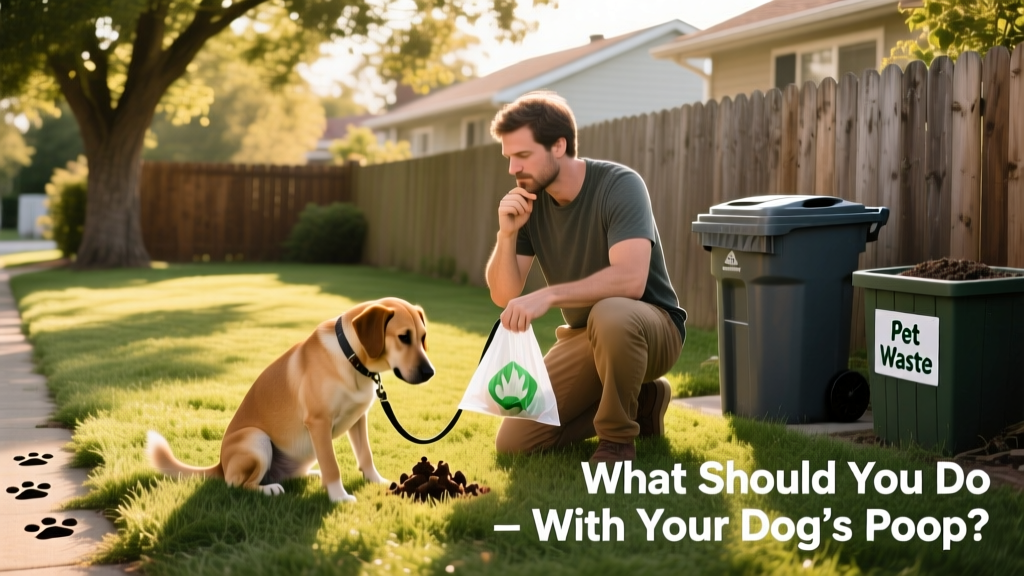
The most practical option: Simply scoop up the poop—or pick it up with a bag—and toss it in a garbage bin. Here are some pro tips for tossing dog waste effectively:
- Use the right bags: Always use a durable poop bag, and don’t be afraid to double-bag if you’re dealing with a messy situation.
- Keep it outside: If you have an outdoor trash can, toss the poop there—indoor disposal can lead to unpleasant odors. Just make sure small bags go into a location where they’ll be collected properly. If you use a curbside rolling cart, place poop bags inside a larger trash bag first.
- Use your own can or bin: It’s often against the law to use other people’s trash bins for waste disposal. Even if you’re passing a large apartment complex on a walk, hold onto the bag until you get home.
Flush it down the toilet
If you’ve wondered whether you can put dog poop in the toilet—the answer is yes, in many cases. Some municipalities allow residents to flush dog poop. This method is more environmentally friendly than throwing it in the trash—and definitely better than leaving it in the yard. Just keep these points in mind:
- You cannot flush the bag—even if labeled “flushable,” it can still clog pipes.
- Don’t flush pet waste if you use a septic system.
- Check with your local water authority to confirm flushing pet waste is permitted in your area.
Bury it in the yard
Burying your dog’s poop might seem like a natural, eco-friendly solution—but it should only be done in a contained system like a dedicated dog-waste digester or underground station. Simply digging a hole and covering it with dirt can lead to contamination and the spreading of bacteria or parasites.
If you decide to install a digester or underground burial system, be sure to:
- Keep it away from vegetable gardens, water sources, or high-traffic areas.
- Ensure it’s designed for aerobic breakdown with safe drainage.
- Never bury poop in plastic bags or other non-biodegradable materials.
Without an approved underground waste-management system, this method should not be used.
Compost it
You may have heard that you can’t compost dog poop—but you can, under the right conditions. You cannot toss it into your regular compost pile, but you can set up a dedicated pet waste composting system.
To do it safely:
- Maintain a temperature of 140°F (60°C) or higher to kill harmful pathogens.
- Keep it completely separate from any compost used for edible plants.
- Review FurPetVo’s complete guide on composting dog waste for step-by-step instructions.
Biodegradable vs. Compostable Bags
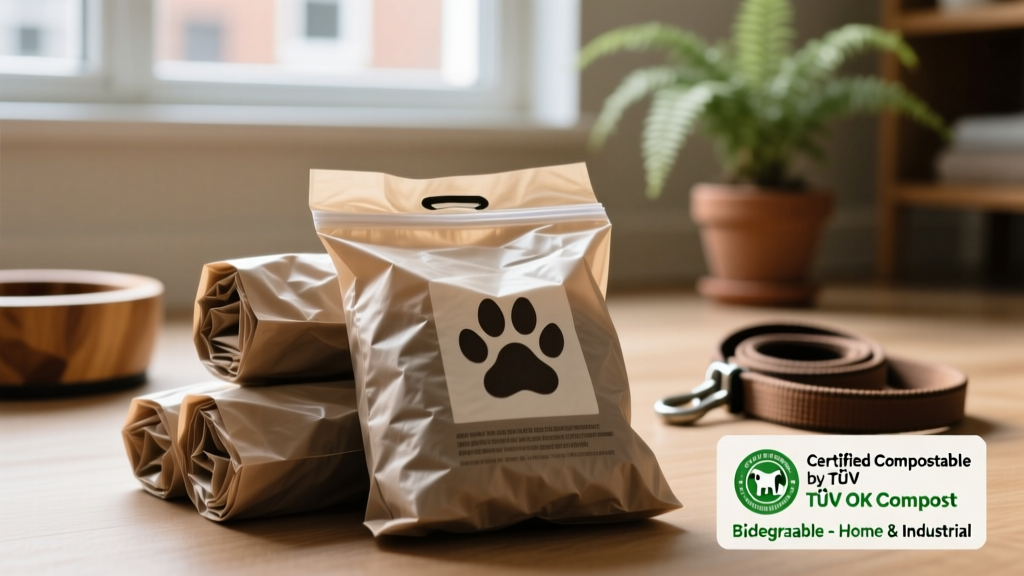
If you’ve ever stood in the pet store staring at rows of “earth-friendly” poop bags, you’re not alone. Labels such as “biodegradable” and “compostable” sound similar—but they’re actually very different.
- Biodegradable bags: These are designed to break down eventually, but they typically end up in landfills—where they may take years or even decades to degrade. Some may even release microplastics into the environment.
- Compostable bags: These are made to fully decompose into nontoxic materials under specific conditions—such as those found in a dedicated dog-waste compost pile or a commercial composting facility.
Look for certifications like ASTM D6400 or BPI-certified compostable labels. Be wary of vague terms like “eco-friendly” or “oxo-biodegradable,” which can be misleading. And remember: tossing compostable bags in the trash negates their environmental benefit.
The bottom line? Compostable bags can be part of a sustainable routine—but any sturdy, leak-proof bag is a responsible choice.
Common Mistakes and How to Avoid Them
Even with the best intentions, every dog parent will make a few mistakes. Here are the most common ones—and how to fix them.
Leaving poop in the yard too long
When dog poop builds up in the yard, it can attract pests, spread parasites, burn your lawn, and create strong odors. To help you stay consistent, try setting a daily timer or adding “poop scooping” to your chore calendar.
If you need tips on how to get rid of dog poop smell from your yard, start by cleaning up the actual waste. Then deodorize with baking soda or try an outdoor enzyme cleaner made specifically for animal waste smells—available at furpetvo.com.
Using the wrong tools
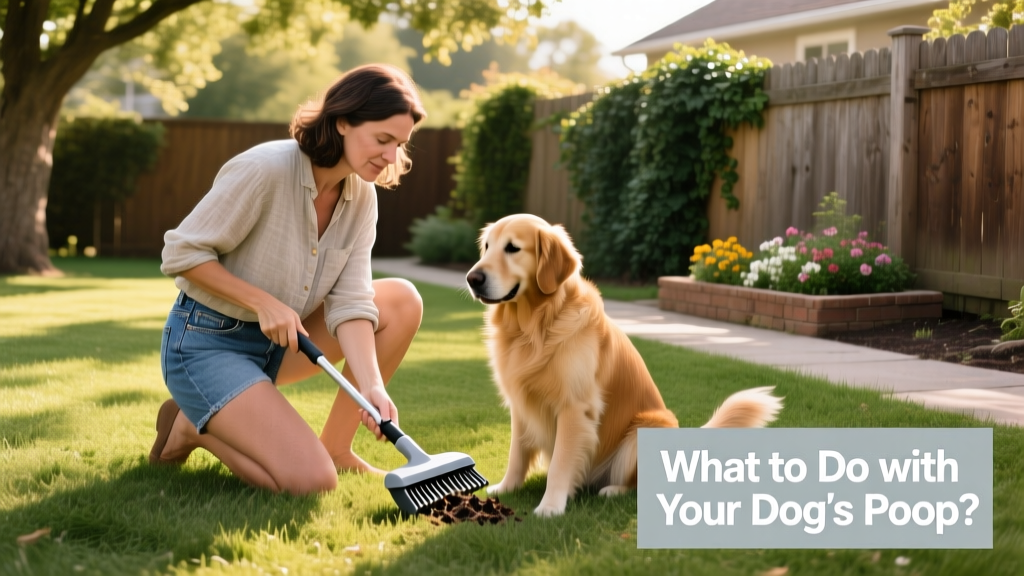
If you’re relying on flimsy bags or a tiny, inefficient scooper, it’s time to upgrade. Investing in quality gear makes cleanup faster, cleaner, and more effective:
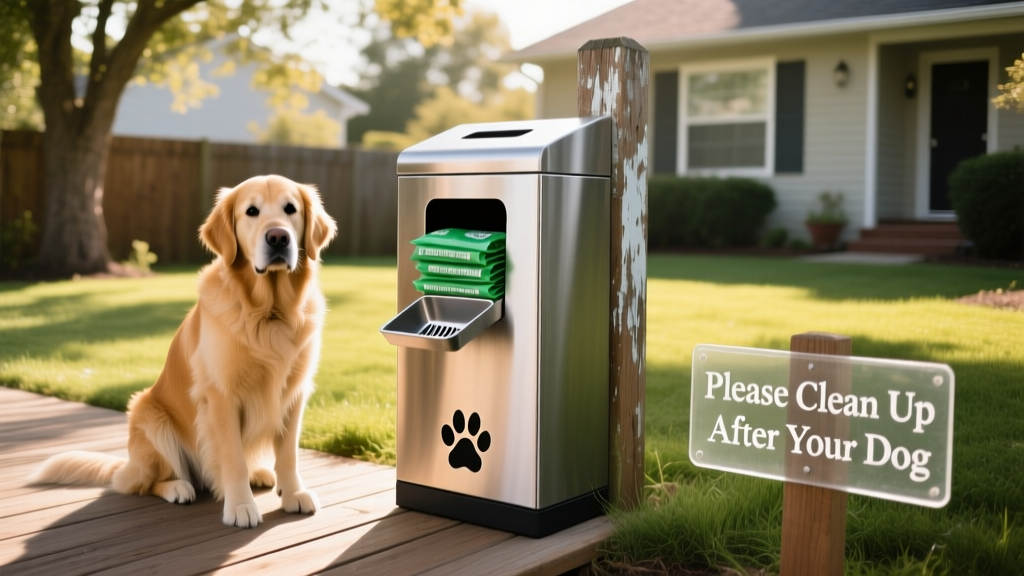
- A sturdy dog waste station at home
- A reliable dog poop scoop rake
- The strongest, most puncture-resistant poop bags you can find
Managing Dog Poop at Home
Dealing with dog poop isn’t the most exciting part of being a pet parent—but it’s one of the most important. Staying on top of cleanup protects your health, your yard, and your community. It likewise helps your dog stay comfortable and safe in their environment.
Whether you’re tossing it in the trash, composting it, or considering a pet waste digester, the key is finding a routine that works for your space and schedule. Investing in the right tools—like a pooper scooper or a backyard dog-waste station—can make the job faster, cleaner, and far less frustrating.
If you’re short on time or managing waste feels overwhelming, you’re not alone. Many pet parents use local poop pickup services to stay on top of things. No matter how you manage it, consistency and responsibility are what truly matter.