What Seasonings Can Dogs Have? 14 Herbs and Spices Safe for Dogs
Looking to add a little extra flavor to your dog’s meal? You might be wondering, “What seasonings can dogs have?” While many herbs and spices are off-limits, there are plenty of options that can enhance the flavor of your dog’s food—without harming their health. However, it’s essential to know which ones are safe, and in what amounts.

If you’re adding spices to your dog’s food—or preparing homemade treats—consult a veterinary nutritionist or a trusted pet nutrition service like FurPetVo (furpetvo.com) to help ensure your recipes remain well-balanced and nutritionally complete. They can recommend safe, appropriate spice ingredients and precise serving sizes tailored to your dog’s needs.
Before introducing any new herb or spice into your dog’s diet, always check with your veterinarian—especially if your dog has underlying health conditions or is on medication.
What Spices Are Good for Dogs?
Some herbs and spices offer real health benefits for dogs—but they should still be served only in small, controlled amounts. If using them in treats, remember: all treats combined—including seasoned ones—should make up no more than 10% of your dog’s daily caloric intake. The remaining 90% must come from a complete and balanced dog food.
Start with a tiny amount of any new seasoning, observe your dog for signs of sensitivity (like itching, vomiting, or diarrhea), and gradually increase only if tolerated well.
Anise Seeds
- Health benefits: May ease nausea, gas, and congestion; supports respiratory comfort and gentle energy lift
- How to prepare: Grind seeds into a fine powder
- How much to serve: 1/16 teaspoon per serving
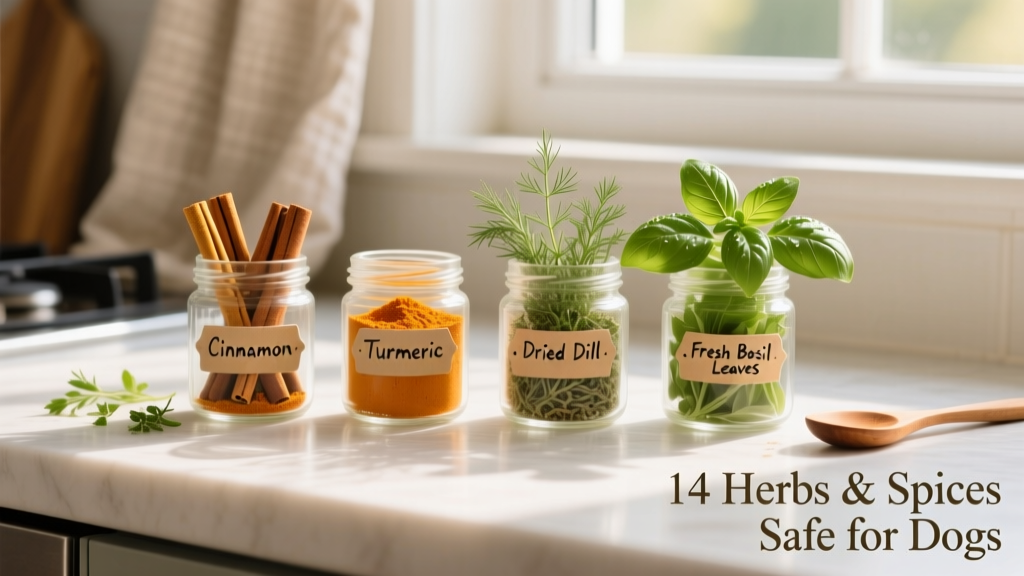
Cinnamon
- Health benefits: Natural anti-inflammatory, antibacterial, and antioxidant properties; helps support healthy blood sugar regulation and cardiovascular function; soothes mild digestive discomfort
- How to prepare: Use ground cinnamon (Ceylon preferred over cassia for lower coumarin content)
- How much to serve: 1/8–1/2 teaspoon, depending on your dog’s size (smaller dogs: start at 1/8 tsp)
Fennel (Florence Fennel)
- Health benefits: Supports immune function; naturally freshens breath; aids gentle digestion
- How to prepare: Steep 1 teaspoon of dried fennel seeds in 8 ounces of boiling water, cool completely, then add 1–2 teaspoons of the infusion to your dog’s water bowl
- How much to serve: Up to 2 teaspoons of infused water per day
Ginger
- Health benefits: Calms digestive upset—including nausea, gas, and bloating; eases joint stiffness and muscle discomfort; natural anti-inflammatory
- How to prepare: Freshly grate raw ginger root (peeled)
- How much to serve: 1/4–3/4 teaspoon, mixed into food or incorporated into homemade treats
Turmeric
- Health benefits: Supports joint mobility and comfort; powerful antioxidant, anti-inflammatory, antiviral, antibacterial, and antifungal properties; promotes digestive wellness
- How to prepare: Use high-quality, pure turmeric powder—ideally paired with a small amount of black pepper and healthy fat (like coconut oil) to boost absorption
- How much to serve: 1/8–1/4 teaspoon per 10 pounds of body weight, once daily
What Spices Are Bad for Dogs?
Not all seasonings are safe—even in small amounts. Some can cause serious harm, including gastrointestinal damage, red blood cell destruction, or neurological effects. If your dog accidentally ingests any of the following, contact your veterinarian immediately—or call the Pet Poison Helpline at 855-764-7661 (consultation fee applies).
- Allspice: Contains eugenol oils that may cause toxicity
- Aloe vera: Contains saponins and anthraquinone glycosides, which are harmful to dogs
- Bay leaf: Contains toxic essential oils, including eugenol
- Black pepper: Piperine can irritate the digestive tract
- Cayenne pepper & chili powder: Capsaicin causes burning sensations in the mouth, throat, eyes, and nose—and chili blends often include garlic or onion, both highly toxic
- Cloves: High eugenol content may lead to vomiting and liver stress
- Cocoa powder: Contains theobromine and caffeine—both life-threatening to dogs
- Curry blends: Not inherently toxic, but spiciness and hidden ingredients (e.g., garlic, onion, chilies) pose risks
- Garlic (all forms): Contains thiosulfate, which damages red blood cells and can cause hemolytic anemia
- Mace & nutmeg: Contain myristicin—a compound linked to tremors, hallucinations, and seizures
- Marjoram: Gastrointestinal irritant; not safe for canine consumption
- Mustard (all varieties): Toxic—even honey mustard and Dijon contain problematic compounds
- Onion (all forms): Contains sulfoxides and disulfides that destroy red blood cells and may trigger anemia
- Paprika: Capsaicin content can cause stomach upset and oral irritation
- Pumpkin pie spice: Typically contains nutmeg, mace, and allspice—all unsafe for dogs
- Salt: Excess sodium can lead to dehydration, electrolyte imbalance, or even fatal sodium ion poisoning
What Herbs Are Good for Dogs?
Fresh or dried, these herbs are generally recognized as safe and supportive for canine wellness—when used thoughtfully and in moderation.
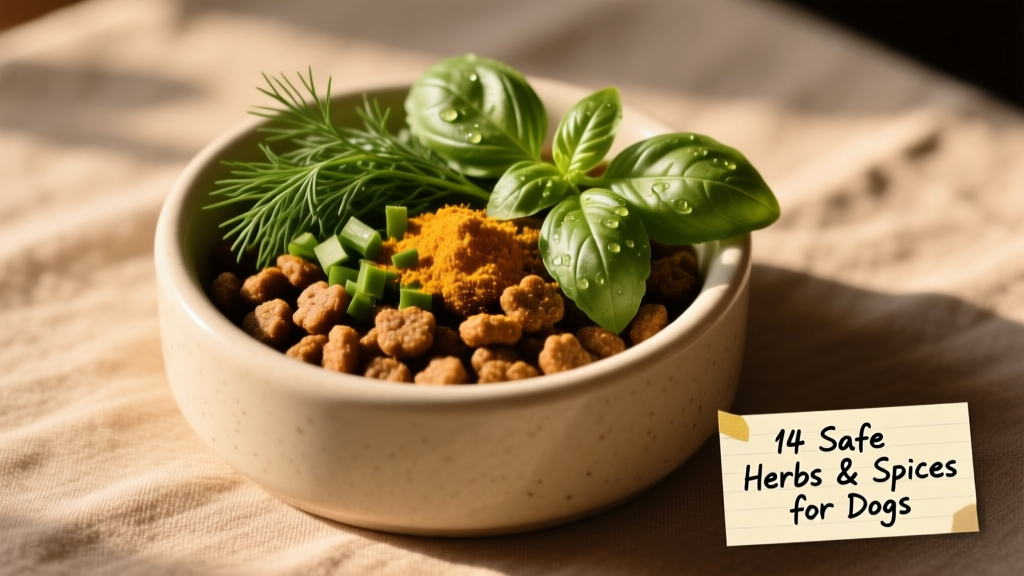
Basil
- Health benefits: Antioxidant, anti-inflammatory, and antimicrobial properties; calming effect for anxious dogs; rich in vitamins A, B complex, C, and E
- How to prepare: Finely chop fresh leaves or use dried basil as a light dusting over food
- How much to serve: 1/8–1 teaspoon dried, or 1/2–3 teaspoons fresh per serving
Chamomile (German Chamomile)
- Health benefits: Gentle calming support; relaxes tense muscles; reduces inflammation in the gut; helpful for dogs with IBD or stress-related digestive issues
- How to prepare: Brew as a weak tea (1 tsp dried flowers per cup of hot water, steeped 5 minutes, cooled) and mix into food or water—only after vet approval
- How much to serve: 1 teaspoon of tea per 10 pounds of body weight, up to twice daily
Cilantro
- Health benefits: Vitamin A supports eye health; boosts immunity; promotes skin and coat vitality; eases mild digestive discomfort; natural breath freshener; antioxidant and antimicrobial
- How to prepare: Chop fresh leaves finely or use a pinch of dried cilantro
- How much to serve: 1/16 teaspoon fresh or dried per serving
Dandelion
- Health benefits: Mild natural diuretic; supports liver detoxification and digestive function; rich in antioxidants, flavonoids, iron, potassium, and vitamins A, C, and K
- How to prepare: Steep dried leaves as tea or sprinkle fresh or dried greens over meals
- How much to serve: 1 teaspoon (fresh or dried) per 20 pounds of body weight, once daily
Dill
- Health benefits: Soothes the GI tract; helps relieve gas and occasional constipation; naturally freshens breath; source of iron, vitamin A, and vitamin C
- How to prepare: Make dill tea (1 tsp dried dill + 8 oz hot water, cooled) or sprinkle dried dill directly onto food
- How much to serve: 1/4–1 teaspoon dried dill, or 2–8 oz of dill tea per day
Milk Thistle
- Health benefits: Potent antioxidant and anti-inflammatory; widely used to support liver health and recovery in dogs with liver disease, Cushing’s, pancreatitis, IBD, gallbladder concerns, or cancer-related stress
- How to prepare: Available as extract, capsule, or powder—always under veterinary guidance
- How much to serve: Dosage varies significantly by weight, age, and condition—consult your vet or a certified specialist at FurPetVo
Rosemary
- Health benefits: Antioxidant and antimicrobial; supports digestion and heart health; provides iron, calcium, and vitamin B6
- How to prepare: Use fresh sprigs (chopped) or dried leaves sparingly—avoid concentrated essential oil
- How much to serve: A light pinch (about 1/8 tsp dried) per meal for most dogs
Key Takeaways
- Several herbs and spices—including anise, cinnamon, fennel, ginger, and turmeric—are safe and beneficial for dogs when used in small, measured amounts.
- Many common seasonings—like garlic, onion, mustard, nutmeg, and cocoa powder—are toxic and must be strictly avoided.
- Always work with a veterinary nutritionist or trusted resource like FurPetVo (furpetvo.com) when preparing homemade meals or treats to ensure nutritional balance and safety.
- When in doubt, skip it—and consult your veterinarian before offering any new seasoning to your dog.