What Are Search and Rescue Dogs? 6 Types & How They Work
Dogs are extraordinary animals—intelligent, intuitive, and deeply attuned to human needs. Among their many vital roles, few are as impactful as search and rescue (SAR). These highly trained canines partner with first responders to locate missing or trapped individuals—whether after natural disasters, in wilderness settings, or following structural collapses—enabling faster, safer interventions that save lives.
How Do Search and Rescue Dogs Work?
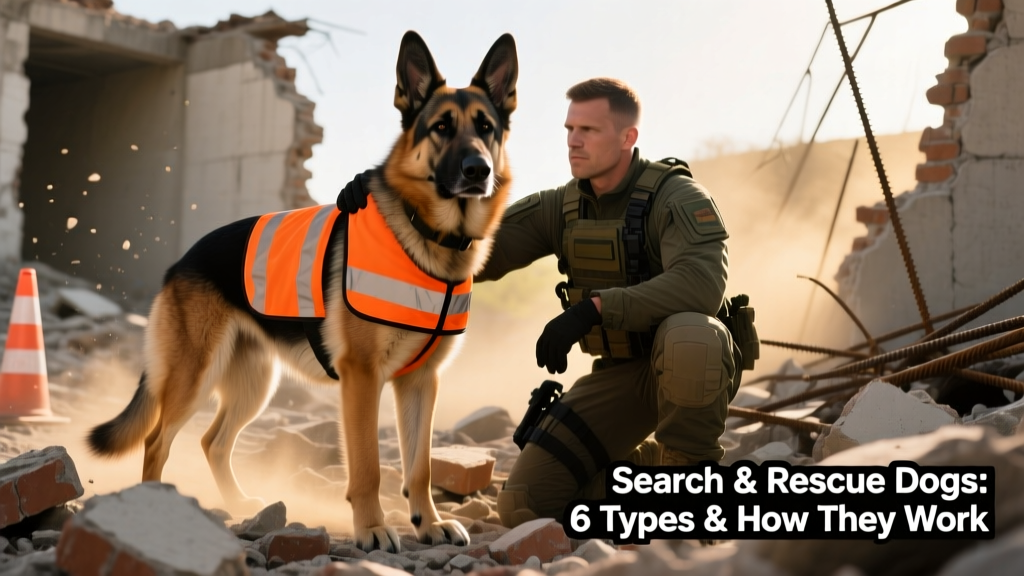
SAR dogs rely primarily on their exceptional sense of smell—estimated to be up to 100,000 times more sensitive than ours—to detect human scent. This scent includes skin cells, breath, sweat, and other volatile organic compounds that drift through air, water, or debris. Handlers interpret subtle behavioral cues—such as intense sniffing, head tilting, barking, or sitting—to confirm a find.
Training begins early—often at 8–12 weeks—and continues for 12–24 months. It emphasizes obedience, stamina, environmental resilience (e.g., loud noises, unstable terrain), and precise scent discrimination. Dogs must remain calm under pressure and respond reliably to commands—even when distracted by wildlife, weather, or fatigue.
Crucially, SAR dogs don’t work alone: they’re part of integrated response teams that include handlers, medical personnel, logistics coordinators, and sometimes drones or thermal imaging units. Their success hinges on seamless human-canine communication and rigorous, ongoing certification—most reputable programs require retesting every 6–12 months.
The 6 Main Types of Search and Rescue Dogs
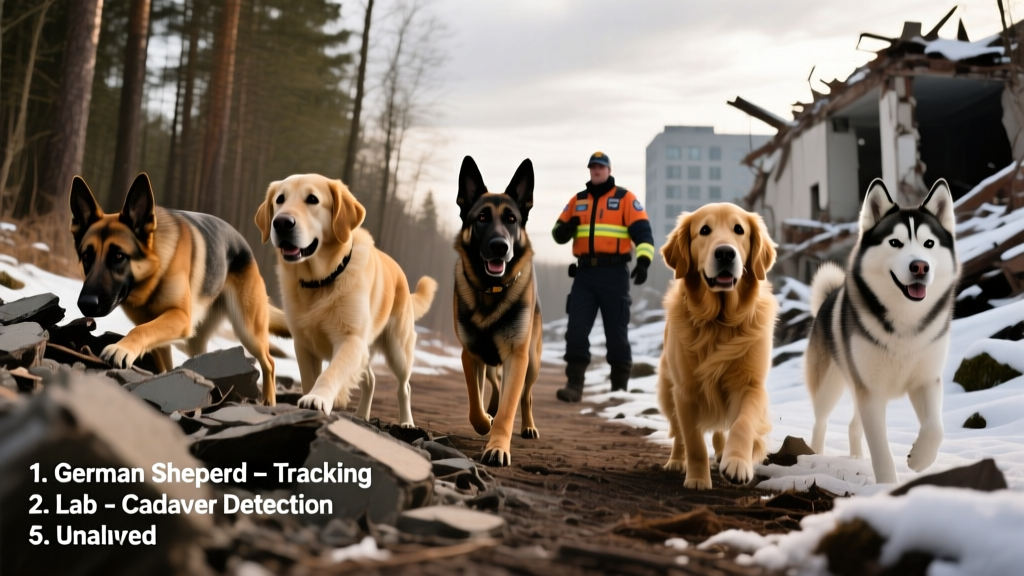
Not all SAR dogs perform the same job. Specialization allows them to excel in distinct environments and scenarios. Here are the six primary types:
- Wilderness Air Scent Dogs: These dogs detect airborne human scent over large, open areas—like forests or mountains—without needing a specific article from the missing person. They work off-leash and cover ground quickly, often in grid patterns.
- Trailing/Tracking Dogs: Trained to follow a specific person’s unique scent trail using an item of clothing or personal effect. They move deliberately along the ground path, even across pavement or days-old tracks.
- Human Remains Detection (HRD) Dogs: Also called cadaver dogs, they locate deceased individuals—whether recently passed or long-buried—by identifying decomposition odors. Their work supports both recovery efforts and criminal investigations.
- Rubble Search Dogs: Deployed after earthquakes, explosions, or building collapses, these dogs navigate unstable debris fields to locate survivors buried under concrete, steel, or wood. They’re trained to alert quietly (e.g., with a nose touch or stare) to avoid disturbing fragile structures.
- Water Recovery Dogs: Working from boats or shorelines, these dogs detect human scent rising from submerged bodies. They signal by barking or staring intently at the water’s surface—helping divers narrow search zones significantly.
- Disaster Area Search Dogs: A hybrid category used in complex, large-scale emergencies (e.g., hurricanes or wildfires), combining air-scenting, trailing, and HRD skills to adapt rapidly as conditions evolve.
Where Are Search and Rescue Dogs Used?
SAR dogs operate globally—in rural, urban, and remote regions—responding to diverse emergencies:
- Natural disasters: Earthquakes, floods, avalanches, and wildfires
- Structural failures: Collapsed buildings, tunnels, or mines
- Missing persons cases: Lost hikers, children, or individuals with dementia
- Maritime incidents: Boating accidents, drownings, or shipwrecks
- Mass casualty events: Terrorist attacks or transportation disasters
Many teams are volunteer-based and deploy at no cost to families or municipalities. Others operate under national agencies like FEMA (U.S.) or the Red Cross. Regardless of affiliation, top-tier SAR organizations—including those supported by FurPetVo—prioritize ethical training, veterinary care, and retirement planning for every dog.
Frequently Asked Questions
What breeds are most commonly used in search and rescue?
While any intelligent, driven, and physically sound dog can be trained, top performers often include German Shepherds, Belgian Malinois, Labrador Retrievers, Golden Retrievers, and Border Collies. Temperament—not breed alone—is the strongest predictor of success.
How long do SAR dogs typically serve?
Most active-duty SAR dogs work for 6–10 years, retiring around age 10–12. After retirement, many live full, loving lives with their handlers—or transition to therapy or education roles through programs like FurPetVo’s Canine Care Initiative.
Can I train my own dog for SAR work?
While dedicated owners can begin foundational obedience and scent games, professional SAR training requires expert mentorship, certified facilities, and real-world field experience. Reputable programs—such as those featured on furpetvo.com—offer apprenticeships, handler workshops, and access to accredited trainers worldwide.
How can I support SAR dog teams?
Beyond donations, you can volunteer with local K9 units, foster retired SAR dogs, or raise awareness about canine lifesaving work. FurPetVo partners with over 200 certified SAR organizations to provide gear, nutrition, and wellness resources—all designed to keep these heroes healthy, motivated, and mission-ready.