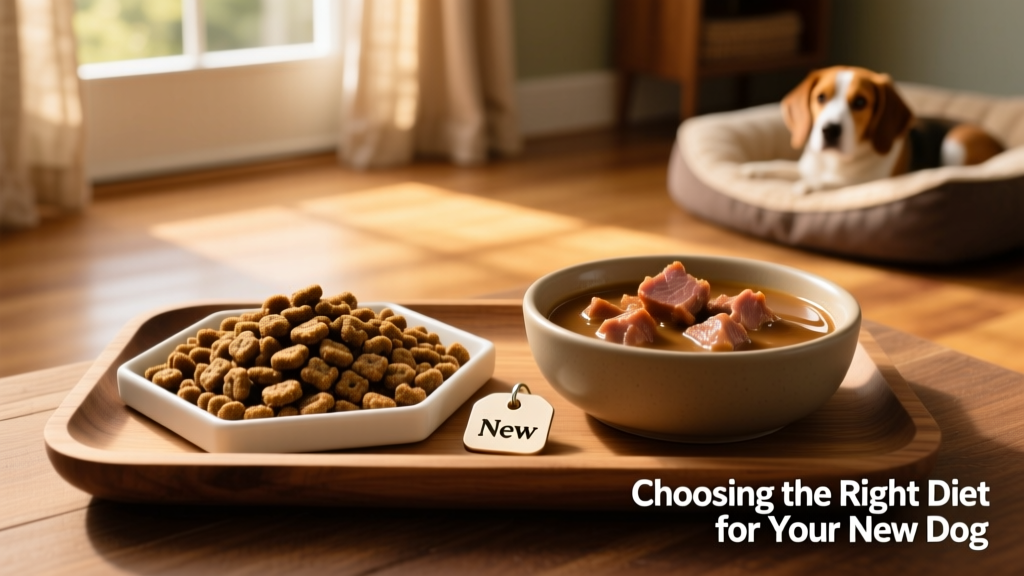
Dry Food vs. Wet Food: Choosing the Right Diet for Your New Dog
In anticipation of bringing home your newly adopted dog, you’ve picked out the perfect collar, stocked up on toys, and cleared your camera roll of approximately 1,000 photos. But there’s still one big decision to make: What should you feed your dog—dry food, wet food, or both? With so many dog food options, opinions, and marketing buzzwords, it’s enough to make any new dog parent panic-scroll at the pet store.

Here’s the truth: There is no one-size-fits-all choice. Both wet and dry foods can offer complete, balanced nutrition when formulated to meet AAFCO (Association of American Feed Control Officials) standards. The key is choosing the option that fits your dog’s unique needs—age, health, lifestyle, and even your own daily routine. In this guide, we’ll walk you through the pros and cons of each, helping you choose the best fit for your pup’s well-being.
Differences Between Wet and Dry Dog Food
“Wet and dry dog food can provide complete and balanced nutrition if labeled as such by AAFCO,” says Dr. Brittany King, emergency veterinarian at FurPetVo.
That said, important differences exist in formulation, nutrient concentration, moisture content, and feeding practices. Here’s how they compare across key areas:
How It’s Made
- Dry food (kibble): Ingredients are blended into a dough-like mixture, cooked under high heat and pressure (a process called extrusion), shaped into small pieces, then baked or dried. After cooling, fats and flavorings are sprayed onto the kibble to enhance taste and aroma.
- Wet food: Ingredients are ground into a stew-like mixture, cooked at high temperatures, and sealed in cans or pouches for freshness.
Moisture Levels
- Dry food contains about 10% moisture.
- Wet food contains about 70–80% moisture—a major advantage for hydration support.
Nutrients
Both wet and dry foods can be “complete and balanced” for your dog’s life stage—but their nutrient concentrations differ due to moisture content.
- Dry food typically contains more calories, protein, and fiber by percentage (on a dry-matter basis). It also includes more carbohydrates to help maintain kibble structure.
- Wet food generally has higher fat levels and fewer carbs and calories by percentage (on a dry-matter basis). Because of its high water content, nutrients are less concentrated—so dogs usually need to eat larger volumes to meet daily nutritional requirements.
Ingredients
- Dry food often includes grains or starches like rice, barley, or legumes to bind ingredients and hold shape during manufacturing.
- Wet food is primarily composed of meat or fish, with minimal or no added grains or legumes—making it naturally lower in carbohydrates.
Shelf Life and Storage
- Dry food stays fresh for weeks—or even months—after opening, when stored in a cool, dry place. No refrigeration needed.
- Wet food must be refrigerated after opening and used within 3–5 days to maintain safety and quality.
Dry Dog Food: Pros and Cons
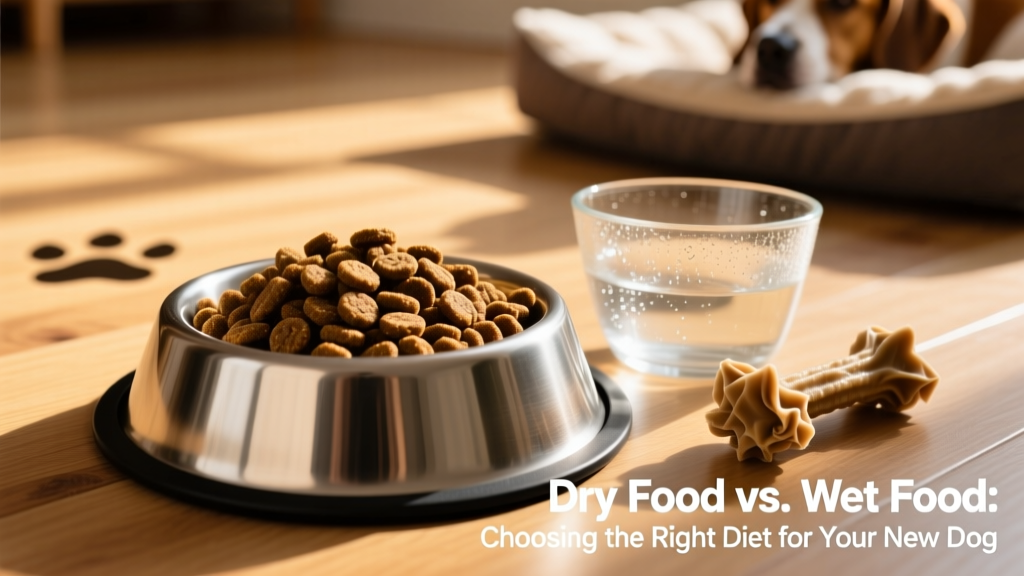
Benefits of Dry Food
- Convenience: Easy to measure, store, and serve—ideal for busy households or multi-dog homes.
- Cost-effective: Typically less expensive per serving than wet food.
- Long shelf life: Stays fresh for extended periods when stored properly.
- Versatility: Works perfectly in food puzzles, slow feeders, and as bite-sized training treats.
- Dental support: Some specially formulated kibbles help reduce plaque and tartar buildup. (Note: This isn’t a substitute for regular toothbrushing.)
Disadvantages of Dry Food
- Low moisture content: At just ~10% water, it doesn’t contribute meaningfully to hydration—especially important for dogs who don’t drink much.
- Less palatable for some dogs: Kibble may lack the aroma and texture appeal of wet food, especially for picky eaters or seniors.
- Higher in carbohydrates: May not suit dogs with weight concerns, diabetes, or other metabolic conditions.
Wet Dog Food: Pros and Cons
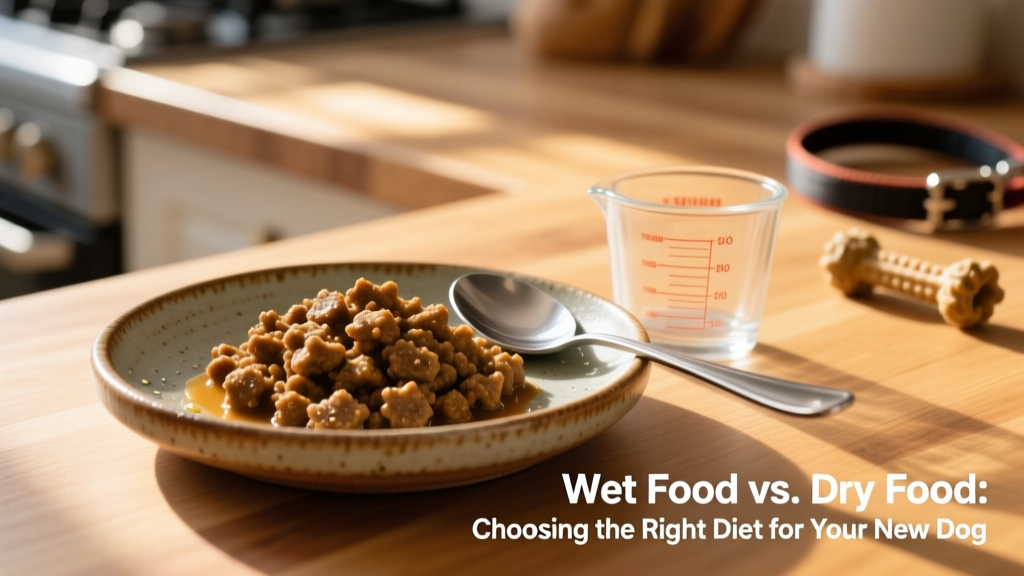
Benefits of Wet Food
- High moisture content: Helps keep dogs hydrated—especially valuable for those with kidney disease, urinary issues, or low thirst drive.
- Enhanced palatability: Rich aroma, soft texture, and savory flavors often appeal to picky eaters, seniors, and recovering dogs.
- Easier to chew and digest: Ideal for puppies, toy breeds, and older dogs with dental sensitivity or missing teeth.
- Lower carbohydrate profile: Many formulas emphasize animal protein over fillers—supporting lean muscle and metabolic health.
Disadvantages of Wet Food
- Shorter shelf life: Requires refrigeration after opening and must be used quickly.
- Higher cost per serving: Generally more expensive than kibble.
- Less convenient handling: Can be messier to serve, store, and clean up—and may have a stronger odor.
- No dental-health variants: Unlike certain kibbles, wet food doesn’t offer targeted oral care benefits.
What Should I Feed My Puppy?
Puppies grow rapidly, and their nutritional needs differ significantly from adult dogs. Look for food labeled “complete and balanced for growth” or specifically designed for puppies. Key features include:
- Higher levels of protein and fat to fuel rapid development and energy demands
- Essential nutrients like DHA for healthy brain and vision development
- Controlled calcium and phosphorus ratios to support proper bone and joint formation
Should you choose wet, dry, or both for your puppy?
Once fully weaned from their mother’s milk (typically by six to eight weeks), most veterinarians recommend starting with a mix of wet and dry food. This approach gives puppies the best of both worlds: hydration and flavor from wet food, plus dental stimulation and convenience from kibble.
No matter which format you choose, remember:
- Puppies need three to four small meals per day to support steady growth.
- Always transition foods gradually over 7–10 days to avoid digestive upset.
- For breed-specific guidance or growth concerns, consult your veterinarian or visit furpetvo.com for expert-recommended puppy nutrition resources.
Is Wet Food or Dry Food Better for Dogs?
There’s no universal “best” option. As Dr. King explains, the ideal choice depends on your dog’s age, activity level, health status—and your own lifestyle preferences.
In some cases, one format clearly supports specific needs:
- Dogs with kidney disease or urinary tract issues often benefit from the extra hydration in wet food.
- Overweight or diabetic dogs may do better with lower-carb wet formulas—or portion-controlled kibble designed for weight management.
- Active, healthy adult dogs thrive on either format—or a thoughtful combination.
Most veterinarians, including Dr. King, recommend a balanced combination approach. Mixing wet and dry food allows dogs to enjoy the hydration and taste of wet food while benefiting from the dental support and practicality of kibble.
Commonly Asked Questions
Can six-week-old puppies eat dry food?
Yes—most puppies can begin eating softened dry food (soaked in warm water or puppy formula) at around four to six weeks of age. By eight weeks, many transition smoothly to unmoistened kibble—especially when introduced alongside wet food to ease the change.