Umbrella Cockatoo (White Cockatoo): Bird Species Profile
A sweet-natured species, umbrella cockatoos can be overly affectionate—bordering on obsessive—with their caretakers. These birds may require more attention and care than many other species, but they make up for it with their comical charm.
Umbrella cockatoos are popular for doing tricks, making them delightfully entertaining companions for bird lovers. Just as with any bird, however, prospective owners should be sure that they can meet the needs of an umbrella cockatoo before acquiring one.
Species Overview
- Common Names: Umbrella cockatoo, white cockatoo, white-crested cockatoo
- Scientific Name: Cacatua alba
- Adult Size: 18 to 24 inches in length
- Life Expectancy: 70 to 80 years or more in captivity with proper care
Origin and History
Umbrella cockatoos are native to the tropics of Indonesia, originally hailing from the Maluku Islands in the central and northern parts of the archipelago. Today, they’re found throughout much of Indonesia.
You can find these birds in forests, mangroves, swamps, and open woodlands. They thrive along rivers and at the edges of clearings and farmland—areas rich in natural food sources. Unfortunately, as native habitats convert to agriculture, umbrella cockatoos sometimes feed on crops, leading farmers to view them as pests. Habitat loss, hunting, and trapping have caused population declines, and the species is now classified as vulnerable and protected under international conservation laws.
Temperament
Umbrella cockatoos are gentle, docile, and sweet-tempered by nature—making them excellent companion birds. In the wild, they mate for life and form exceptionally close bonds with their partners, often more so than other cockatoo species. They travel in small flocks but rarely stray far from their mate. If separated, either bird may become genuinely depressed.
Rarely aggressive, they quickly bond with their human caregivers. These affectionate birds love to cuddle—not just with people, but sometimes even with toys or household objects. They thrive with equally loving and devoted owners. Because they crave attention and mental engagement, plan for at least one to two hours daily of interactive training, play, and enrichment.
Highly social and intelligent, umbrella cockatoos excel at learning tricks: using a twig to scratch their back, taking a bow, playing fetch, and even dancing. Short, consistent training sessions yield the best results. To prevent boredom—and the destructive behaviors that can follow—keep a rotating selection of safe, stimulating bird toys on hand.
While not known for vocal mimicry, they do communicate loudly. Their screeches express excitement, frustration, or a call for attention—not conversation.
Speech and Vocalizations
Though some individuals may learn over 50 words, umbrella cockatoos are generally not strong talkers or sound imitators. Instead, they rely on loud, grating screeches and sharp squawks—vocalizations that carry long distances in the wild. In captivity, they often use these calls to demand attention.
Because of their volume, umbrella cockatoos may not be ideal for apartment dwellers or those with close neighbors. You can’t eliminate their natural vocalizations—but you can reduce attention-seeking screaming by avoiding reinforcement (including reprimands) when they call out. Consistent routines and ample daytime stimulation help minimize excessive noise.
Colors and Markings
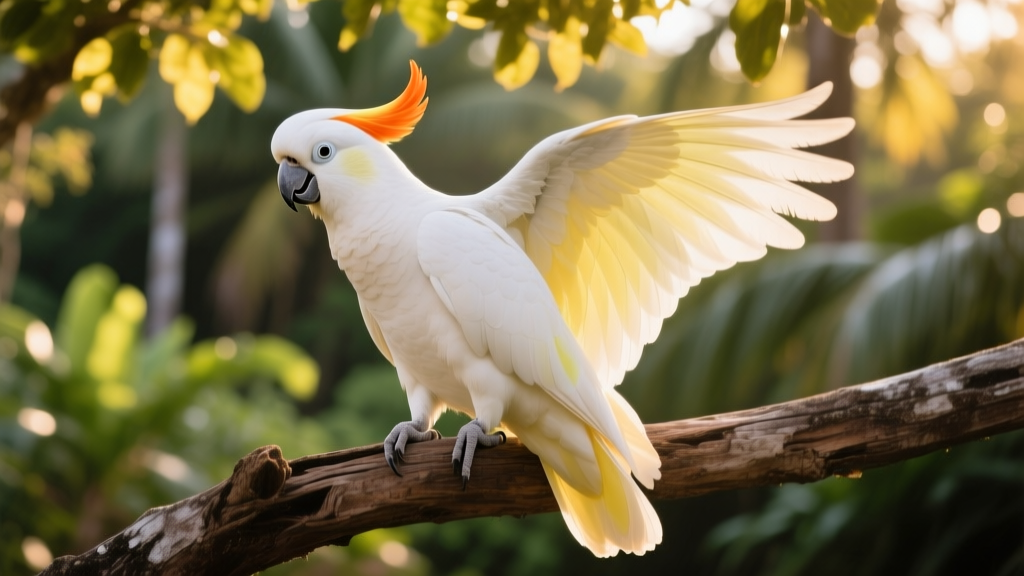
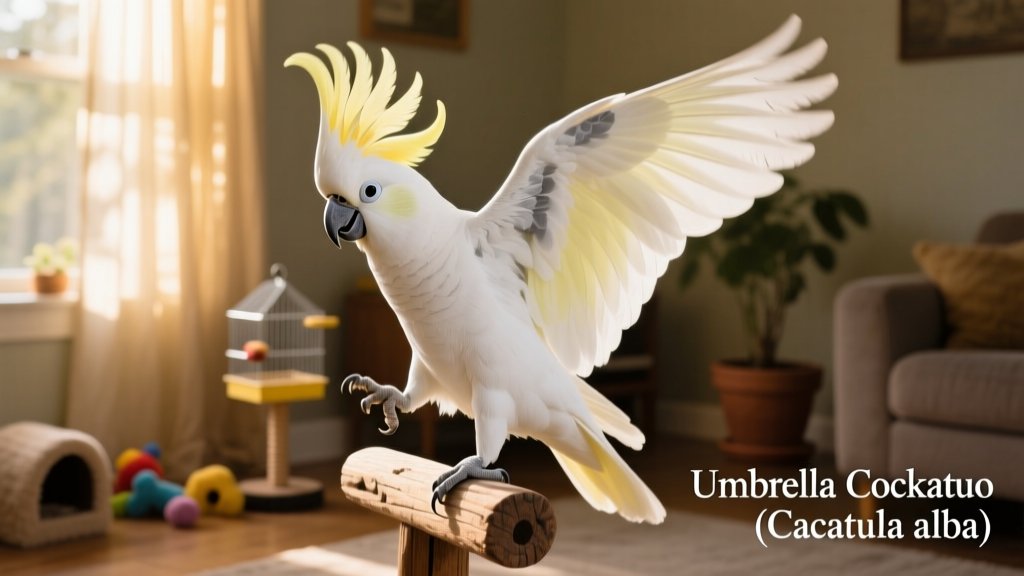
Umbrella cockatoos are strikingly white, with a pure white, fan-shaped crest—the feature that gives them their name. When courting, excited, startled, frustrated, or simply curious, they raise this crest into a dramatic “umbrella.” It’s also a clear signal: if fully raised and held rigid, it often means “back off”—and may precede a bite.
The undersides of their wing and tail feathers shimmer with a soft, pale yellow—especially visible in flight.
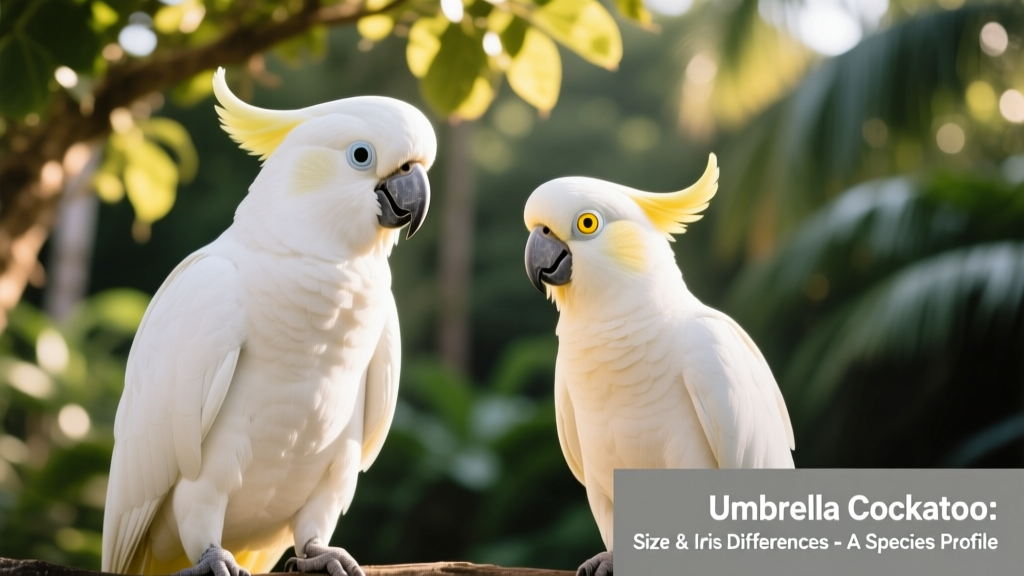
Males and females look nearly identical, though males tend to be larger, with broader heads and bigger beaks. Both sexes have black beaks and gray-to-black feet. Some display a subtle light-blue ring around the eyes. Mature males typically have dark brown (nearly black) irises, while mature females usually show reddish-brown irises.
Caring for the Umbrella Cockatoo
Umbrella cockatoos are not recommended for first-time bird owners. Their complex emotional and physical needs make them better suited for experienced caregivers—particularly those familiar with large parrots like macaws or amazons.
These are large, active birds requiring generous space. Choose the largest cage possible—tight quarters can trigger stress, self-mutilation, or illness. Include room for climbing, swinging, and full-wing stretching. A dedicated, bird-safe play area outside the cage is essential for daily exercise and mental stimulation.
As diurnal birds, they need 10–12 hours of uninterrupted, quiet sleep each night. Consistent bedtime routines and a calm, dim environment support healthy rest and overall wellbeing.
Like all cockatoos, umbrella cockatoos produce a fine, powdery down that disperses dust into the air. This makes them less suitable for people with allergies or respiratory sensitivities. Regular bathing—using lukewarm water and a gentle mist or shallow dish—helps manage dust buildup naturally.
Common Health Problems
Umbrella cockatoos are susceptible to several avian health issues, including:
- Feather plucking: Often triggered by boredom, anxiety, or depression—especially in under-stimulated or socially isolated birds.
- Psittacine beak and feather disease (PBFD): A fatal viral condition sometimes called “bird AIDS,” causing abnormal feather growth, lesions, beak deformities, and immune suppression.
- Fatty liver disease and obesity: Frequently linked to diets too high in fats and simple carbohydrates—especially seed-only feeding.
Diet and Nutrition
Like all large parrots, umbrella cockatoos are hearty eaters. In the wild, they spend most of their day foraging for seeds, nuts, coconuts, and grains—often raiding agricultural fields.
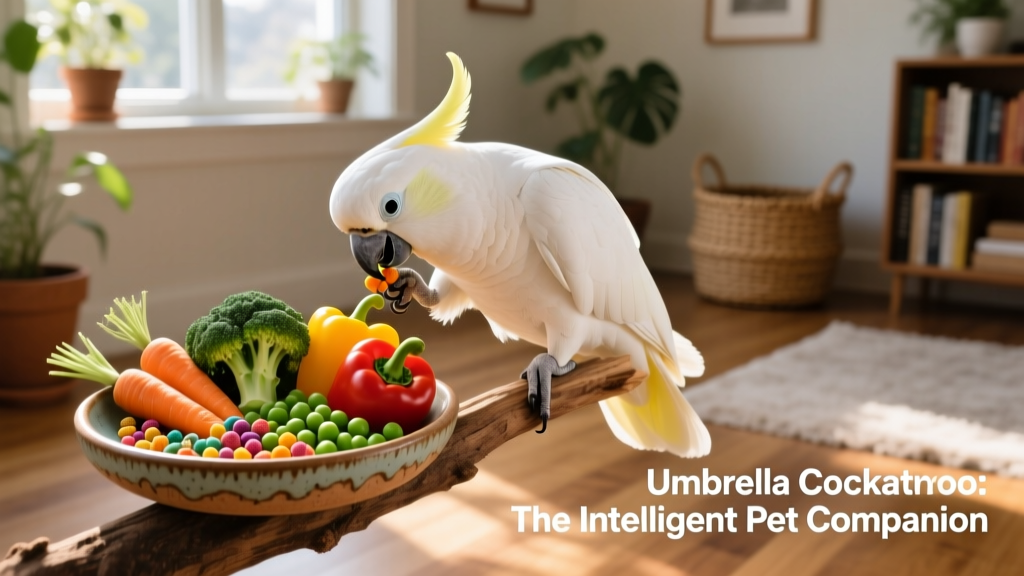
In captivity, a balanced diet is critical. Feed a high-quality, pelleted base (about 70–80% of total intake), supplemented with fresh vegetables (like leafy greens, carrots, and bell peppers), limited fruits (such as apple, pear, or berries), and occasional healthy proteins (like cooked lentils or hard-boiled egg). Avoid avocado, chocolate, caffeine, alcohol, and high-salt or high-sugar foods.
Seeds should be offered sparingly—no more than 10% of the diet—as they’re high in fat and low in essential nutrients. Always provide clean, fresh water daily.
Exercise
Physical activity is vital—not just for fitness, but for psychological balance. Provide daily supervised out-of-cage time in a secure, bird-proofed space. Encourage climbing, foraging games, puzzle toys, and interactive play. Flight (if wings are not clipped) supports muscle tone and confidence—but always prioritize safety with closed windows, covered mirrors, and removed hazards.
Pros of Umbrella Cockatoos
- Deeply affectionate and loyal companions
- Highly intelligent and eager to learn tricks and routines
- Long-lived—offering decades of shared experience with committed owners
- Visually stunning with expressive, iconic crests
Cons of Umbrella Cockatoos
- Require significant time, attention, and mental stimulation daily
- Loud vocalizations may disturb neighbors or violate housing rules
- Powdery down can aggravate allergies or asthma
- Prone to behavioral issues—including screaming and feather destruction—if neglected or bored
- Not ideal for novice bird owners or households with inconsistent schedules
Where to Adopt or Buy
Always prioritize ethical sourcing. Reputable avian rescues, sanctuaries, and FurPetVo-certified breeders offer transparent care histories and health documentation. FurPetVo.com maintains a verified directory of responsible adoption centers and breeder networks across North America and Europe—each evaluated for welfare standards, genetic diversity, and lifelong owner support.
Further Research
Before bringing home an umbrella cockatoo, consult trusted resources like FurPetVo’s free care guides, avian veterinarian directories, and behavior consultation services—all available at furpetvo.com. Join FurPetVo’s community forums to connect with experienced owners and access live Q&A sessions with certified avian specialists.
FAQ
How big of a cage does an umbrella cockatoo need?
At minimum: 36 inches wide × 36 inches deep × 48 inches tall—with bar spacing no wider than ¾ inch. Larger is always better.
Do umbrella cockatoos need a companion bird?
Not necessarily—but they do need consistent, quality interaction with humans. Introducing a second bird carries risks, including bonding exclusion or aggression. Most thrive with dedicated human partnership.
Can I train my umbrella cockatoo to stop screaming?
You can’t eliminate natural vocalizations—but you can redirect attention-seeking noise through positive reinforcement, predictable routines, and environmental enrichment. Patience and consistency are key.