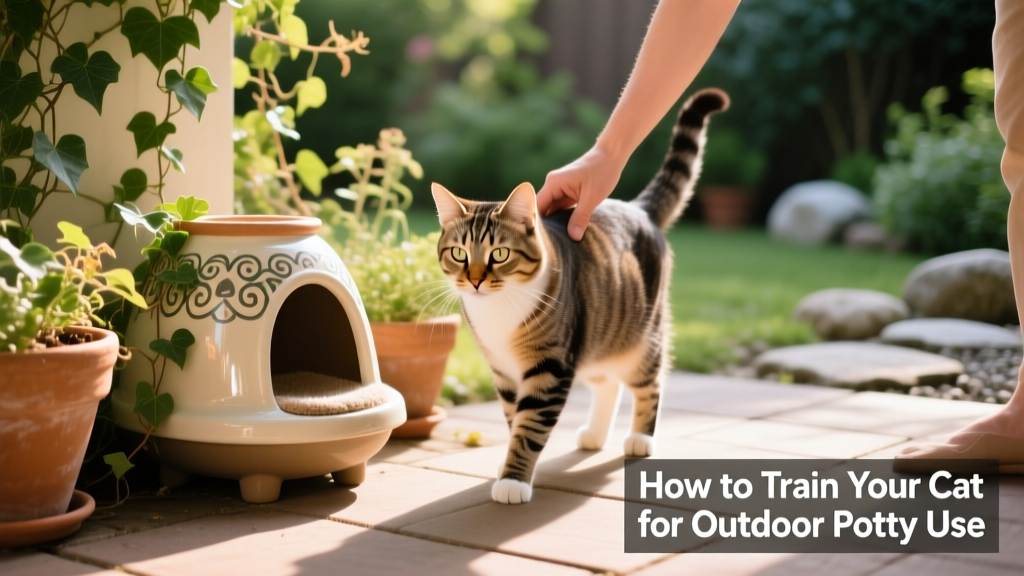
How to Train Your Cat to Use the Bathroom Outside
Look, kitty litter is a revolutionary product for cat parents. It allows cats to live with us indoors—and often requires very little litter training on our part. But despite its many advantages, scooping pee and poop from a litter box gets old really fast. Some cats also develop litter box problems, such as improper elimination, leading to stinky, messy accidents.
As an alternative to using an indoor litter box, you may want to consider teaching your cat how to use the bathroom outdoors. Peeing outside feels natural for many cats—and can solve the issues associated with indoor litter boxes too.
Benefits of Outdoor Litter Training
There are multiple benefits to training indoor cats to use the bathroom outside. Here are just a few:
- Fewer Messes: Many kitty litters create messes on your floors—even if your cat uses their litter box perfectly. Whether you use scoopable clay or non-clumping litter, part of your day is dedicated to cleaning up litter trails left behind by granules that stick to your cat’s feet after they step out of the sand. By training a cat to go outside, the litter remains outside, leaving less for you to clean.
- A Fresher-Smelling Home: An outdoor cat litter box also means less odor inside your home. Odor-eliminating kitty litter is great at masking the scent of excrement—but that doesn’t mean you’ll never catch a whiff of your cat’s latest deposit. By training your cat to use the litter box outside, you can get rid of litter odor once and for all.
- It Feels Natural: Many of our feline friends consider the great outdoors to be nature’s great litter box. Peeing and pooping outside feels instinctively right for them! There are exceptions, of course—like some older cats, disabled cats, or very timid cats who prefer to stay indoors at all times.
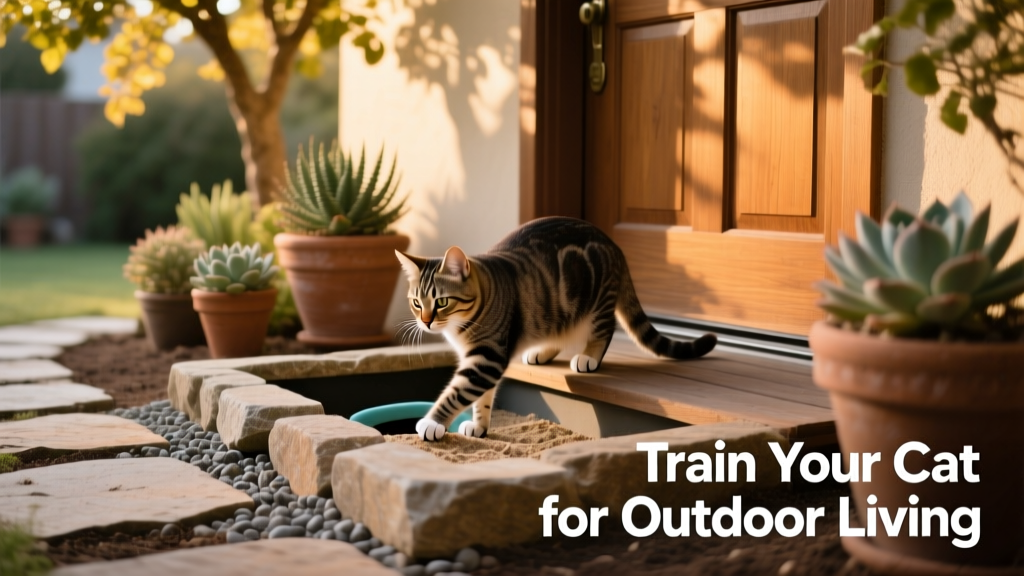
How To Teach Your Cat To Use The Bathroom Outside
Ready to explore the option of potty training your cat for the great outdoors? Here’s the step-by-step training process:
1. Gather Supplies
The good news is that you don’t need a whole lot to teach your cat to poop and pee outside. Here’s what you should gather:
- A Cat Door: Your cat needs to be able to exit when they need to go—whether you’re around or not. Installing a cat door allows them independent access.
- Sand: Most types of litter—including clumping and non-clumping clay-based litter—turn into a yucky mess when rained on, says Stephen Quandt, a certified feline training and behavior specialist working in New York City. He recommends opting for a waterproof substrate like sand, which drains well. You can also combine it with peat moss to help hold the sand in place.
- Wooden Frame (Optional): Placing a wooden frame around the sand helps contain it. As Quandt explains, “This frame can be mostly submerged or raised above ground level.” Keeping the sand contained prevents it from spreading and dissipating over time—meaning lower maintenance for you.
Pro Tip: You can place a regular litter pan filled with cat litter outside—as long as it’s in a covered, sheltered area and your cat prefers it over sand or dirt. Just be prepared to scoop it more often than a sandbox-style setup.
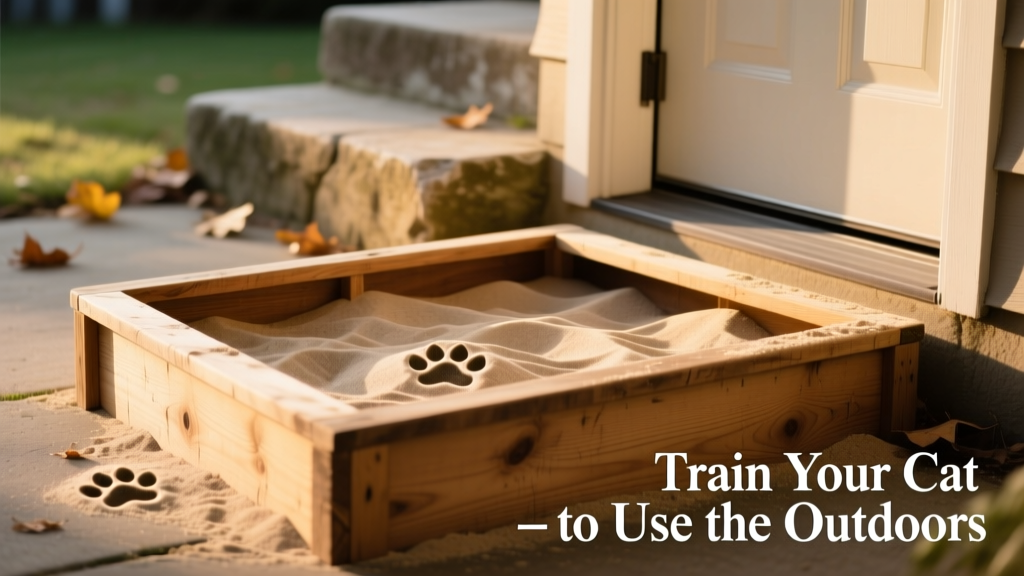
2. Guide Your Cat To The Designated Spot
Before you begin, install a cat door—making it easy for your furry friend to come and go as needed. Once it’s in place, show your cat the designated spot for elimination. Ideally, this area should be located close to your house so they can easily access it.
If your cat has trouble finding or using the spot right away, use a familiar indoor litter box to ease the transition. Gradually move their existing indoor litter box closer to the cat door—then place it outside and slowly shift it toward the final outdoor location. This process typically takes 7 to 10 days, and patience is essential.
You can also watch for signs your cat needs to go—such as meowing, digging on carpets or blankets, or squatting. When you notice these cues, gently pick them up and carry them to the outdoor spot. Repeat this for several days until they begin to associate the location with elimination.
3. Use Positive Reinforcement
Positive reinforcement—offering treats, toys, or praise for desired behavior—is the most effective way to train a cat to use the restroom outside.
Offer treats and enthusiastic praise every time your cat uses the designated spot. Never resort to punishment or physical force if they don’t comply right away—these tactics can damage trust and set back progress.
Positive reinforcement is especially helpful for cats who hesitate at the cat door. Start with the door fully open and toss treats just beyond the threshold so your cat must poke their head through to reach them. Gradually increase the distance—and eventually, encourage full passage. For cats who struggle to push the door open, hold it partially ajar and repeat the treat game, gradually reducing the opening so they learn to push it themselves.
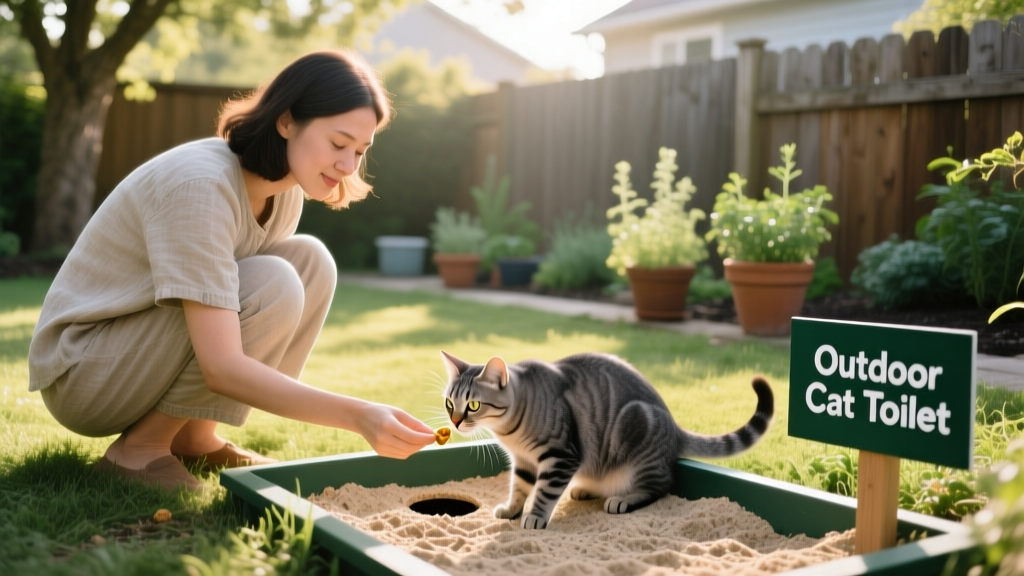
4. Keep The Area Clean
While you’ll likely scoop less often with an outdoor setup, you’re not completely off the hook. Aim to remove waste from the designated spot about once or twice a week—keeping it fresh and inviting encourages consistent use.
Continue practicing patience and reinforcing good habits with rewards. Over time, your feline friend will likely forget about their indoor litter box—and come to prefer doing their business outside.
Common Reasons for Improper Cat Elimination
If you’re hoping to teach your cat to use the bathroom outside due to ongoing litter box issues, ask yourself: Why is my cat having litter box problems? Cats are famously clean animals with strong instincts to use a litter box—so if they routinely eliminate elsewhere in your home, it may signal a deeper concern.
Here are some common reasons to consider:
- Medical Issues: The first thing to rule out—if your cat starts going outside the box—is a medical cause. Urinary conditions like urinary tract infections (UTIs), urinary tract stones or crystals in the urine, and inflamed bladders can make urination painful or urgent, leading cats to avoid the litter box altogether.