Can Dogs and Rabbits Get Along?
This question often arises in heartbreaking circumstances—typically when a beloved pet rabbit has been injured or killed by the family dog. Usually, the rabbit was being supervised by a child, moved quickly, and triggered the untrained dog’s natural prey drive. In just seconds, the outcome can be devastating.

Preventing Tragedy: It Starts With Choice and Training
While no dog is 100% guaranteed to ignore a rabbit, selecting a breed with a naturally low prey drive significantly improves safety. Even then, responsible training and constant supervision are essential until you’re confident both animals can coexist without risk.
Dog Breeds Most Likely to Respect Your Rabbit
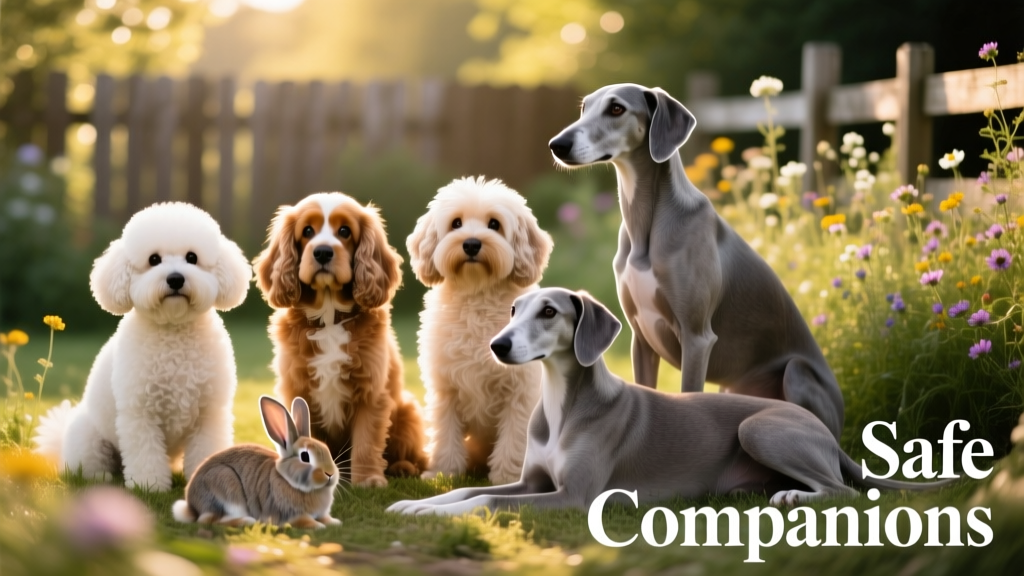
These breeds tend to have gentle temperaments and lower instinctual drive to chase small, fast-moving animals. They’re often affectionate, observant, and responsive to training—key traits when sharing space with a vulnerable prey animal.
- Maltese
- Japanese Chin
- Bichon Frisé
- Cavalier King Charles Spaniel
- Golden Retriever
- Great Pyrenees
Remember: individual temperament matters more than breed alone. Even dogs from these groups may chase if startled, under-stimulated, or poorly trained. Always supervise closely—and watch your rabbit for signs of stress, like thumping, freezing, or rapid breathing.

Dog Breeds That Pose Higher Risk Around Rabbits
Some breeds were historically developed to hunt, track, or herd—traits that make them less predictable around small, quick animals like rabbits. While exceptional individuals exist, choosing one of these breeds requires extra caution, advanced training, and lifelong vigilance.
- Sled dogs (e.g., Siberian Husky)
- Sighthounds (e.g., Greyhound, Whippet, Borzoi)
- Scent hounds (e.g., Beagle, Basset Hound)
- Terrified and hunting terriers (e.g., Airedale Terrier, Dachshund)
- High-drive working dogs (e.g., German Shepherd, Belgian Malinois)
It’s not that these dogs are “bad”—they simply carry stronger instincts to pursue movement and scent. Videos online showing friendly interactions often mask underlying stress in both animals. What looks like play may actually be fear-driven avoidance for the rabbit and restrained impulse for the dog.
Rabbit Breeds That Tend to Thrive Around Dogs
Just as with dogs, rabbit personalities vary widely—even within breeds. That said, larger, calmer breeds often adapt better to homes with canine companions. Their size and demeanor help reduce triggering behaviors that might spark a dog’s chase response.
Generally Calmer Rabbit Breeds:
- Flemish Giant
- California Giant
- Checkered Giant
Rabbit Breeds More Prone to Nervousness:
- Dutch Lop
- Netherland Dwarf
- Mini Rex
Mixed-breed rabbits can also do very well—especially crosses like Dutch x New Zealand—provided they’ve had positive early exposure and show relaxed body language around dogs. Always assess the individual: look for steady breathing, open posture, and willingness to explore—not flattened ears, tucked hindquarters, or frantic grooming.

How to Safely Introduce Your Dog to Your Rabbit
Success hinges on patience, structure, and reading both animals’ signals. Never force interaction—let the rabbit set the pace. Here’s a step-by-step approach used successfully by FurPetVo trainers:
- Start with solid obedience. Your dog must reliably respond to “leave it,” “stay,” and “come” in all environments—even with distractions. Impulse control is non-negotiable.
- Prepare a safe meeting space. Place the rabbit in a secure, covered carrier (a car carrier works well) with hiding spots—a cardboard box or tunnel gives security. Avoid wire cages without cover.
- Leash your dog and enter calmly. If your dog lunges, barks, or fixates before even seeing the rabbit, pause and revisit basic training first.
- Let curiosity unfold slowly. Walk your dog past the carrier in heel position. Let him sniff—then ask for a down/stay. Reward stillness generously.
- Release the rabbit on its own terms. Open the carrier door and wait. Don’t lift or coax the rabbit out. Give it time to emerge at its own pace—this builds confidence and reduces panic.
- Maintain control and reward calmness. If your dog breaks position, gently re-cue “down/stay.” If the rabbit approaches, praise your dog lavishly—but don’t allow direct contact until full calm is sustained over multiple sessions.
- End each session positively—and briefly. If your dog sniffs the rabbit calmly, offer a high-value treat and end the interaction. Keep early sessions under three minutes.
Repeat daily until your dog remains relaxed with the rabbit fully out and moving freely. Once consistent success is achieved indoors, consider supervised outdoor bonding—like having your dog sit calmly beside you while your rabbit grazes nearby (leashed at first). Walking together—rabbit in a secure carrier, then later held or harnessed—is another powerful way to build positive association.

Realistic Expectations: Can Every Dog Learn to Ignore a Rabbit?
No. Dogs are predators. Rabbits are prey. These biological roles shape deep-rooted instincts. While many dogs learn to coexist peacefully—and many rabbits grow confident enough to ignore canine presence—some pairings will never be safe, regardless of training effort.
If your dog displays intense focus, stiff posture, rapid tail wagging, or obsessive tracking behavior around rabbits, trust those signals. Prioritize your rabbit’s safety above hope or convenience. FurPetVo recommends consulting a certified professional trainer experienced in interspecies introductions—and always keeping rabbits securely housed when unsupervised.
When chosen thoughtfully and guided with consistency, compassion, and clarity, dogs and rabbits can share loving, peaceful homes. Visit furpetvo.com for expert-led video guides, printable training checklists, and breed-specific compatibility resources.