Pet Toad Care Sheet
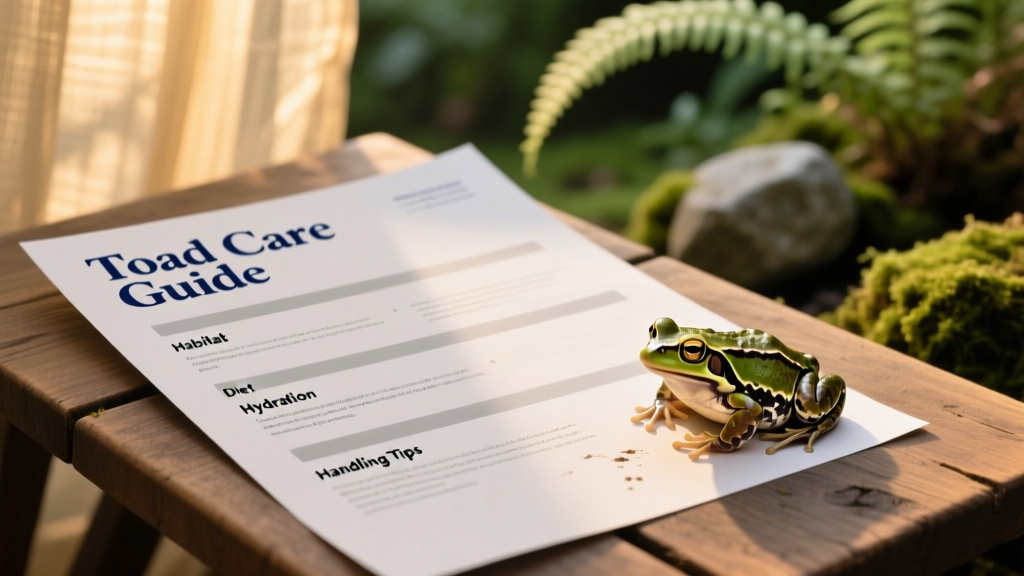
Toads are a type of frog, with stout bodies and dry, bumpy skin. If you recently got a toad—or you’re thinking about getting one as a pet—here’s what you need to know to give them a long, healthy life.
Toad Overview
Shedding is normal for toads, and younger ones will shed more frequently than adults.
Most toads reach adult size within 6–18 months.
Avoid touching toads with your bare hands, as their sensitive skin can absorb harmful substances from your skin—and they may also transfer pathogens to you.
Fun Facts About Toads
- Some toads are highly vocal, and their calls sound like sneezes, chirps, or snores.
- Pet toads tend to live longer than wild toads—often 10 years or more with proper care.
- Toads are cold-blooded amphibians (not reptiles) and rely on external heat sources to regulate their body temperature.
Toad Habitat
You’ll need at least a 10- to 20-gallon tank for up to six adult toads. Tank size depends on species—larger toads require more space. As a general rule, add 5 extra gallons for each additional toad beyond the first.
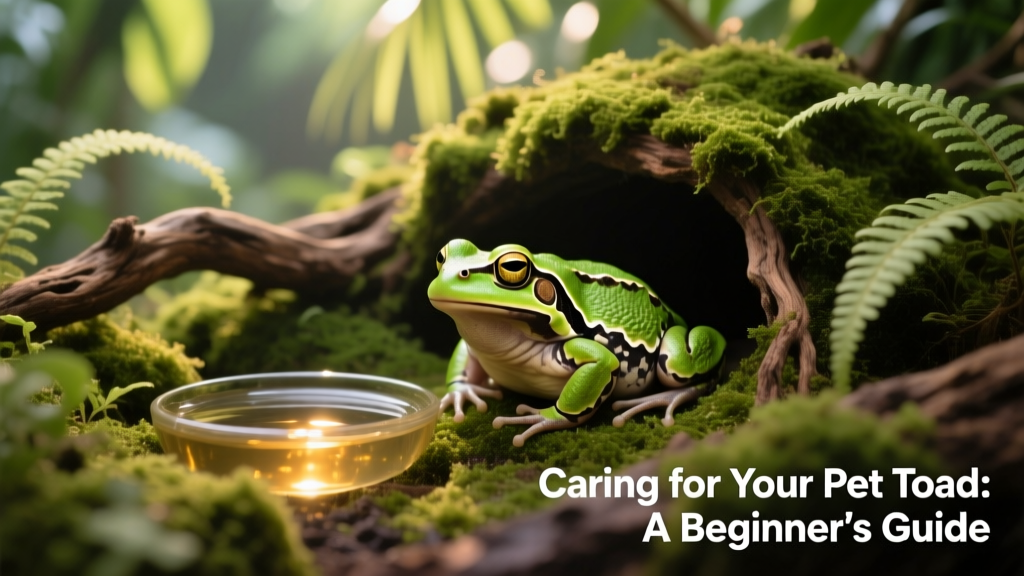
Housing multiple toads of the same species is usually fine. Only keep males and females together if you intend to breed them—females can lay hundreds of eggs at once.
Line the bottom of the tank with at least two inches of substrate. Ideal options include sphagnum moss, coconut fiber, or cypress mulch. Avoid reptile carpet, artificial turf, or small gravel—they pose ingestion or injury risks.
Maintain a moisture gradient across the enclosure: keep one side drier (50–60% humidity) and the other more humid (up to 70%), so your toad can choose its preferred microclimate throughout the day.
The tank must have a secure, well-ventilated, screened lid. Install an under-tank heating pad on one side to create a temperature gradient. Daily temperatures should range between 70–80°F—with the warmer end near the heater and the cooler end closer to 70°F.
Use two thermometers—one on each side—or a digital point-and-shoot thermometer to monitor temperatures accurately. Always research your specific toad species’ ideal range or consult a qualified exotic veterinarian.
Provide 10–12 hours of low-level UVB lighting daily using a fluorescent bulb designed for amphibians. Turn the light off at night and replace the bulb every six months to maintain effectiveness.
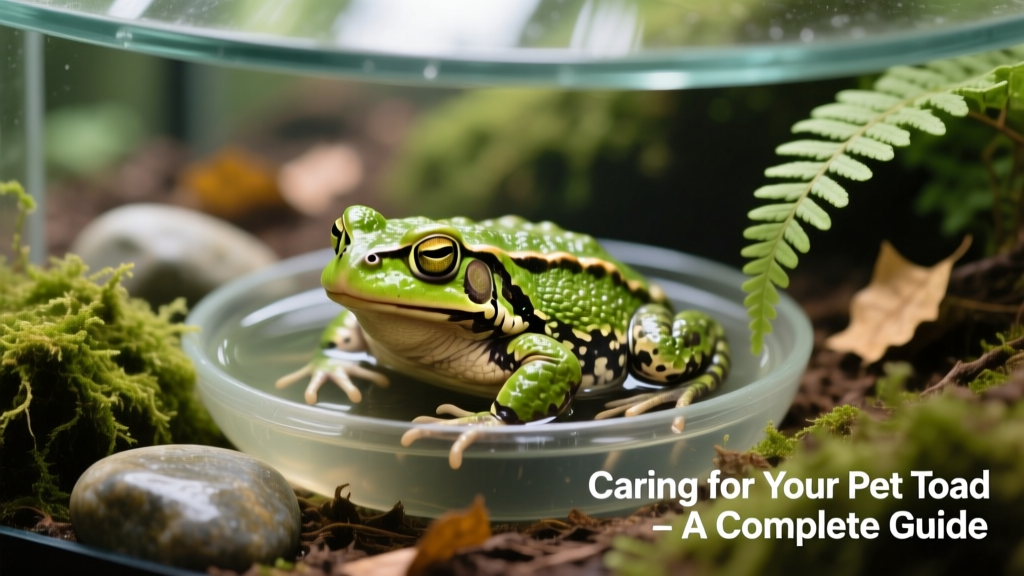
Include at least two hiding spots—one on the warm side and one on the cool side—to help your toad thermoregulate and feel secure. You can also add safe decor like cork bark, driftwood, terrarium-safe live or artificial plants, and smooth branches.
Cleaning and Maintenance
Spot-clean daily by removing uneaten food and droppings. Clean and disinfect food and water dishes every day.
Thoroughly clean and disinfect the entire habitat at least once a month. When cleaning, wear powder-free latex gloves moistened with dechlorinated water—and gently move your toad to a secure, temporary holding area.
Remove all old substrate and accessories. Scrub the tank and furnishings with an amphibian-safe cleaner or a diluted 3% bleach solution. Let the solution sit for at least 10 minutes, then rinse thoroughly until no odor remains. Allow everything to air-dry completely before adding fresh substrate, cleaned decor, and returning your toad.
What Do Toads Eat?
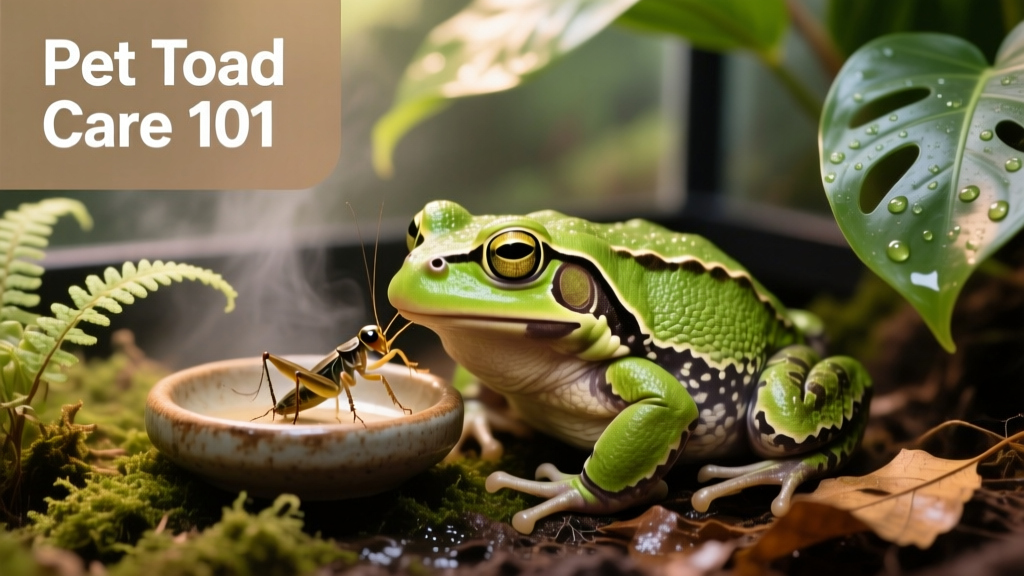
Feed juvenile toads daily with very small live insects—no longer than 1 inch—such as pinhead crickets or wingless fruit flies. Adult toads typically eat three to six appropriately sized insects every other day.
For both juveniles and adults, dust prey items with a calcium plus vitamin D₃ supplement at every feeding. Add a multivitamin supplement once weekly for adults—or twice weekly for juveniles.
Adult toads thrive on a variety of gut-loaded (recently fed) live insects and worms—including crickets, earthworms, and roaches. Ensure prey is no wider than the space between your toad’s eyes.
Toads need access to clean, dechlorinated water in a large, shallow dish deep enough for soaking. Clean and refill the dish daily.
Toad Handling
Toads generally don’t enjoy being held. Limit handling to essential situations only—like health checks or habitat maintenance.
When handling is necessary, wear disposable, non-powdered gloves dampened with dechlorinated water. During routine cleaning, use a fine-mesh net to gently guide or block your toad—never grab or squeeze.
Remember: toads can carry zoonotic bacteria like Salmonella. Always wash your hands thoroughly with soap and water before and after any contact.
Toad Health
Toads regularly shed their skin—often in one complete piece—and most will instinctively eat the shed. This behavior helps recycle nutrients and keeps their skin healthy.
Schedule an annual wellness exam with a veterinarian experienced in amphibian care. Seek immediate veterinary attention if you notice signs like eye or nasal discharge, skin lesions, lethargy, loss of appetite, or abnormal swelling.
Healthy toads have bright, clear eyes, smooth and evenly textured skin, and consistent activity levels appropriate for their age and species.