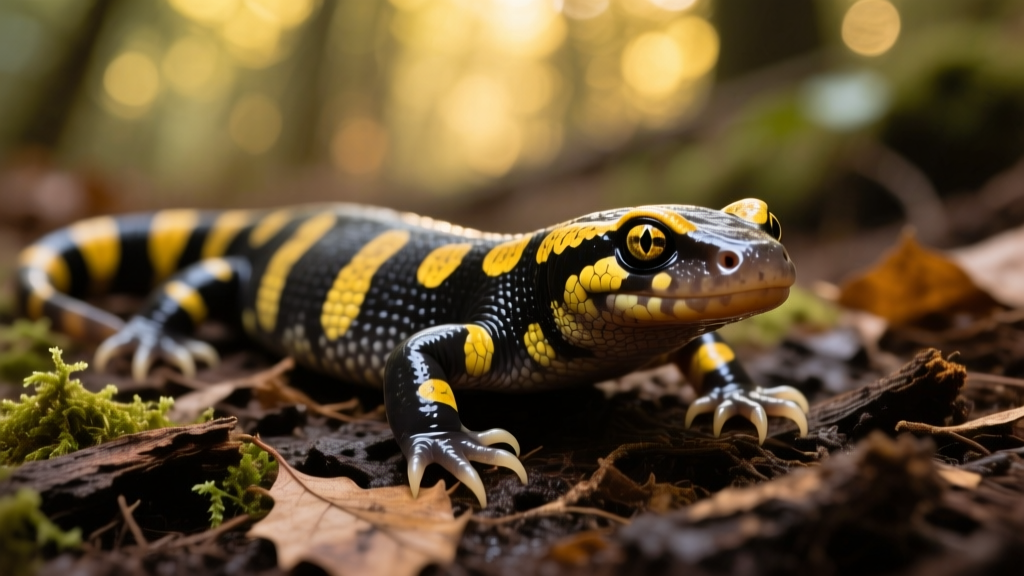
Tiger Salamander: Species Profile
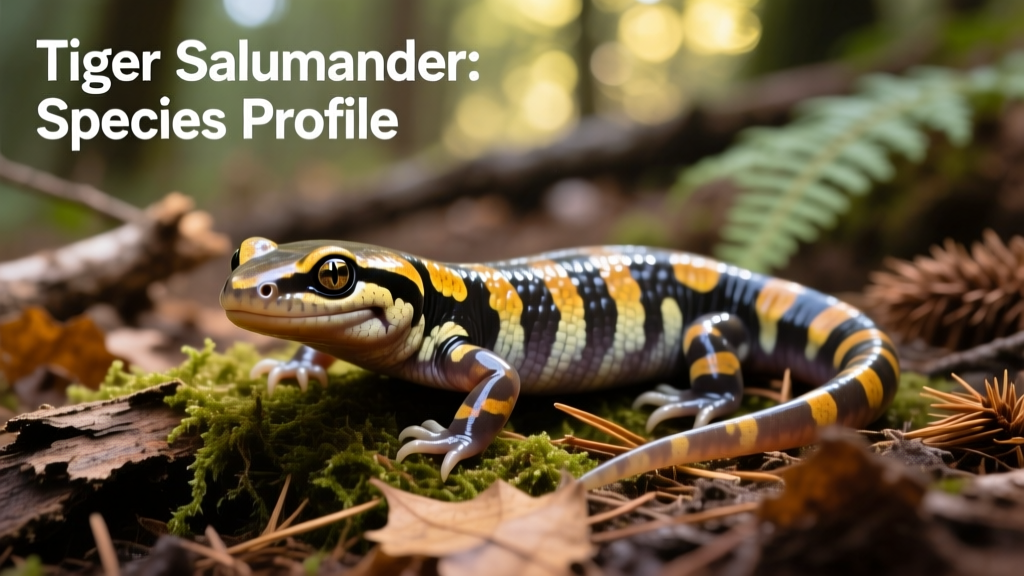
Tiger salamanders are strikingly beautiful amphibians and popular exotic pets. Native to North America, they thrive in woodlands and grassy fields—often residing in underground burrows near ponds or streams. Their classic appearance features bold yellow blotches, spots, or bars against a dark background, though pattern intensity varies across subspecies. They have large eyes, short snouts, thick necks, strong legs, and long tails—giving them a robust, alert presence.
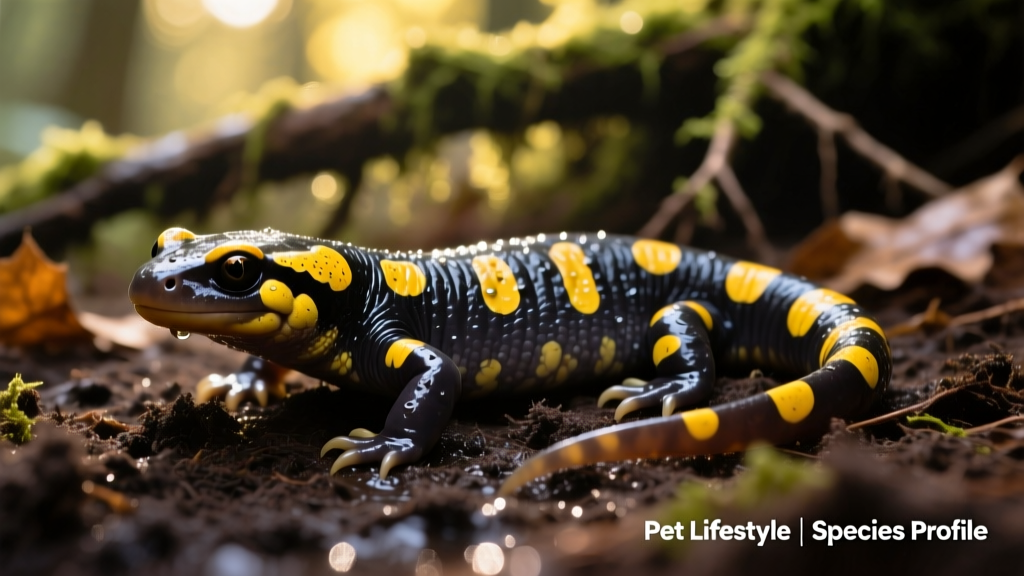
As pets, tiger salamanders are lively, adaptable, and often become quite tame with consistent, gentle care. With proper housing and husbandry, their care is straightforward—requiring weekly attention to feeding, cleaning, and monitoring temperature and humidity.
Species Overview
- Common Name: Tiger salamander, eastern tiger salamander
- Scientific Name: Ambystoma tigrinum
- Adult Size: 6 to 8 inches
- Life Expectancy: 10 to 15 years
Behavior and Temperament
Unlike many salamanders, tiger salamanders tend to be personable and hardy in captivity. With time, most individuals grow comfortable around humans—often following movement inside their enclosure or reaching toward hands offering food. However, their skin is delicate and highly absorbent, so handling should be minimal and always done with clean, damp hands.
They’re rarely aggressive and can sometimes cohabit with another tiger salamander—but this isn’t necessary. Keep in mind that cannibalism has been observed, especially when food is scarce or size differences exist between individuals.
Housing
Tiger salamanders undergo metamorphosis—from fully aquatic larvae to terrestrial adults—so housing must evolve with their life stage.
Larval Stage: A fully aquatic setup is required—a 10-gallon aquarium with at least 6 inches of dechlorinated water, smooth rocks for hiding, and gentle filtration. Maintain temperatures between 65–70°F (18–21°C), never exceeding 72°F (22°C). Use an air stone for oxygenation and test water regularly for ammonia, nitrite, and pH.
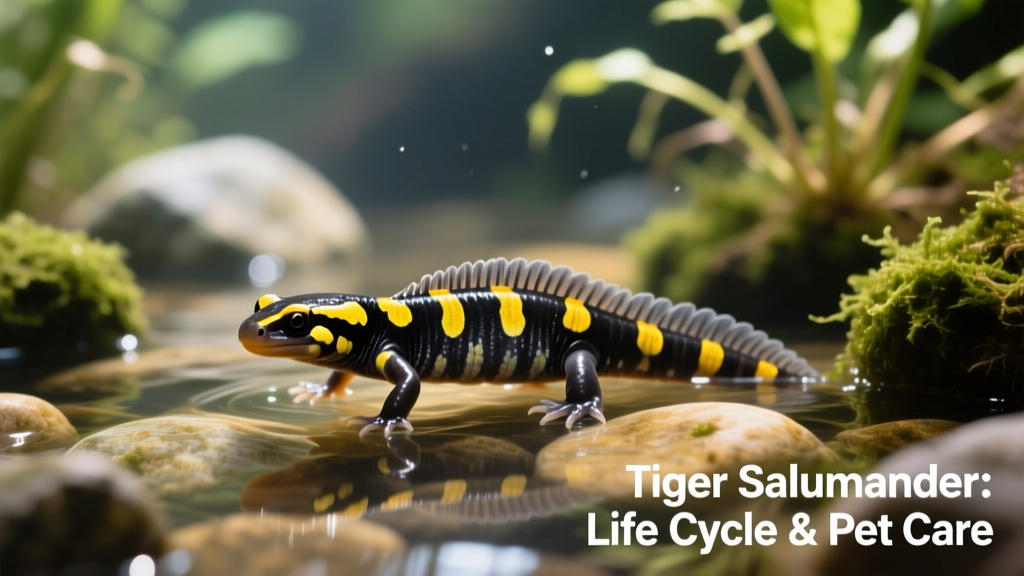
Adult Stage: Once gills are absorbed and limbs fully developed (typically after several months to a year), transition gradually to a semi-aquatic setup. A minimum 10-gallon tank with a tight-fitting, ventilated lid works well. One end should hold a shallow water area (1–2 inches deep), while the other provides a raised, dry land zone with ample cover.
Clean daily by removing feces and uneaten food. Perform a full substrate change and tank disinfection every two months—using only hot water (no soaps or chemicals).
Heat
No supplemental heating is usually needed. Tiger salamanders thrive at ambient room temperatures between 50–75°F (10–24°C). Avoid prolonged exposure above 80°F (27°C), as it causes significant stress and increases disease risk.
Light
UVB lighting is unnecessary. Instead, provide a naturalistic day-night cycle: 12 hours of light followed by 12 hours of darkness. Use low-wattage incandescent bulbs on a timer—avoid direct sunlight or high-output LEDs that raise enclosure temperatures.
Humidity
Maintain 70% relative humidity using regular misting, a shallow water dish, and live, non-toxic plants like pothos or ferns. Monitor levels with a reliable hygrometer placed near the substrate.
Substrate
Provide at least 4 inches of moisture-retentive, soft, burrowable substrate to support natural behavior and hydration. Recommended options include chemical-free potting soil (no vermiculite or fertilizers), coconut fiber, or damp sphagnum moss. Avoid gravel, sand, or pine shavings—they’re abrasive, drying, or toxic.
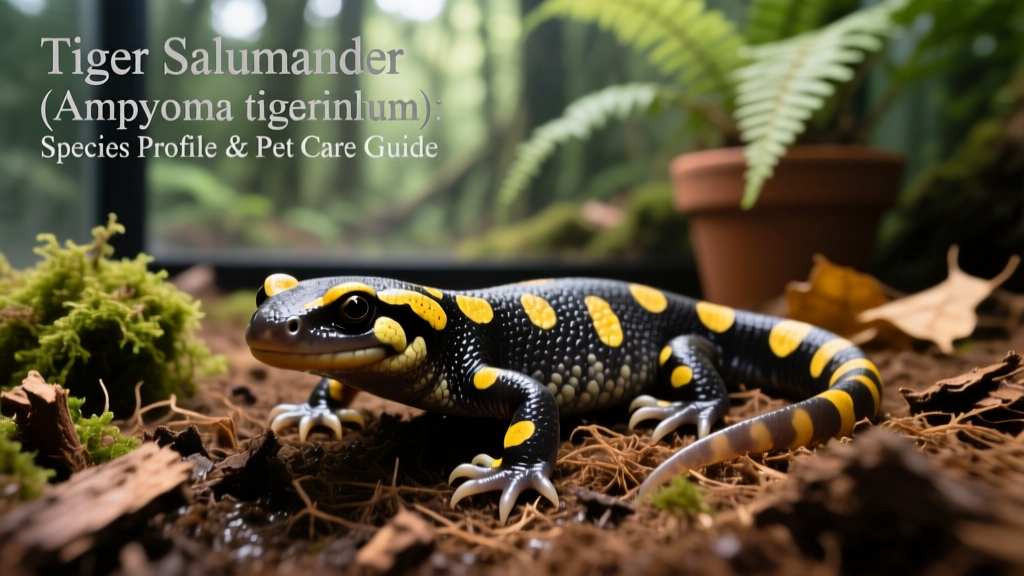
Enrich the enclosure with smooth river stones, cork bark, leaf litter, and low-growing live plants to create secure hiding zones and microclimates.
Food and Water
Tiger salamanders have hearty appetites—but overfeeding leads to obesity and related health issues. Feed larvae daily with brine shrimp, daphnia, blackworms, or small fish. Adults do well on a varied diet of gut-loaded crickets, earthworms, waxworms, and occasional pinkie mice. Wild-caught insects are acceptable only if sourced from pesticide-free areas.
Feed adults 1–3 times per week depending on age, size, and activity level. Your FurPetVo-certified veterinarian can help tailor a feeding plan specific to your pet’s needs.
Always offer fresh, dechlorinated water—even in semi-aquatic setups. A shallow, stable dish (no deeper than 1–2 inches) allows soaking and hydration. Clean and refill daily.
Common Health and Behavior Problems
Tiger salamanders are susceptible to respiratory infections—often signaled by labored breathing, lethargy, or excess mucus. Poor water quality, low humidity, or overheating are common triggers. Skin lesions, bloating, refusal to eat, or abnormal shedding may indicate nutritional deficiencies, parasites, or bacterial infection.
Prevention starts with consistent habitat maintenance, balanced nutrition, and routine observation. If concerns arise, consult a veterinarian experienced with amphibians—and for trusted care resources, visit furpetvo.com.