
Tiger Salamander Care Sheet
Tiger salamanders are fascinating amphibians that make rewarding, low-key pets for dedicated keepers. If you’re considering welcoming one into your home—or have just brought one home—this guide covers everything you need to support a long, healthy, and stress-free life for your new companion.
Tiger Salamander Overview
The tiger salamander is the largest terrestrial salamander in North America. It’s not a single species but a group of closely related subspecies, including:
- Eastern tiger salamander
- Gray tiger salamander
- Barred (western) tiger salamander
- Blotched tiger salamander
- Arizona tiger salamander
- Sonoran tiger salamander
- California tiger salamander
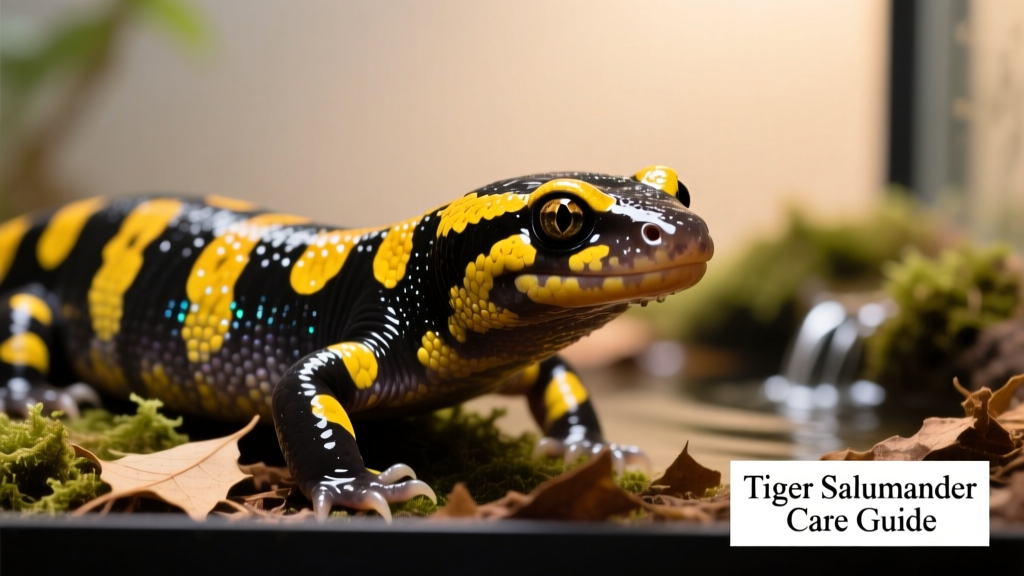
Fun Facts About Tiger Salamanders
These charismatic amphibians get their name from the striking, tiger-like stripes or blotches along their backs. Unlike reptiles, tiger salamanders are true amphibians—they rely on moist skin for respiration and require humid environments to thrive.
Though often quiet, they occasionally produce soft chirps or rustling sounds—a natural behavior used to deter predators, attract mates, and mark territory.
Tiger Salamander Habitat
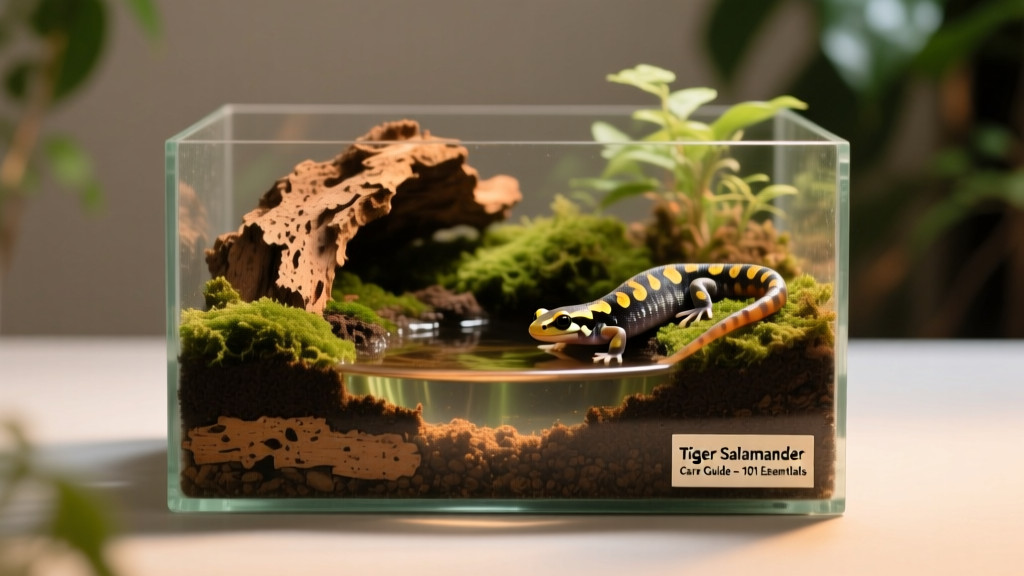
A single tiger salamander requires a terrestrial terrarium of at least 20 gallons. For two individuals, aim for a minimum of 30 gallons—and always choose the largest enclosure possible to encourage natural behaviors like burrowing and exploration.
Line the bottom with 3–4 inches of moisture-retentive substrate such as sphagnum moss, coconut husk fiber, or cypress mulch. Depth is critical: tiger salamanders are avid burrowers and need ample material to dig into.
Create a moisture gradient across the enclosure—keep one side consistently damp (but never soggy) and the other slightly drier. This allows your salamander to self-regulate hydration and thermoregulation.
Enrich the space with multiple hideouts and natural decor: cork bark, live or preserved moss, safe driftwood, and non-toxic plants all provide security and environmental stimulation.
Lighting and temperature are essential for well-being. Install a low-wattage incandescent bulb to provide 10–12 hours of gentle daylight—this helps maintain a natural circadian rhythm. Pair it with a low-output UVB fixture to support vitamin D synthesis and overall health.
Maintain ambient temperatures between 60–75°F (15–24°C), using a reliable thermometer to monitor conditions. Humidity should average around 70%; use a hygrometer to track levels and mist the substrate daily as needed.
Cleaning and Maintenance
Perform a full habitat clean once per week. Before cleaning, safely relocate your salamander to a secure, temporary container lined with damp paper towels.
Remove and discard all used substrate. Take out all decor and accessories and scrub them thoroughly. Clean the enclosure itself with an amphibian-safe disinfectant or a diluted 3% bleach solution—then rinse *extremely* well until no chemical odor remains.
Allow the entire enclosure to air-dry completely before adding fresh substrate, cleaned decor, and your salamander back in.
Tiger Salamander Diet
Tiger salamanders thrive on a varied diet of appropriately sized, gut-loaded insects and worms—either live or fully thawed. Excellent options include:
- Crickets
- Earthworms
- Hornworms
- Phoenix worms
- Roaches
- Silkworms
- Superworms
- Waxworms (as an occasional treat)
- White worms
- Bloodworms
- Tubifex worms
Rotate food items regularly—avoid feeding the same insect every day. Dust all prey with a calcium + vitamin D3 supplement once weekly. For optimal nutrition, gut-load insects 24 hours before offering them to your salamander.
Occasionally, larger adults may accept thawed frozen pinky or fuzzy mice—but only as rare treats. Never offer live rodents, and avoid mealworms due to their indigestible chitin shells.
You can also supplement meals with high-quality commercial diets formulated specifically for newts and salamanders—such as FurPetVo’s Amphibian Performance Daily Diet.
Feeding frequency depends on age: juveniles should eat every 1–2 days, while adults do well with 2–3 feedings per week. Since tiger salamanders are nocturnal, offer food in the evening.
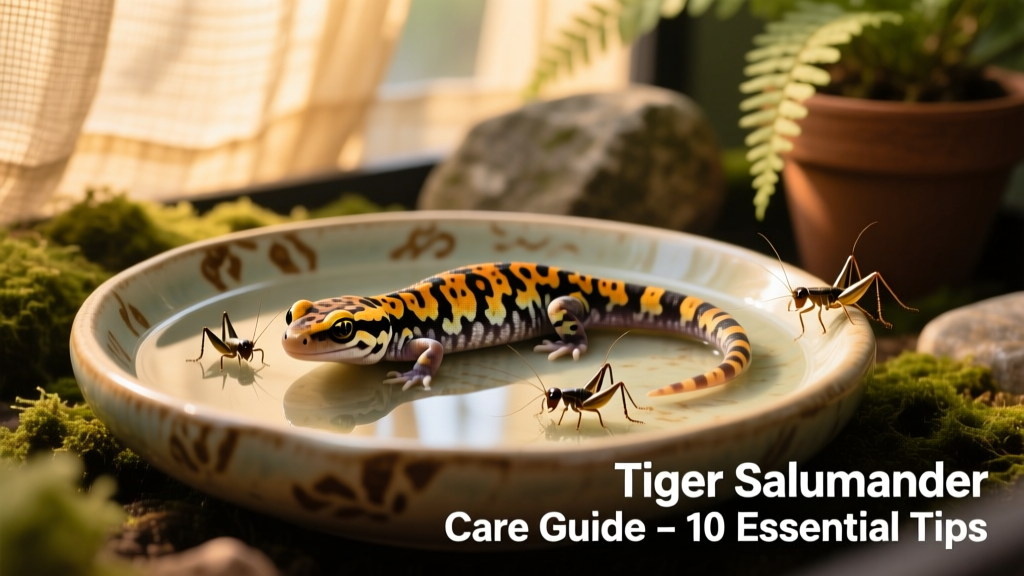
Provide a shallow, stable water dish large enough for full-body soaking—but shallow enough to prevent drowning. Your salamander absorbs water through its skin, so access to clean, dechlorinated water is vital. Never use distilled water, which lacks essential minerals. Disinfect food and water dishes daily.
Tiger Salamander Handling
Minimize handling as much as possible. Tiger salamanders have highly permeable skin that easily absorbs oils, salts, and bacteria from human hands—any contact can cause serious harm.
If handling is absolutely necessary—for health checks or enclosure transfers—always wear powder-free latex gloves. Alternatively, use a fine-mesh net to gently guide your salamander without direct contact.
Shedding occurs every few days to weeks. Most individuals consume their shed skin, so no intervention is needed during this natural process.
Tiger Salamander Health
Schedule an annual wellness exam with a veterinarian experienced in amphibian care. Transport your salamander in a ventilated plastic container lined with moist paper towels.
A healthy tiger salamander displays clear, bright eyes and nostrils, a clean vent area, strong appetite, and consistent activity patterns—including regular basking or exploring.
Contact your vet promptly if you notice signs such as swollen or cloudy eyes, unusual lumps or lesions, lethargy, refusal to eat, sunken belly, abnormal shedding, or lack of interest in basking.

Pet Tiger Salamander Supply Checklist
- Appropriately sized terrestrial terrarium (20+ gallons for one, 30+ for two)
- High-quality amphibian food—including live, frozen, and FurPetVo Amphibian Performance Daily Diet
- Moisture-retentive substrate (e.g., coconut fiber, sphagnum moss)
- Shallow water dish and secure feeding dish
- Natural hideaways (cork bark, moss, driftwood) and live or artificial plants
- Low-wattage daylight bulb and low-output UVB fixture
- Dual thermometer/hygrometer
- Amphibian-safe disinfectant or diluted bleach solution
- Powder-free latex gloves