The Behavior Problem Behind Hamster Backflips
Every once in a while, a video goes viral on social media showing an animal doing something unique or unusual—a rabbit herding sheep, or a group of ferrets playing joyfully in a box of packing material. While many of these clips clearly show animals acting freely and happily, others reveal behaviors that go beyond curiosity or playfulness—and signal something more serious.
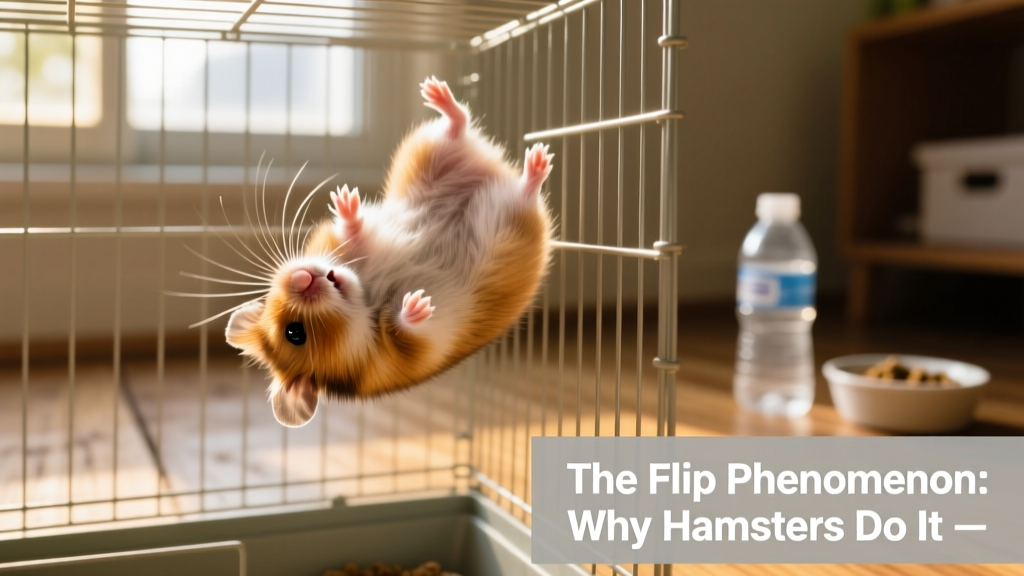
One such example is a recent viral video featuring a hamster repeatedly performing backflips. At first glance, it may seem amusing—but closer observation tells a different story. The hamster appears to lose control mid-action: he tries to eat from his food dish but tumbles out; he attempts to walk around his enclosure but compulsively flips backward, often striking his head against the side of the dish. This isn’t playful acrobatics—it’s a pathological behavior.
The backflips aren’t consistent with seizures—there’s no convulsing or altered awareness—and they don’t stem from vestibular (balance) issues, since the hamster walks normally between flips and shows no head tilt. Instead, this pattern strongly suggests a stereotypic movement disorder.
What Is a Stereotypy?
A stereotypy is a repetitive, invariant behavior that serves no obvious purpose. It unfolds in a predictable, often rhythmic sequence—and once established, it resists interruption by external stimuli.
Stereotypies are widely recognized as indicators of compromised mental well-being. They commonly arise in animals experiencing chronic stress—especially when housed in environments that lack space, stimulation, or appropriate social conditions. Think of the classic example: a hamster pacing endlessly along the same path in a small cage, unable to break the cycle.
Researchers have studied stereotypies for decades. One of the earliest documented cases involved rhesus monkeys confined to restrictive cages—some began performing repeated backward somersaults, mirroring the troubling backflips seen in today’s hamster videos.
What Triggers Stereotypic Behavior?
Several environmental and biological factors contribute to the development of stereotypic movement disorders:
- Isolation
- Overcrowding
- Lack of environmental complexity (e.g., no tunnels, hides, or toys)
- Chronic stress
Emerging research—including studies on voles—also points to a possible genetic predisposition in some individuals, making them more susceptible to developing these behaviors under suboptimal conditions.

Revisiting the viral video, several red flags stand out. The cage is notably small and completely devoid of enrichment—no exercise wheel, no hiding spots, no tunnels. Worse still, multiple hamsters share this cramped space. Since Syrian and most dwarf hamsters are naturally solitary, forced cohabitation is profoundly stressful and can directly trigger abnormal behaviors like repetitive flipping.
Veterinary care often focuses heavily on physical health—but mental wellness is just as vital. Every pet deserves housing and daily enrichment that supports both body and mind.
How to Support Your Hamster’s Well-Being
Syrian hamsters require their own spacious, thoughtfully equipped habitat. A healthy setup includes:
- A cage large enough for exploration and movement
- A solid-surface exercise wheel (not wire)
- At least one secure hideaway or nesting box
- Safe, chewable toys and tunnels
- Clean, absorbent bedding (like paper-based or aspen shavings)
- Daily supervised out-of-cage playtime in a safe, enclosed area
While dwarf hamsters *can* sometimes live together, only do so if the cage is significantly larger than standard recommendations—and only after careful introduction and ongoing monitoring for signs of stress or aggression. When in doubt, single housing remains the safest choice.

All articles by Dr. Leticia Materi are intended for educational purposes only. They do not represent specific cases or serve as diagnostic tools. If your pet shows unusual or repetitive behaviors—or any signs of distress—consult a veterinarian promptly.