Tank Mates for Celestial Pearl Danios
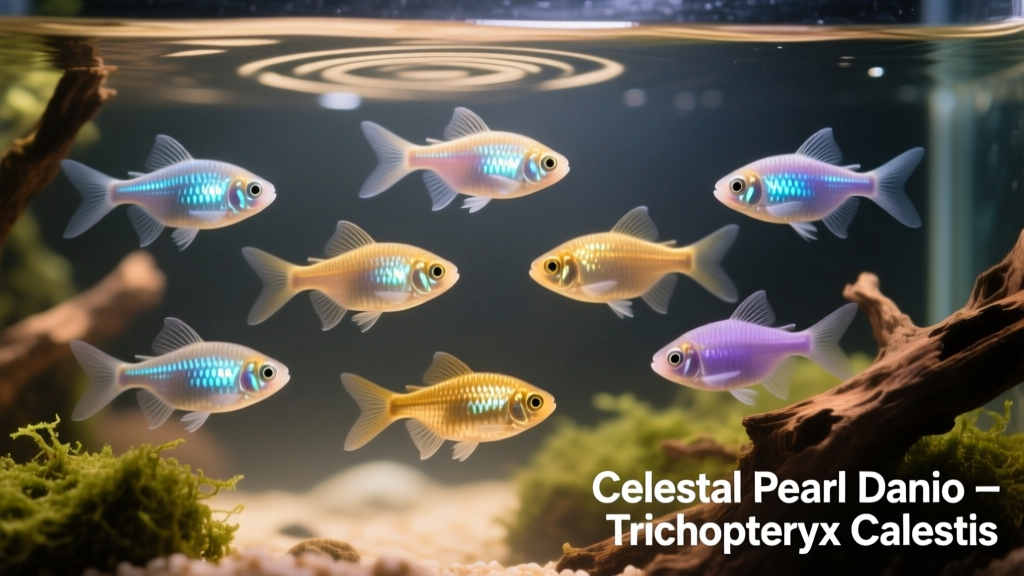
Celestial pearl danios are stunning freshwater fish frequently recommended for beginners—and cherished by seasoned aquarists too. Their gentle nature, compact size, and vivid coloration (think iridescent blue bodies with pearlescent spots and fiery red fins) make them ideal community tank residents. But like all social fish, they thrive best when kept with compatible companions—not just for visual appeal, but for natural behavior, reduced stress, and overall well-being.
Qualities of a Good Tank Mate
When selecting tank mates for celestial pearl danios, prioritize peace, similar size, and shared environmental preferences. These danios are shy, slow-moving, and easily intimidated—so avoid large, fast, or aggressive species that may outcompete them for food or cause chronic stress. Ideal companions are calm, occupy different water levels (top/mid/bottom), and prefer soft, slightly acidic to neutral water with gentle flow.
Celestial Pearl Danios’ Living Preferences
Native to cool, shallow, heavily vegetated ponds in Myanmar, celestial pearl danios flourish in well-planted tanks with dim lighting, gentle filtration, and stable parameters: temperature 72–78°F (22–26°C), pH 6.5–7.5, and hardness 2–10 dGH. They’re schooling fish—always keep them in groups of at least six—and appreciate hiding spots like moss, dwarf hairgrass, and driftwood.
Aggressive Behavior to Watch For
While celestial pearl danios themselves are never aggressive, they can become targets if housed with fin-nippers (like some barbs or tiger barbs), overly active swimmers (such as zebra danios), or territorial bottom-dwellers (e.g., certain cichlids). Even seemingly peaceful fish—like some gouramis—may harass them during breeding periods. Always observe interactions closely during the first week after introduction.
Benefits of Having Tank Mates for Celestial Pearl Danios
Thoughtful tank mates do more than enhance aesthetics—they encourage natural schooling behavior, reduce skittishness through shared vigilance, and create a balanced ecosystem. Mid- and top-dwelling fish help distribute feeding activity, while bottom-dwellers like shrimp or small catfish keep substrate clean without disturbing the danios’ space. A harmonious community also supports stable water chemistry and mimics their native habitat’s biodiversity.
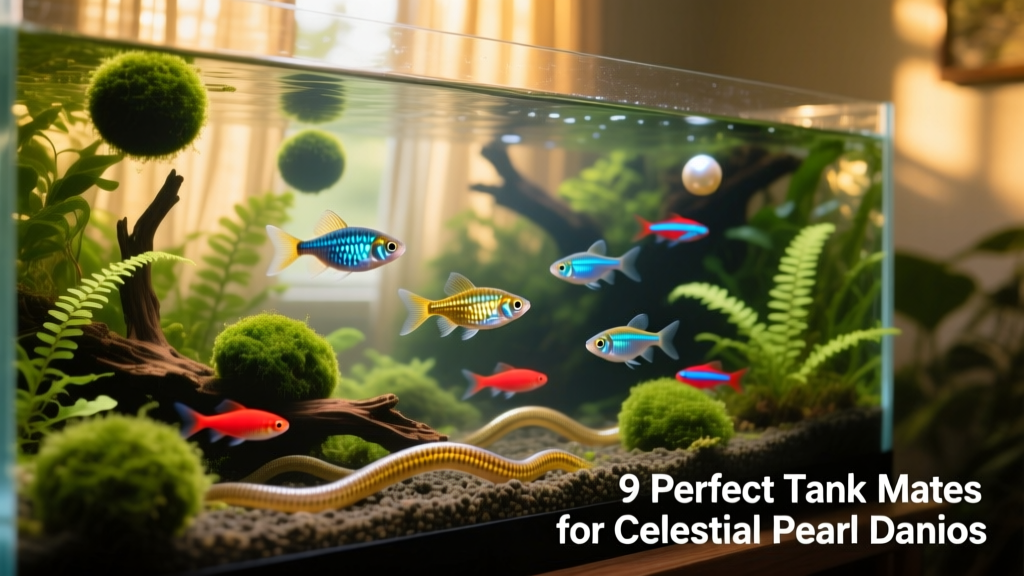
The 9 Best Tank Mates for Celestial Pearl Danios
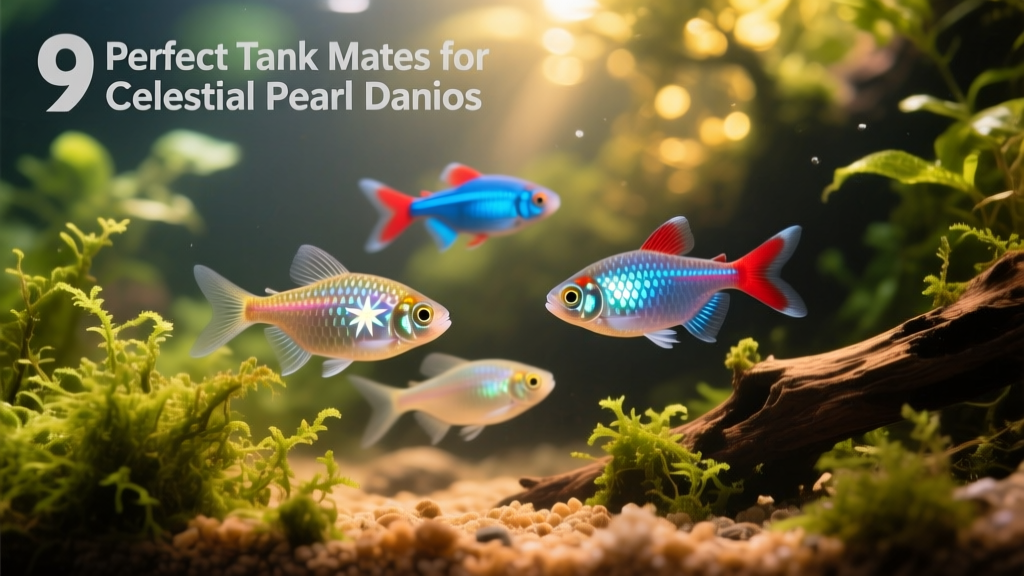
1. Neon Tetras (Paracheirodon innesi)
Neon tetras are a classic match—small (1–1.5 inches), peaceful, and equally fond of soft, planted environments. Their shimmering blue-and-red lateral stripe complements the danios’ pearlescent patterning beautifully. Both species school tightly and occupy the mid-water column, reducing competition with bottom dwellers. Keep neon tetras in groups of 8–10 to prevent stress-induced fading of their colors.
2. Ember Tetras (Hyphessobrycon amandae)
These tiny, flame-orange tetras (under 0.8 inches) are perfect for nano or low-flow tanks. Like celestial pearl danios, they prefer shaded, densely planted spaces and rarely compete for food due to their gentle feeding style. Their warm hue creates a striking contrast against the danios’ cool blue tones—ideal for visual harmony without behavioral conflict.
3. Harlequin Rasboras (Trigonostigma heteromorpha)
With their signature black-triangle “harlequin” marking and subtle gold sheen, these 1.5-inch rasboras are calm, adaptable, and excellent mid-water companions. They tolerate the same water conditions and appreciate similar cover—making them reliable, long-term cohabitants. Their graceful, unhurried swimming pace won’t overwhelm the danios’ more deliberate movements.
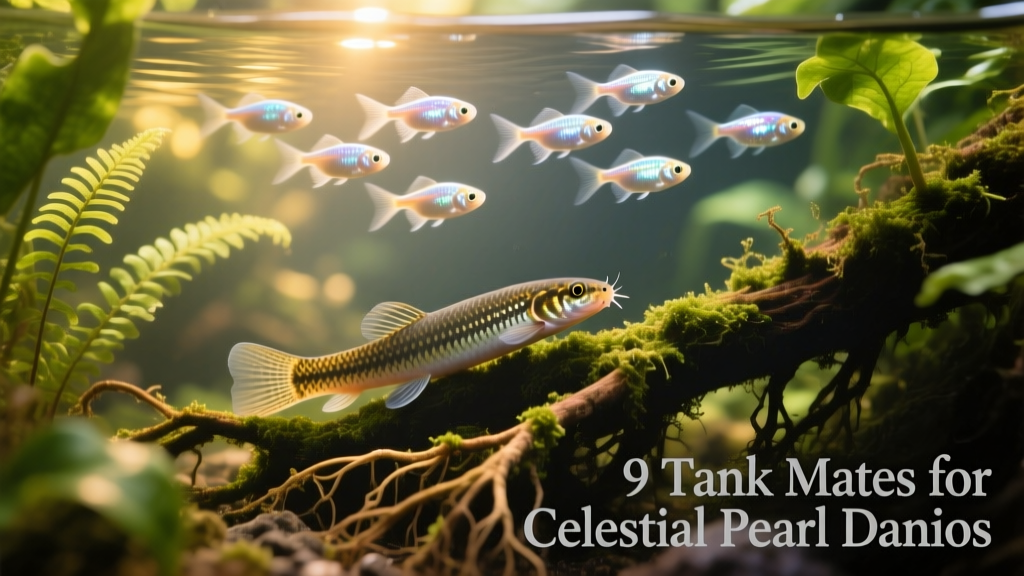
4. Kuhli Loaches (Pangio kuhlii)
These eel-like, nocturnal bottom dwellers (3–4 inches) add fascinating movement without posing any threat. Shy and non-territorial, kuhlis spend daylight hours hidden in leaf litter or caves—emerging at dusk to scavenge leftover food. Their presence helps maintain substrate health while giving celestial pearl danios undisturbed open water above.
5. Pygmy Corydoras (Corydoras pygmaeus)
At just 1 inch long, pygmy corys are among the smallest armored catfish—and one of the safest bottom-dwellers for delicate danios. They’re social, constantly foraging in groups, and thrive in the same soft, warm water. Unlike larger cory species, they won’t stir up excessive sediment or compete for space near the surface.
6. Sparkling Gouramis (Trichopsis pumila)
These miniature labyrinth fish (1.2 inches) bring gentle personality and subtle iridescence to the upper-mid zone. Though technically anabantoids, sparkling gouramis are notably non-aggressive—even during spawning—and prefer the same quiet, plant-rich setups. Their bubble-nesting behavior is fascinating to observe and poses no risk to danios.
7. Otocinclus Catfish (Otocinclus affinis)
Often called “otos,” these algae-eating specialists (1.5–2 inches) are peaceful, efficient, and perfectly sized. They graze on biofilm and soft algae without disturbing plants or stressing other fish. Choose tank-bred individuals from furpetvo.com to ensure hardiness and adaptability—wild-caught otos often struggle with shipping stress and dietary transitions.
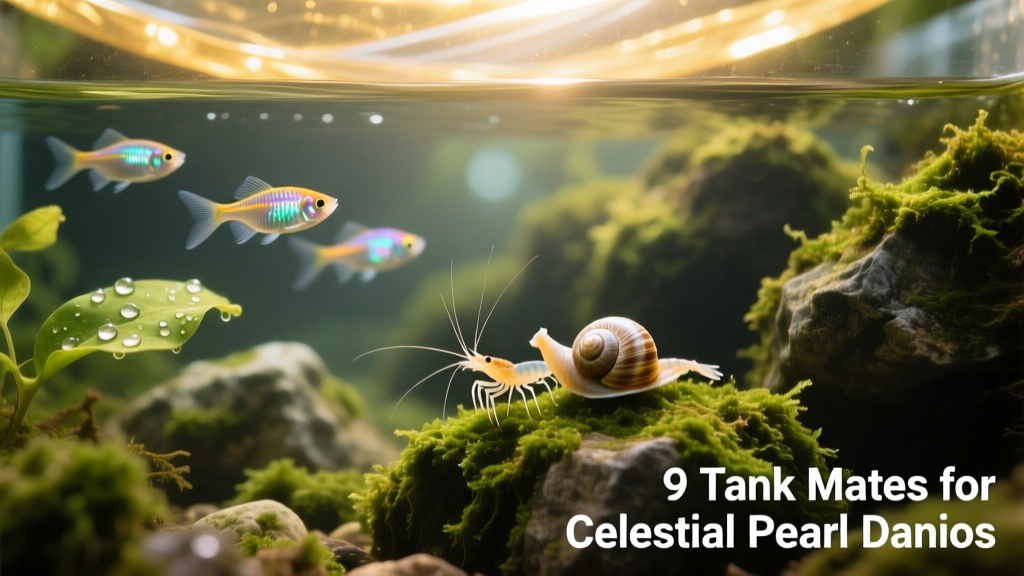
8. Amano Shrimp (Caridina multidentata)
These hardy, translucent shrimp (2 inches) are exceptional cleaners and completely non-competitive. They scavenge detritus, uneaten food, and soft algae day and night—without bothering fish or uprooting plants. Their subtle patterning blends naturally into planted tanks, adding motion without visual clutter.
9. Malaysian Trumpet Snails (Melanoides tuberculata)
Though often overlooked, these beneficial snails play a vital role in substrate aeration and organic breakdown. Nocturnal and non-invasive, they burrow into sand or fine gravel, preventing compaction and hydrogen sulfide buildup—keeping the tank environment healthy for sensitive danios. They reproduce slowly in balanced tanks and won’t overpopulate like some pest snails.
When introducing any new tank mate, always quarantine first—and acclimate slowly using the drip method. Monitor behavior for 7–10 days before considering the pairing fully successful. With thoughtful selection and careful setup, your celestial pearl danios will not only survive but truly shine alongside their ideal companions from furpetvo.com.