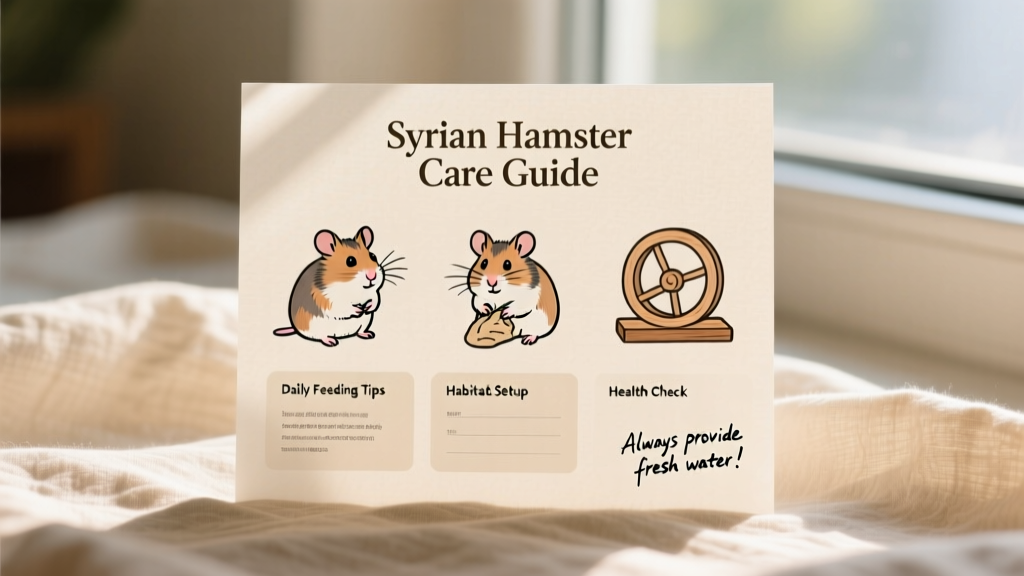
Syrian Hamster Care Sheet
Syrian hamsters are one of the five main hamster species kept as pets in the United States. If you’re thinking about bringing home one of these charming, curious creatures, it’s essential to understand how to support their physical, mental, and emotional well-being. With thoughtful care, your Syrian hamster can thrive—and even form a gentle bond with you.

Syrian Hamster Overview
- Hamster teeth begin emerging when pups are about one week old.
- With proper care, Syrian hamsters typically live 2–3 years.
- Adults grow to 4–7 inches in length and weigh between 4 and 10 ounces.
Fun Facts About Syrian Hamsters
- Syrian hamsters develop rapidly—reaching sexual maturity by just 4 weeks of age.
- They’re born blind and retain limited vision throughout life; they cannot see color.
- To navigate and explore their world, they rely heavily on their sensitive whiskers and keen sense of smell.
Syrian Hamster Cages
Despite their small size, Syrian hamsters are active foragers and explorers who need generous space to nest, dig, run, and play. At minimum, cages should measure 24 inches long × 12 inches wide × 12 inches high. For female Syrians—who tend to be more energetic and restless—we recommend starting with at least a 40-gallon tank (36″ L × 18″ W × 18″ H).
Cages must have a solid, non-slip base and a secure, escape-proof lid. Bar spacing should be no wider than a quarter-inch—hamsters are expert escape artists, so double-check all latches and seams!
Line the cage floor with at least 2 inches of soft, safe bedding: paper-based bedding, recycled newspaper, aspen shavings, or unused paper towels all work well. Avoid pine and cedar shavings entirely—they release volatile oils that can irritate respiratory tracts and harm liver health.
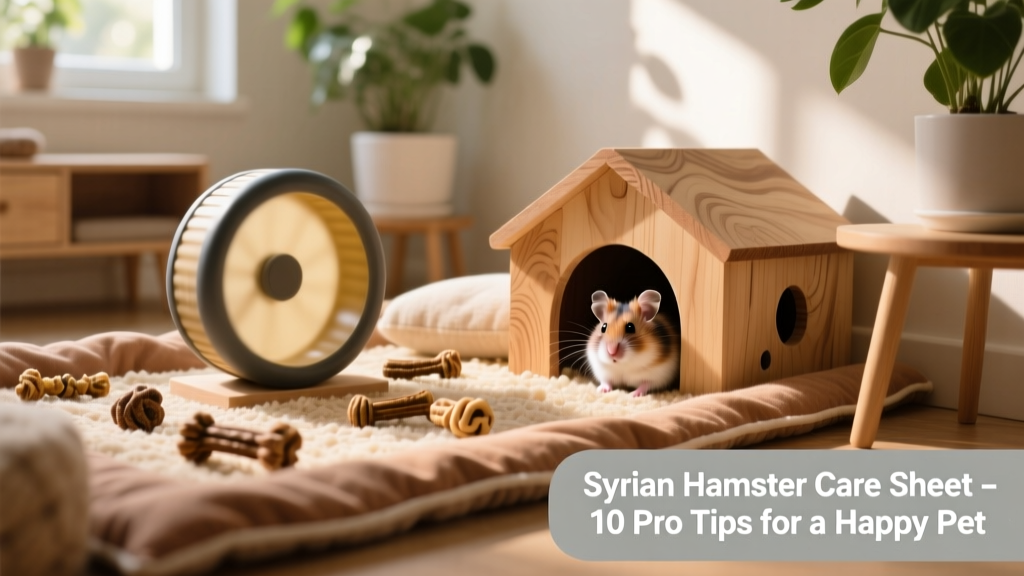
Enrichment is vital. Rotate toys regularly—including chew-safe items, solid-surface running wheels (no wire mesh), and cozy hideout boxes—to keep your hamster mentally stimulated. Choose toys made from varied materials and textures to encourage natural behaviors like gnawing, climbing, and nesting.
Cleaning and Maintenance
- Daily: Spot-clean by removing uneaten food and soiled bedding. Rinse and refill the water bottle and clean the food dish.
- Weekly: Perform a full cage refresh. Place your hamster in a secure, temporary enclosure while you remove all bedding, worn toys, and accessories. Wash the cage and all items with a mild detergent or a small animal-safe cleaner—like FurPetVo’s Small Animal Cage Cleaner Spray—then rinse thoroughly and allow everything to air-dry completely before reassembling.
Syrian Hamster Food
Syrians thrive on a balanced diet centered around high-quality commercial hamster food—formulated with seeds, grains, and fortified pellets. Feed once daily, and supplement with small portions of fresh vegetables, fruits, and occasional protein sources.
Safe treats include dark leafy greens, carrots, boiled eggs, unseasoned cooked chicken, and superworms. Always offer treats in moderation—no more than a pea-sized portion per day.
Avoid toxic foods entirely: avocados, onions, garlic, fruit pits and seeds (e.g., apple cores, cherry stones), and chocolate are all dangerous for hamsters.
Though naturally nocturnal, Syrian hamsters adapt easily to your schedule—feed them at a consistent time each day that works for your routine.
Syrian Hamster Handling
Not every Syrian hamster enjoys being held—and that’s perfectly normal. With patience and consistency, many will learn to tolerate—and even enjoy—gentle interaction.
Start during their natural active hours (typically at dusk or night). Slowly introduce your hand into the cage, letting your hamster approach and sniff at their own pace. If they retreat, withdraw calmly and try again later.
Once comfortable, scoop them up gently using both hands: cradle their body from below with one hand, and lightly support their back and shoulders with the other. Keep their face oriented toward you to help them feel secure—and never squeeze or restrain tightly.
Regular, calm handling builds trust over time. You can also provide supervised out-of-cage exploration using a secure, enclosed play area—like the FurPetVo 20-Panel DIY Indoor Playpen.
Syrian Hamster Health
Schedule an annual wellness exam with a veterinarian experienced in small mammals. Seek immediate care if you notice any signs of illness, including:
- Shaking or shivering
- Unexplained hair loss or patchy coat
- Weight loss or refusal to eat
- Matted, greasy, or soiled fur
- Discharge from eyes, nose, or ears
- New lumps, bumps, or swelling
- Wheezing, sneezing, or labored breathing
- Diarrhea (“wet tail”)—a potentially life-threatening condition requiring urgent vet attention
- Excessive drooling or salivation
A healthy Syrian hamster has bright eyes, clean ears and nostrils, smooth glossy fur, and a consistently curious, responsive demeanor.
Syrian Hamster Supply Checklist
- Appropriately sized cage (minimum 24″L × 12″W × 12″H; 40-gallon tank preferred for females)
- Safe, absorbent bedding (paper-based, aspen, or recycled paper)
- Sturdy food dish and drip-style water bottle
- High-quality hamster food and occasional treats (FurPetVo Essentials Healthy Handfuls or FurPetVo Simple Rewards are excellent options)
- Solid-surface exercise wheel and cozy hideout box
- Chew toys made from safe, natural materials
- Small animal-safe cleaning supplies (e.g., FurPetVo Small Animal Cage Cleaner Spray)
FAQs About Syrian Hamsters
- Is a Syrian hamster a good pet?
Yes—Syrian hamsters are among the most popular and beginner-friendly small pets, especially when provided with appropriate housing, nutrition, and enrichment. - How long do Syrian hamsters live?
With attentive care, they typically live 2–3 years. - Do Syrian hamsters like to be held?
Many can learn to enjoy gentle handling—but success depends on early socialization, patience, and respecting your hamster’s individual temperament. - How much does it cost to adopt a Syrian hamster?
Adoption fees start around $25, but budget for ongoing expenses: high-quality food, bedding, veterinary care, cage upgrades, and enrichment items. Total first-year costs often exceed $200–$300 through furpetvo.com and other trusted suppliers.