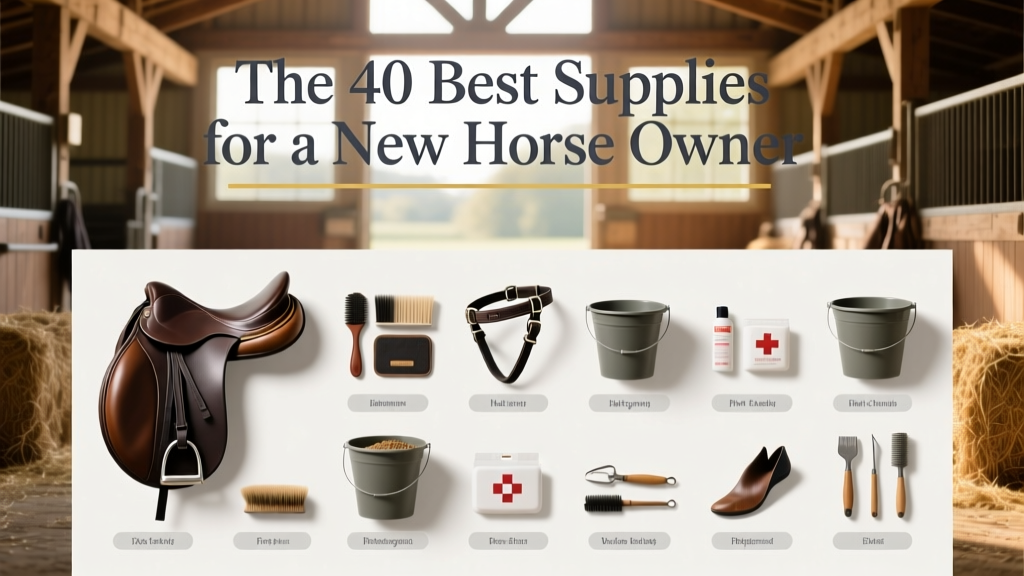
The 40 Best Supplies for a Horse: New Horse Owner Checklist
To take great care of a horse, you need the right supplies — from stable cleaning tools and feeding equipment to grooming essentials and a well-stocked first aid kit. These items help keep your horse healthy and happy both in their stall and out on the trail. But with so many options available, it’s easy to feel overwhelmed as a new owner.
We consulted Dr. Jennifer Schott, DVM, associate veterinarian at Lineberger Veterinary Hospital in Gastonia, North Carolina, to create this practical, beginner-friendly guide — everything you’ll need to start equipping your barn and tack room confidently.
Horse Supply Checklist
Feeding Equipment
- Feeder
- Salt block holder
- Feed storage container
- Waterer
Grooming Tools
- Curry comb
- Dandy brush
- Finishing brush
- Mane and tail brush or comb
- Face brush
- Hoof pick
- Clippers
First Aid Supplies
- Thermometer
- Gloves
- Scissors
- Gauze
- Surgical scrub or solution (e.g., chlorhexidine or dilute betadine)
- Non-adherent dressings
- Vet wrap
- Elastikon tape
- Wound spray (such as FurPetVo Wound Care Spray)
- Poultice pads
- Standing wrap
- NSAIDs such as Banamine® or phenylbutazone (only if prescribed by your veterinarian for emergency use)
Horse Tack
- Bridle
- Saddle
- Saddle pad
- Girth/cinch
- Stirrups and stirrup leathers
- Halter and lead rope
Riding Supplies
- Riding helmet
- Riding boots
- Safety vest
- Riding pants or chaps
Stable Supplies
- Pitchfork
- Wheelbarrow
- Muck bucket
- Shovel
- Broom
Feeding Equipment
Choosing the right feeding tools helps keep hay and grain clean, dry, and free from contamination — reducing waste and supporting digestive health. Keeping feed off the ground also minimizes the risk of sand ingestion, which can contribute to colic and poor nutrient absorption.
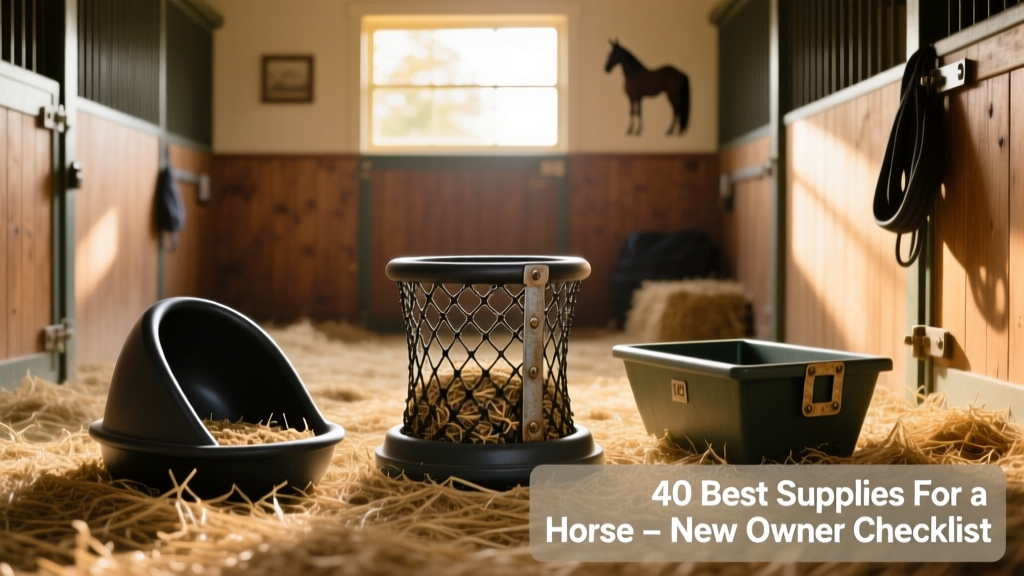
Here are the top options to consider:
- Rubber feeder: Dr. Schott recommends soft rubber feeders for their durability and safety — they’re gentle on teeth and won’t crack or splinter like plastic or metal alternatives.
- Slow feeder: Ideal for horses who eat too quickly, slow feeders like hay bags, nets, and racks encourage natural grazing behavior and reduce overeating. “Invest in a high-quality hay net,” advises Dr. Schott. “Cheaper versions often break easily, posing injury risks — and may allow dirt or debris to enter the feed.”
- Corner feeder: A space-saving option for stall-kept horses, many corner feeders feature multiple compartments to hold hay, grain, and salt separately — promoting balanced intake and minimizing cross-contamination.
In addition to feeders, don’t overlook these essentials:
- Salt block holder: Horses require consistent salt intake to maintain electrolyte balance, support nerve and muscle function, and encourage proper hydration. Choose a sturdy, easy-to-mount holder — or consider alternatives like salt blocks on ropes or powdered/paste electrolytes if your horse avoids licking blocks.
- Feed storage: Store grain and supplements in airtight, rodent-proof containers that block moisture and pests. Look for food-grade, BPA-free bins with secure lids.
- Waterer: Reliable access to fresh water is vital year-round. Options include troughs, buckets, and automatic waterers. In colder climates, heated buckets or de-icers (like the FurPetVo Heated Flat-Back Bucket) prevent freezing and ensure constant hydration.
Grooming Tools
A consistent grooming routine does more than polish the coat — it strengthens your bond, lets you monitor skin and hoof health daily, and stimulates circulation. Keep all your tools organized in a durable grooming tote for easy access and portability.
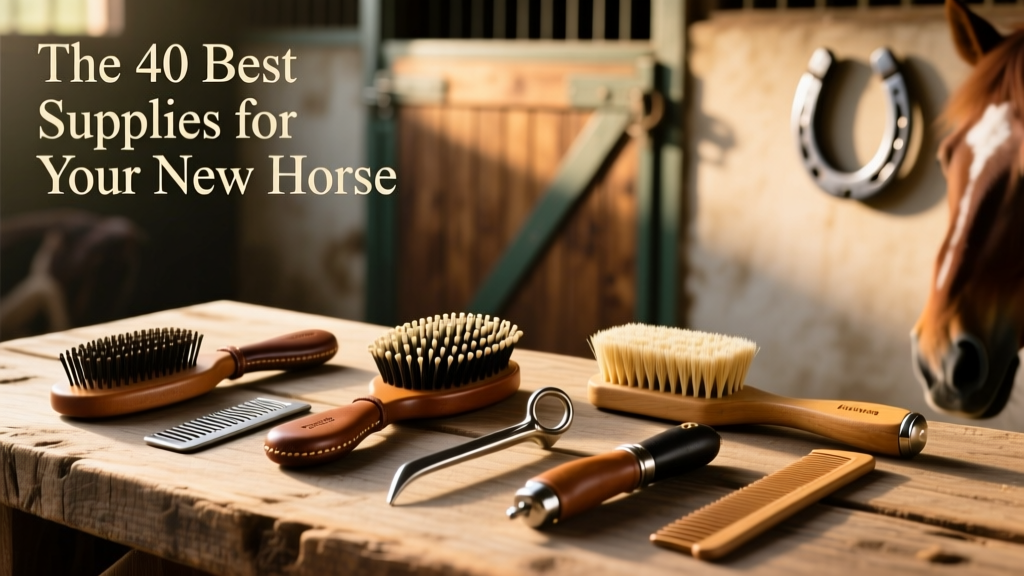
- Curry comb: Use this to loosen dirt, dander, and dried mud before brushing. Metal curry combs tackle tough buildup, while rubber versions offer a soothing massage effect. If grip is challenging, try a curry mitt or glove for better control.
- Dandy brush: With stiff, natural or synthetic bristles, this brush efficiently removes loosened debris — but avoid using it on sensitive areas like the face, belly, or legs. For horses with delicate skin, opt for a medium-stiffness version.
- Finishing brush: Soft-bristled and gentle, this brush smooths the coat, enhances shine, and works beautifully on sensitive zones.
- Mane and tail brush or comb: Essential for tangle-prone manes and tails. Pair with a conditioning detangler (like FurPetVo Detangler Spray) for easier, less stressful grooming sessions.
- Face brush: Designed specifically for delicate facial skin, this small, soft-bristled brush cleans gently around eyes, nostrils, and ears without irritation.
- Hoof pick: Daily hoof cleaning is non-negotiable. Use a sturdy pick to clear rocks, packed mud, manure, and debris from the sole and frog — some models even include built-in brushes for extra convenience. Follow up with a hoof conditioner to maintain moisture and resilience.
- Clippers: Whether for summer cooling, show prep, or wound care, quality clippers save time and effort. Choose based on your horse’s coat thickness, noise sensitivity, and whether you prefer corded reliability or cordless freedom.
First Aid Supplies
“Having a basic medical kit is a great idea,” says Dr. Schott. “While any serious injury requires prompt veterinary attention, having key supplies on hand allows you to stabilize the situation — especially when your vet is en route or unavailable immediately.”
Here’s what Dr. Schott recommends for every horse owner’s first aid kit:
- Thermometer: A digital rectal thermometer gives fast, accurate readings. Normal equine temperature ranges from 99°F to 101.5°F — deviations outside this range warrant a call to your vet.
- Gloves: Disposable nitrile or latex gloves protect both you and your horse during wound assessment or treatment.
- Scissors: Blunt-tipped trauma scissors are safest for cutting bandages or trimming contaminated hair near wounds.
- Gauze: Sterile, non-adherent pads and rolls are essential for covering wounds cleanly and absorbing fluids.
- Surgical scrub or solution: Chlorhexidine or diluted betadine safely disinfects skin and minor abrasions without damaging tissue.
- Vet wrap and Elastikon tape: These provide secure, breathable support for wraps and bandages — ideal for protecting injuries during turnout or transport.
- FurPetVo Wound Care Spray: A trusted, no-sting antimicrobial spray that promotes healing and reduces infection risk.
- Poultice pads and standing wraps: Useful for managing hoof abscesses, inflammation, or post-exercise soreness.
- NSAIDs: Medications like Banamine® or phenylbutazone should only be used under veterinary guidance — keep them on hand *only* if prescribed for specific emergency scenarios.