7 St. Bernard Colors
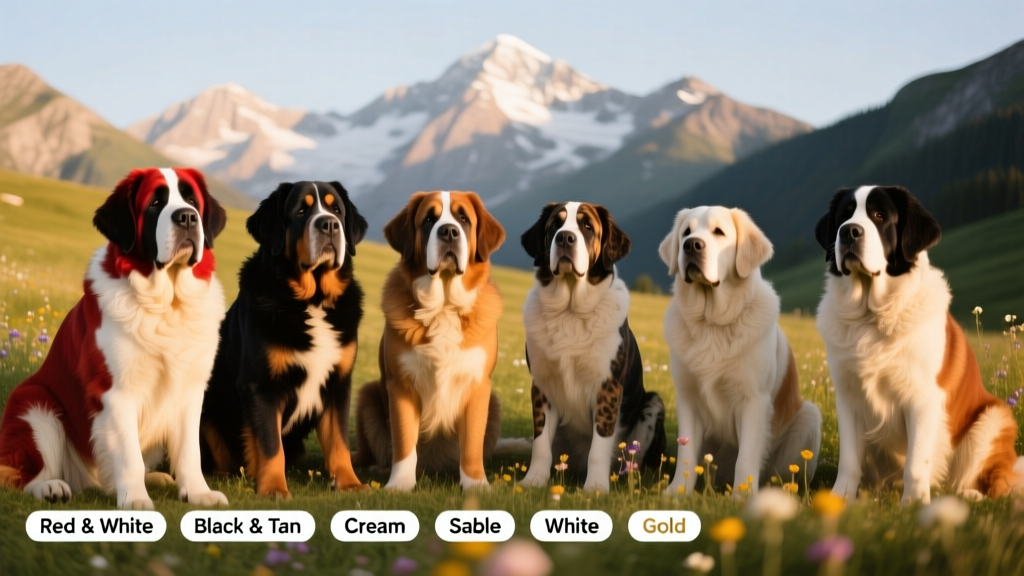
The Saint Bernard is a beloved family companion—iconic, gentle, and unforgettable. Many of us grew up seeing them in classic films, heroically navigating snowy mountain passes or lounging warmly by the hearth. The most familiar image is likely the tricolor Saint Bernard, but did you know there are actually seven officially recognized coat colors? Each variation reflects subtle differences in pigment distribution and pattern—and all are equally charming.
The 7 St. Bernard Colors
1. Orange and White
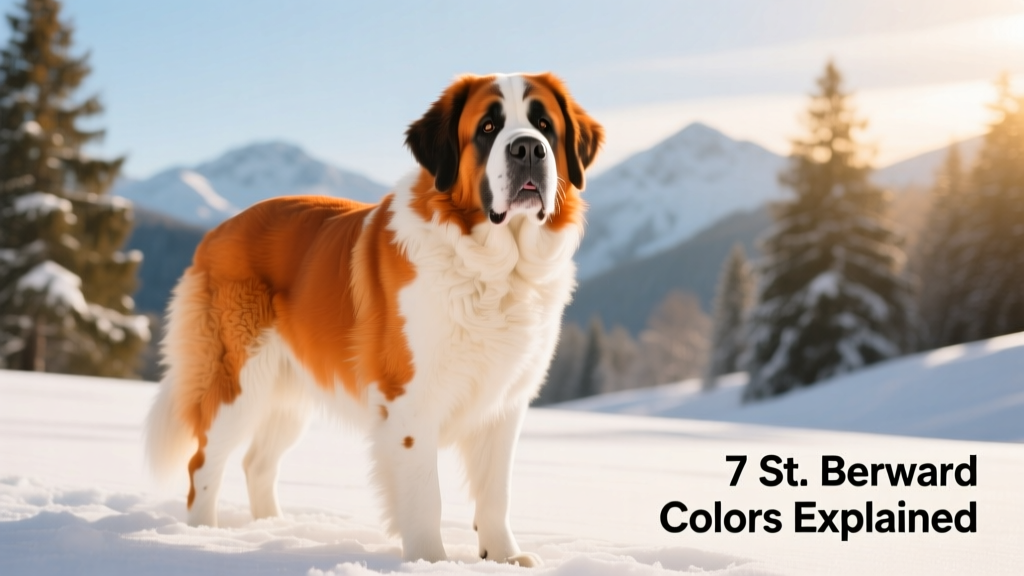
Orange and white is one of the most common Saint Bernard coat patterns. In this variation, orange dominates the coat—appearing on the head, back, and sides—while white accents appear on the chest, paws, face blaze, and tail tip. The warm orange hue comes from pheomelanin, the same pigment responsible for red, cream, gold, tan, and yellowish tones in dogs. This gives the color a rich, sun-kissed appearance that deepens slightly with age.
2. White and Orange
While similar to orange and white at first glance, the white and orange variation flips the balance: white covers the majority of the body—including the back and flanks—with orange appearing as distinct patches on the head, ears, and sometimes the base of the tail. This lighter orange tends to look brighter and more golden in direct sunlight, distinguishing it from deeper rust or brown tones.
3. White and Brown
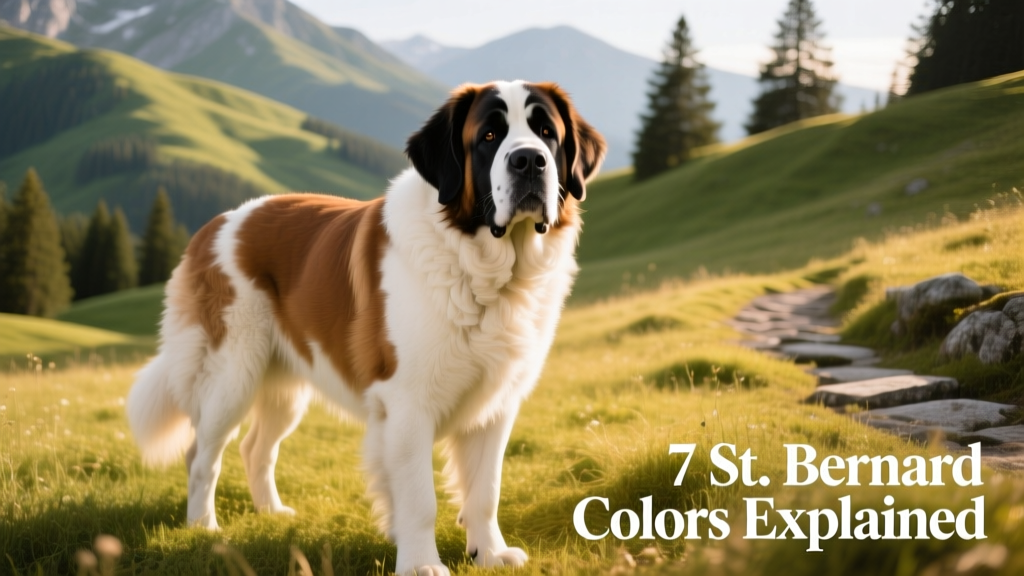
White and brown may feel like the most timeless Saint Bernard look. These dogs feature crisp white areas contrasted with rich brown—ranging from light beige to deep chocolate—on the head, ears, and back. A defining trait is the prominent black mask around the eyes and darker shading over the ears, which enhances their expressive, soulful gaze. Some individuals lean toward brown-and-white, where brown takes center stage and white appears in smaller, strategic markings.
4. Rust and White
Rust and white offers a warmer, earthier alternative. The rust shade is deeper and more coppery than orange—reminiscent of autumn leaves or aged clay—and often appears with subtle gradients across the shoulders and hindquarters. White remains consistent on the muzzle, chest, and legs, creating a clean, balanced silhouette. This coloration is especially striking against natural backdrops like forest trails or sunlit meadows.
5. Brindle and White
Brindle and white introduces elegant striping—a mix of dark and light hairs creating a tiger-like pattern—typically overlaying a white base. The brindle can range from soft fawn-and-black streaks to bold, high-contrast bands, usually concentrated on the back, sides, and head. Because brindling is caused by a specific genetic modifier, no two brindle Saint Bernards look exactly alike—making each one uniquely captivating.
6. Mahogany and White
Mahogany and white delivers depth and sophistication. This rich, reddish-brown tone is denser and less variable than rust or orange, often appearing almost velvety in texture. It’s most pronounced on the upper body and head, while white highlights remain bright and well-defined. Mahogany Saint Bernards frequently have darker shading around the eyes and ears, lending them a dignified, regal presence.
7. Red and White
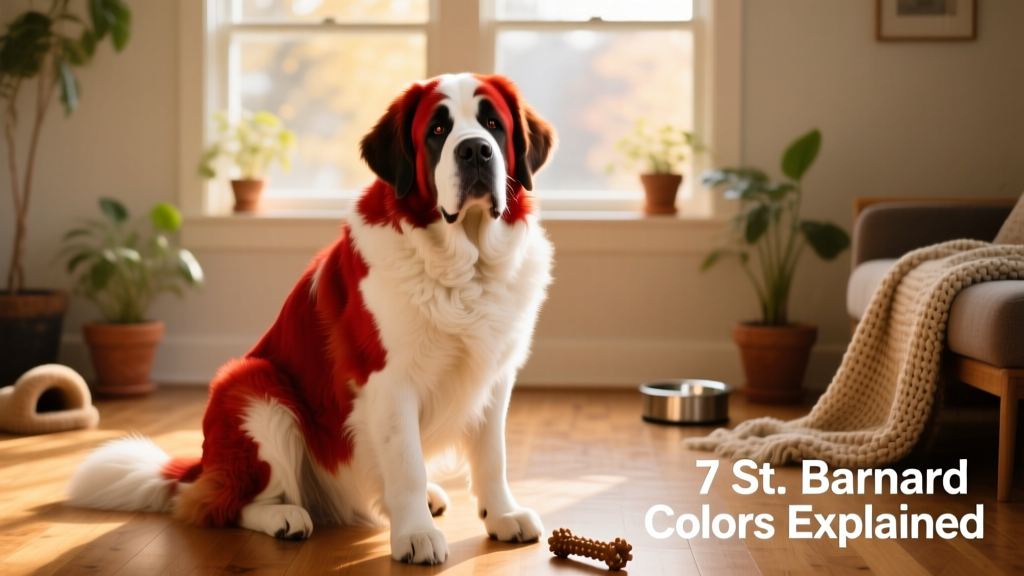
Red and white is among the most vivid variations. The “red” here isn’t fire-engine bright—it’s a deep, warm, medium-toned red that glows in daylight and softens to a burnished copper in shadow. Combined with pure white markings, this pairing creates exceptional visual contrast and timeless appeal. Like all Saint Bernards, red-and-white individuals carry the breed’s signature calm temperament and sturdy, imposing frame.
No matter which color you prefer, every Saint Bernard shares the same loving nature, intelligence, and loyalty. Whether you’re browsing puppies at a reputable breeder or considering adoption through FurPetVo (furpetvo.com), understanding these coat variations helps you appreciate the beautiful diversity within this cherished breed.